
Review
By Apex
A second chance to chart the Deepblue
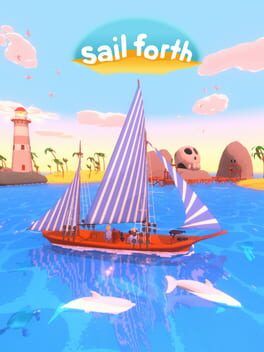
Sail Forth has always had a clear fantasy: a Wind Waker‑flavored ocean you can truly live in, cruising between pastel isles, getting into scrappy cannon duels, and then zoning out while the wind does the work. On the original Switch, that vision kept bumping into technical chop. Resolution, pop‑in, jerky frame pacing, and constant loads between tiles all chipped away at the vibe.
The Nintendo Switch 2 Edition, launching alongside the free Battle for Croaker Command update, is the mulligan. It is still the same low‑poly, lightly whimsical sailing sim at heart, but now it finally feels tuned for long, lazy sessions on a modern handheld. The question is whether this relaunch simply polishes the deck or meaningfully deepens the sea.
Technical overhaul: from blurry blue to postcard ocean
Docked, Sail Forth now targets 4K on Switch 2, with 1080p in handheld. That alone is transformative. The painterly color palette was always a strength on PC and newer consoles; on old Switch it looked washed‑out and soft. Here, you get crisp horizon lines, cleaner UI text, and sails and hulls that pop instead of smearing into the ocean.
The added water reflections and proper shadows in the waves go a long way to selling the fantasy of being on an actual sea instead of a blue plane. Reflections of islands and ships give you subtle motion cues in combat, and the upgraded color grading and bloom finally make sunrise and storm fronts feel like events rather than palette swaps.
Performance is where this becomes a different game to live with. Sailing between islands used to be punctuated by frequent, noticeable loading breaks as you crossed from one chunk of the map to another. On Switch 2 those transitions are dramatically quicker. You still hit a loading seam when you hop between regions, but the wait is slashed to a couple of seconds at most, so that meditative rhythm of wind, creaks, and music holds together.
Framerate is both higher and, more importantly, steadier. Where the original Switch struggled in heavy battles, the new build keeps combat feeling responsive even when multiple vessels are trading broadsides. The developers also tout more boats being active at once, and in practice that bears out. Fleet engagements that used to feel cramped now have some scale to them, with several friendly and enemy ships trading fire without reducing the game to a slideshow.
There are still limitations if you go hunting for them. You can see some foliage pop‑in when you barrel straight at an island at full tilt, and a few of the more densely cluttered harbors can dip a little below the target frame rate. But compared to the original console release, this is a night‑and‑day upgrade that finally matches the PC version in spirit, if not quite in raw muscle.
Battle for Croaker Command: a new campaign spine
The headliner of this relaunch is the Battle for Croaker Command update, which is not just a side mission chain but a genuine shift in how Sail Forth structures its progression and combat.
Croaker Command, the frog‑themed spy corps that was previously more of a quirky flavor faction, gets its own focused campaign arc. You are pulled into a secretive conflict, tracking coded messages across the regions, infiltrating fortified outposts, and eventually taking part in set‑piece fleet engagements where your whole armada finally feels necessary instead of ornamental.
These missions pull you out of the sometimes aimless loop of “sail, poke at a point of interest, maybe fish or fight, move on” and give the game a firmer backbone. Objectives are still loose enough to fit the laid‑back tone, but the Croaker Ops give you meaningful reasons to upgrade specific ship roles, experiment with different hulls, and think about positioning before you open fire.
The update also adds new enemy types and more varied encounter setups. You will run into convoys that need to be broken apart, artillery platforms that punish head‑on charges, and escort jobs where your AI wingmen actually matter. None of it turns Sail Forth into a hardcore tactics sim, but it nudges the combat closer to the thrilling sea skirmishes its systems have always hinted at.
Balance tweaks: less teeth‑gnashing, more satisfying broadsides
Beyond the headline campaign content, the patch quietly rebalances a lot of knobs that used to frustrate console players.
Damage pacing is better. Early skirmishes used to be awkwardly spongey or, in a few cases, lethal in one bad exchange. Now cannons feel chunky without shredding you instantly, and even a modest starter ship can survive long enough for you to learn wind angles and firing arcs. Upgrades to hulls, sails, and armaments land more clearly, with a smoother curve between zones; it is no longer as easy to stumble into a region that erases you for daring to explore.
Enemy behavior benefits from the tweaks too. Reports from the first Switch release often mentioned dumb AI pathing and friendly ships ramming you more often than they helped. The current build still has the occasional comedy collision when the seas get crowded, but your allied boats are more inclined to stay on your flanks, focus fire on your target, and avoid t‑boning you during tight turns. That alone makes fielding a full fleet feel more like a strategy and less like babysitting.
Economy and upgrade pacing also feel saner. You accrue materials and currency at a rate that encourages experimentation instead of hoarding. Swapping to a new hull or loadout no longer feels like a multi‑hour commitment that might brick your build. It invites you to try oddball configurations, which fits the game’s playful tone.
Does it finally deliver the chill sailing‑and‑combat fantasy?
On Switch 2, the answer is largely yes.
The technical upgrades clear away most of the friction that used to interfere with that cozy loop of picking a direction, catching the wind, and seeing what the ocean throws at you. Sailing itself remains delightful. The way your boat leans into gusts, the simple but tactile sail controls, and the gentle soundtrack all conspire to put you in that rare headspace where a game is active but not demanding.
Combat, once the weak link on original Switch, now holds up its end of the fantasy. Sharper visuals make it easier to read incoming fire and hull angles, the steadier performance keeps aiming predictable, and the Croaker Command missions put you into enough spicy situations to make the cannon work feel worthwhile. It is still more about vibe than precision, and if you are coming from something like a full sim you may find it a bit floaty, but within its own arcade‑y lane it finally feels complete.
Where the game still stumbles is structural repetition. Despite the new campaign thread, you are ultimately doing variations on the same loop: discover a new pocket of the Deepblue, meet a quirky faction, poke at points of interest, occasionally get in a naval dust‑up, move on. If that loop clicks for you, Sail Forth on Switch 2 is endlessly pleasant. If you bounced off the original because you found the procedural world a little samey, no amount of sharper water and frog spies will fully change your mind.
Verdict: a worthy relaunch for console captains
The Switch 2 Edition and Battle for Croaker Command update do not reinvent Sail Forth, but they finally present it in a form that serves its own ambitions. Higher resolution, better effects, faster loads, and more ships on screen smooth out the practical headaches that used to puncture its calm. The new campaign and balance work pull combat up alongside the sailing, so it is no longer something you endure between screenshots of pretty sunsets.
If you skipped Sail Forth on the original Switch because of performance fears, this is the version that is worth your time. It is not suddenly a sprawling naval epic, but as a cozy, genuinely sea‑savvy sailing and combat sandbox that you can sink hours into on the couch or on the go, the Nintendo Switch 2 Edition finally feels like the game the developers were chasing all along.
Final Verdict
A solid gaming experience that delivers on its promises and provides hours of entertainment.