
Review

By Pixel Perfect
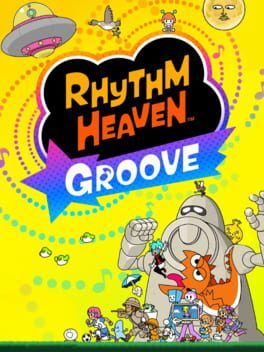
Image: IGDB
A late Switch rhythm test with one very practical caveat
Rhythm Heaven Groove arrives on Nintendo Switch on July 2, 2026, according to Game Informer’s review listing, with Nintendo named as both publisher and developer and an Everyone rating. Nintendo’s official store page lists a downloadable demo, confirms Nintendo Switch 2 compatibility as “Supported,” and says game behavior is consistent with Nintendo Switch. That gives this long-dormant series return a clean hardware story at first glance: it is a Switch game, it can run on Switch 2 through compatibility, and players can try it before buying.
The tension is in the input feel. Rhythm Heaven is a series where a tiny delay can turn a perfect tap into a miss, and Kotaku specifically reports noticeable latency when playing Rhythm Heaven Groove with a Pro Controller on a TV. Kotaku says most stages were still passable that way, with many medals earned, but also says the delay could make it hard to tell whether a mistake came from the player or the setup. For a game built around invisible timing windows rather than a scrolling note highway, that is the technical issue buyers should take seriously.
As a Rhythm Heaven Groove review, then, the question is less whether Nintendo remembered the shape of the series. The answer there is confidently yes. The sharper question is whether Groove’s Switch debut preserves the tactile snap that made the handheld entries sing, while adding enough new variety, challenge, and replay structure to justify the series’ return after the 3DS-era Rhythm Heaven Megamix, which My Nintendo News notes released in 2015.
The best Rhythm Heaven Groove gameplay still asks you to listen first
Nintendo’s store page frames the central promise plainly: “Get ready to use your ears.” That is the correct way to understand Rhythm Heaven Groove gameplay. Unlike rhythm games that show every note in advance, Groove asks players to read musical patterns, character animation, and audio cues, then respond with simple button inputs. IGN describes quick taps and longer holds across bite-sized levels, usually tied to the A button, with some games adding a directional input. GameSpot similarly reports that most commands are mapped to A, with more complex arrangements adding a D-pad direction.
That simplicity is where the craft lives. In one early example described by multiple outlets, a stunt car game uses A to accelerate and Down on the D-pad to brake, turning a tiny two-button vocabulary into a rhythm exercise. Kotaku cites early games built around pressing A on a counted beat, opening and closing umbrellas in sequence, counting to seven, and echoing the rhythm of flowers that shoot hearts. Nintendo’s listing adds examples including catching flying veggies, bouncing fruit off biceps, swinging sledgehammers, flapping umbrellas, tossing frogs, Hoop Trundling, Hop Stop N Roll, and Fruit Flex.
The result is a game that feels easy to understand and hard to fully inhabit. IGN notes that each game begins with an interactive tutorial guided by Groove’s antennaed mascot, teaching skills one at a time before layering them together. My Nintendo News reports that tutorials use both visual and audible indicators, then the actual minigames push players to rely less on visual prompts, sometimes blocking part of the screen in creative ways. That design choice is central to the series’ identity: Rhythm Heaven Groove Nintendo gives you the joke, the beat, and the button, then politely removes the training wheels.
Remix variety gives the campaign its pulse
Nintendo confirms more than 80 single-player games and more than 30 multiplayer games on the official store page, while Game Informer describes the total collection as more than 100 single and multiplayer games. Those numbers are useful, but the stronger selling point is how often Groove changes the texture of play without abandoning its tiny input language. IGN reports that the music moves through shredding guitars, synths, and percussion, with BPM and genre shifts keeping the campaign lively. The same review says some levels include fake-out endings that appear to conclude before the song continues, a classic Rhythm Heaven trick that turns confidence into danger.
GameSpot’s comparison to WarioWare is especially helpful, since art director Ko Takeuchi’s WarioWare connection is also cited by My Nintendo News. Groove shares that appetite for absurd premises, but its minigames last long enough to become little songs rather than disposable gags. GameSpot describes bouncing fruit off a bodybuilder’s muscles, sorting good pudding from tainted living pudding cups as a factory robot, jumping over windshield wipers in a rainstorm, and hopping as a cat doll while the background transforms into a kaleidoscopic beach scene. The best stages are funny before they are demanding, then demanding before they become earworms.
The remix stages appear to be the glue. GameSpot calls them its favorite aspect, and while the provided excerpt cuts off before a full explanation, the series pattern and the surrounding review context support the broad point: Groove is strongest when it recombines familiar rhythms under new musical pressure. IGN’s campaign estimate of approximately eight hours matters here. Eight hours of disconnected novelty can feel thin. Eight hours of minigames that return in remixed, rhythmically sharpened forms gives the solo campaign a stronger arc, especially for players who enjoy recognizing a pattern one second before the game tries to trick them.
The difficulty curve is generous until you start chasing perfection
Groove’s difficulty works because passing and mastering are different hobbies. Kotaku reports that every stage is passable with some practice, even for players who are not musically inclined, and says it never felt unfair even during struggle. IGN reaches a similar conclusion from another angle, describing a process that grows harder as tunes become more complex but can produce a “meditative listening” state once the player locks in. That is a fair description of Rhythm Heaven at its best: frustration collapses into flow, then flow collapses again when the game changes one cue.
My Nintendo News explains the rank structure as a post-song evaluation rather than a live points counter. If you miss too much, you are asked to try again. If you perform well, the game can award the highest “Amazing!” rank and a gold medal. Kotaku goes further into the self-imposed challenge layer, citing Perfect attempts and Rainbow Perfects, the latter requiring three perfect clears in a row and then another Perfect without visuals. That is a deliciously cruel structure for a game that otherwise uses one or two buttons.
The difficulty curve is not flawless for every player. IGN notes that the arrangements in the actual levels can differ significantly from the tutorials, which means a tutorial clear does not always translate to an easy first performance. That gap is usually productive, since surprise is part of the design, but it can feel abrupt when paired with TV latency or when a minigame’s visual joke competes with the beat. Still, the consensus across the provided reviews is consistent: Groove is hard because timing is hard, not because the rules are muddy.
The charm is real, even when Beatspell feels like the side act
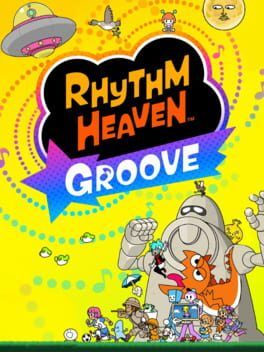
Rhythm Heaven Groove’s presentation is one of its clearest strengths. My Nintendo News credits a charming 2D style to art director Ko Takeuchi, and GameSpot describes an eclectic look that shifts between crude simplicity, chunky cartoonism, and occasional hyper-realism. That range is important because Groove’s comedy depends on instant readability. A frog trampoline, a sentient umbrella troupe, a roly-poly cat doll, or a beach bro flexing fruit all need to be legible within a beat or two. The art is silly, but it is also functional timing language.
The music is the other half of that language. Nintendo’s official listing highlights original music including tracks by renowned Japanese musician Tsunku♂. Kotaku calls out Tsunku’s return and says it did not find a bad piece of music in the game. IGN also credits Tsunku♂ among other secret artists and praises the soundtrack’s range. For a series where the sound cue is often the real UI, that matters more than spectacle. GameSpot even reports closing its eyes and playing by feel because everything has a sound cue, which is about as direct a compliment as a rhythm game can earn.
The new Beatspell mode is less essential. Nintendo describes Beatspell as an unlockable single-player mode where players battle monsters using rhythm-based spells, including offensive and healing actions. IGN says the RPG-inspired Beatspell mode is not as successful as hoped, while Game Informer calls it the most unique new mode and says it functions a bit like an action game even though it is pitched as a turn-based RPG. The useful takeaway is that Beatspell expands the package, but it is not the main reason Rhythm Heaven Groove is worth it. The core minigames, medals, remixes, music, and timing challenges carry the review score.
Replay value, Switch advice, and score
Rhythm Heaven Groove has a strong replay case if you are the kind of player who hears a missed beat as an invitation rather than a failure. IGN estimates roughly eight hours for the solo campaign and says there are at least that many additional hours in medals and side modes. Nintendo’s store page adds local multiplayer for up to three friends around a single system, with a note that additional accessories may be required for multiplayer and are sold separately. That makes the package broader than a solo score chase, though the provided sources give much more detail on single-player than on multiplayer balance.
The buying advice is straightforward. If you loved earlier Rhythm Heaven games, Groove appears to preserve the series’ defining mix of deceptively simple controls, strange setups, catchy original music, and precision timing. If you are new, the demo listed by Nintendo is the best first step, especially because your tolerance for hidden timing windows and repeated attempts will determine your enjoyment. If you plan to play mainly docked with wireless controllers, Kotaku’s Pro Controller latency report is the warning sign to test your own setup before committing to perfection grinding.
There is no confirmed price in the provided source material, so this review cannot make a price-per-hour argument. Judged on design, variety, and replay value, Rhythm Heaven Groove lands as a confident Switch entry rather than a cautious revival. It is charming without being soft, demanding without feeling hostile, and packed with enough remix pressure and medal chasing to keep its tiny songs rattling around in your head long after the credits.
Final Verdict
A solid gaming experience that delivers on its promises and provides hours of entertainment.