
Review

By Apex
Famitsu’s low-30s out-of-40 score for Revolgear Zero feels almost tailor-made to spark arguments. On one hand, this is one of the liveliest horizontal shooters in recent memory: fast, flashy and mechanically dense in the moment-to-moment. On the other, it is a very narrow game that undercuts its own mech fantasy and cannot quite stand shoulder to shoulder with the strongest genre peers of the past year.
This is a very good shmup. It is not a great mech game.
Combat: Thrilling Rhythm, Shallow Fantasy
The instant you take off as Shizuku or Akane, Revolgear Zero snaps into a surprisingly modern combat loop. At its best, it chains systems together in a way that feels almost musical.
The core is a three-part rhythm. You graze bullets to build meter, you fling and recall your boomerang-style melee bit to carve through enemies and cancel shots, and you fire off powerful burst beams or special weapons to cash out that built-up tension. When stages are designed around this interplay, you fall into a hypnotic flow where every dodge, throw and laser feels like a deliberate beat. Reviews that praise its “high-energy balancing act” are not exaggerating.
Inputs are crisp, hitboxes are fair and there is just enough latency in the melee bit’s arc that mastering its timing feels skillful rather than fussy. Local co-op further amplifies the chaos, letting one player lean into close-range risk while the other hangs back with safer loadouts. The game is generous with continues, but higher difficulties and Mission mode challenges reveal a demanding, almost arcade board–authentic side.
Where the combat disappoints is in how little it sells the idea of piloting a giant mechanical war machine. Despite the mecha framing, this is really a transformable fighter craft shooter with a humanoid silhouette attached. Shots lack a sense of mass or recoil, melee hits are more about collision logic than impact, and audio design leans on clean, bright arcade feedback rather than the heavier industrial grit seen in recent mech releases.
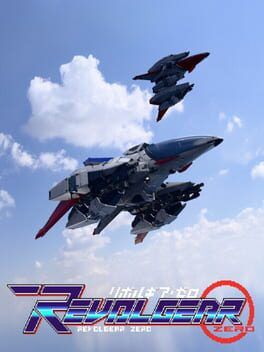
Compared to something like Armored Core VI’s roaring kick cancels or even smaller-scale indies such as Mecha Force Ignition, Revolgear Zero feels abstract. You are manipulating systems on a screen, not wrestling with a barely-contained murder robot. For pure shmup fans that is fine. For players attracted by the key art’s dramatic pilots and mechanical detail, the disconnect is immediate.
Loadouts and Customization: Wide Breadth, Limited Depth
On paper, Revolgear Zero offers over 2,000 possible equipment combinations across its seven stages. You can equip different main shots, sub-weapons, melee variants and support options, then tweak your approach between flowing, grazing-focused builds and more defensive, survival-minded setups.
In practice, the freedom is less transformative than the numbers suggest. The best loadouts converge quickly, especially on higher difficulties where survival is king. Flamethrower-style weapons and certain piercing shots trivialize mid-tier enemies, while some more experimental tools simply never feel worth the risk or slot cost. Once you discover a handful of powerful synergies, there is little incentive to keep experimenting unless you are chasing optional Mission mode constraints.
Compared to the mechanical depth of sim-style mech games, this feels thin. There is no weight tuning, energy balancing, overheat management or armor tradeoff. You do not agonize over swapping a leg frame to favor ground stability versus aerial maneuvering, because the game is not simulating that space at all. It is “pick your shot, pick your sub, maybe swap the melee gimmick,” then head back into the same short campaign.
That is perfectly acceptable for an arcade-forward release, but it explains why Famitsu’s panel seems comfortable parking it at a “good, not essential” score. The numbers on the back of the box promise a deep build lab; in the hands, it is closer to a very nice preset selector.
Stage and Mission Design: Spikes of Brilliance, Patches of Filler
Revolgear Zero structures its main content across seven stages, with four difficulty levels and a separate Mission mode offering around thirty bespoke challenges. This scaffolding goes a long way toward replayability, and some of the best content in the game actually hides in those Missions.
Standard stages have a clear arcade lineage. You move from opening popcorn waves into midboss encounters, environmental hazards and setpiece bosses, each run lasting only a few minutes. At their best, stages blend terrain and enemy patterns in a way that forces you to use the full toolkit. Narrow corridors demand quick melee cancels to clear bullets, vertical shafts push you to juggle beam charge and crowd control, and bosses telegraph multi-phase attack patterns that feel fair but punishing.
The problem is inconsistency in pacing and pattern variety. Several stages lean too hard on simple enemy spam rather than clever layouts. Terrain gimmicks occasionally feel like gotcha design that punishes memorization gaps instead of rewarding adaptation, especially on first runs. A few bosses recycle bullet motifs or safe zones so thoroughly that later encounters feel like reskins of earlier ones.
mission mode, by contrast, is where the core mechanics are stress-tested. Limited-weapon challenges or “no-graze” conditions twist your understanding of the combat system and force genuine experimentation with less-used equipment. Unfortunately, clearing those missions often rewards you with more of the same cosmetic or marginal upgrades rather than new mechanical twists.
This unevenness is what separates Revolgear Zero from the truly standout shooters of the past year. Titles like Radiant Sky Phantom or Bullet Oratorio arranged their stages as escalating arguments, each level introducing new mechanics and then remixing them until the credits. Revolgear Zero feels more like a very good arrangement of disconnected arcade rooms.
Presentation: Clean, Punchy, but Not Showstopping
Visually, Revolgear Zero nails clarity. Projectiles are readable, enemy silhouettes pop against backgrounds and your own mech remains easy to track even when the screen is filled with white-hot beams and grazing arcs. The art direction favors saturated colors and clean spritework over gritty detail, which suits the fast pace.
The downside is a relative lack of spectacle. Backgrounds repeat motifs quickly, some larger bosses lack the animation frames that would make them feel truly climactic and the worldbuilding is mostly relegated to short story interludes and ending variations. The relationship between Shizuku and Akane is sketched in broad strokes, but the game never invests enough time or mechanical storytelling into making their rivalry a driving force.
Sound fares slightly better. Weapon effects are punchy, especially the satisfying crack of a fully charged beam clearing the screen, and the soundtrack leans on energetic synth tracks that would feel right at home in a late-era arcade cabinet. Still, there are few truly memorable tracks, and loop fatigue sets in on longer play sessions.
Stack this against recent mecha or shooter releases and you see the gap. Even smaller-budget projects like Steel Seraphim or Vortex Frame 2099 manage to inject more distinctive identity into their visuals and sound. Revolgear Zero looks and sounds competent rather than iconic.
Comparison with Recent Mecha and Shooter Releases
Within the last year, mecha and shooter fans have been spoiled for choice. On the mech-sim side, games like Armored Core VI: Fires of Rubicon and smaller PC indies such as Nimbus Frame or Project M-EX have pushed intricate buildcraft and weighty movement. On the shmup end, we have seen polished releases like Radiant Sky Phantom, a superb vertical bullet hell, and Terra Blade: Redux, which brought a classic horizontal formula into the modern scoring era.
Placed in this landscape, Revolgear Zero lands comfortably in the upper-middle tier.
As a shooter, its mechanical twist of multi-directional boomerang melee and grazing-driven resource play is legitimately fresh, and the local co-op support is a rare and welcome feature. It is more approachable than dense bullet hells, but offers more nuance than straightforward nostalgia plays. It compares favorably to something like Terra Blade: Redux in terms of immediacy and replay hooks, even if it lacks that game’s scoring depth.
As a mech game, however, it is outclassed. There is simply not enough simulation or buildcraft to satisfy players coming from Armored Core, MechWarrior style experiences, or even mid-budget Japanese mech action like Daemon X Machina’s successors. The “mech” is a coat of paint on a very traditional shmup skeleton.
Famitsu’s solid-but-not-stellar scoring reflects this split identity. For a pure shooter magazine, Revolgear Zero might have edged closer to top-tier marks. For a broader audience, it is hard to justify a higher score when more distinctive and ambitious mech offerings are on the shelf.
Recommendations: Who Should Actually Play This
For fans of arcade-style action, Revolgear Zero is easy to recommend. If you grew up on horizontal shooters, love chasing higher difficulty clears and enjoy the quick-hit satisfaction of perfecting a short run, this belongs on your radar. The combat feel is sharp, the risk-reward of grazing and melee is addictive, and Mission mode stretches the mechanics just enough to keep you coming back.
Score chasers and co-op enthusiasts in particular will find a lot to like. Learning optimal routes, experimenting with a few strong loadouts and competing with friends for clean no-miss clears makes the game sing. Its forgiving base difficulty also makes it a surprisingly good on-ramp for newcomers who find danmaku bullet hells overwhelming.
For players who primarily love mech games for their simulation depth, Revolgear Zero is much harder to endorse. If your idea of fun is spending an hour in a hangar balancing energy output, armor weight and weapon recoil before even launching a mission, this is going to feel like a toy airplane. The customization is broad but shallow, the sense of piloting a towering machine is weak and the narrative does little to elevate the fantasy.
If you sit somewhere between those camps and only have time for one or two action titles this year, you are better off with a deeper mech sim or a more ambitious shooter. Revolgear Zero is a sharp, entertaining diversion rather than a genre-defining experience.
In the end, Famitsu’s score feels exactly right. Revolgear Zero is a rock-solid shmup with clever combat ideas and some standout moments, but its inconsistent stages, modest presentation and lightweight mech trappings keep it a few notches below greatness.
Final Verdict
A solid gaming experience that delivers on its promises and provides hours of entertainment.