
Review

By Story Mode
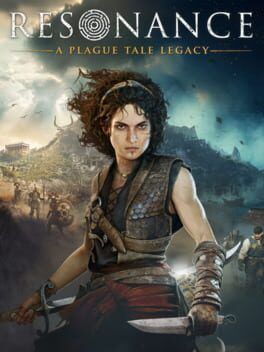
Image: IGDB
Store links: Resonance: A Plague Tale Legacy on Steam
Resonance cuts away the series’ safety net
The sharpest fact about Resonance: A Plague Tale Legacy is also the risk that defines it: Asobo Studio has built a Plague Tale prequel without Amicia, Hugo, the rat swarms, or the stealth-first vulnerability that made Innocence and Requiem feel so distinct. Rock Paper Shotgun describes it as a story set 16 years before the last game, while Push Square places it 15 years earlier and Console Creatures frames it as roughly two decades before Requiem. The exact number varies by outlet, but the confirmed shape is consistent: this is Sophia’s origin story, centered on the smuggler ally players met in A Plague Tale: Requiem.
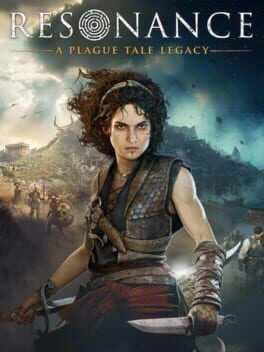
That move immediately changes the camera’s emotional temperature. Amicia and Hugo were defined by being hunted, cornered, and physically overmatched. Sophia is trained to fight. Sources consistently describe her as a blade-wielding protagonist who parries, dodges, kicks, and kills her way through encounters rather than surviving by hiding from them. For an A Plague Tale spinoff review, that is the central question: can a series built on fear, frailty, and sibling grief still work when it becomes a swashbuckling third-person action adventure?
My answer is qualified. Resonance can stand on its own better than its premise suggests, especially once it reaches the island and begins tying its mythology into the Macula. As a Plague Tale game, though, it loses some of the series’ strange identity in the exchange. It is more confident with spectacle than intimacy, more comfortable with blades than panic, and most uneven when it asks Sophia’s combat system to carry the weight that Amicia and Hugo’s desperation once supplied.
Sophia is a strong lead, but the emotional hook is thinner
Resonance follows Sophia from a childhood marked by experimentation and visions into young adulthood as a smuggler and fighter. Rock Paper Shotgun’s account says she was kidnapped by the Inquisition as a child and injected with a poison that triggered visions of a strange island. Fextralife similarly describes her being held at a nunnery and given substances meant to bring on visions tied to Minotaur Island. Console Creatures says her mother sent her to a convent after discovering her father was a smuggler, before her father reclaimed her from nuns who had experimented on her. The details differ in wording, but the supported throughline is clear: Sophia’s visions, her father’s search for the island, and the Macula’s deeper history are the spine of the prequel.
The story’s best idea is that Sophia is chasing both treasure and an explanation for an inherited horror she does not understand. Her father’s failed expedition, the smuggler community that raises her, and her bond with Leni give Resonance a warmer starting point than a simple mythological treasure hunt. Console Creatures credits Anna Demetriou with returning as Sophia, and Bloody Disgusting also notes Demetriou’s voice and motion-capture performance. That continuity helps the character feel connected to Requiem rather than imported for brand recognition.
Still, the supporting cast does not land with the same force as Amicia and Hugo. IGN argues that Resonance improves Sophia from her flatter Requiem appearance, but only modestly, saying she still lacks a strong character arc. That criticism fits the broader shape of the game. Sophia is likable, capable, and easy to follow through danger, but her story often feels like lore discovery wrapped around an action lead rather than a character being transformed by impossible choices.
Where Resonance does gain ground is in the mythic mirror it builds around Theseus and the Minotaur. Houston Press calls the visions of Theseus and the Minotaur the narrative highlight, describing them as a dark reflection of Sophia’s life and of Amicia and Hugo’s struggles. Fextralife reports that parts of the story place players in the body of Theseus, giving direct glimpses of the island’s past. That dual-timeline structure gives Resonance its most distinctive flavor, even when the human drama around Sophia is less piercing than the earlier games.
The combat has personality before it has depth
A Plague Tale Legacy gameplay is built around melee in a way the main games never were. Rock Paper Shotgun describes Sophia’s fighting style as scrappy and characterful: she uses a sword and knife, parries and dodges, throws bottles and knives from the environment to interrupt enemies, and can kick opponents into each other or over ledges. For a studio better known for stealth horror than melee action, that is a meaningful pivot, and RPS specifically credits Asobo with defining a clear fighting identity for Sophia.
The problem is that a good character fantasy is not the same thing as a consistently satisfying combat model. Push Square says the early swordfighting begins with familiar slashes, parries, and dodges, then improves significantly as upgrades expand Sophia’s options. IGN is harsher, calling the fighting too bare-bones to sustain the roughly 12-hour campaign it played. Houston Press also finds the soldier fights tedious, comparing the system loosely to a simplified, less polished version of Ghost of Tsushima’s stance ideas.
The most useful way to read those impressions is to expect a combat system that grows into itself rather than one that arrives fully formed. Push Square says the skill tree has an unusually large impact on how the fights feel, and Houston Press recommends prioritizing an upgrade that allows parries against unblockable attacks because it reduces frustrating group deaths. That suggests Resonance’s combat is partly dependent on progression smoothing out its rougher edges.
There is also some disagreement among sources about stealth. Push Square says there are no stealth mechanics and that enemy encounters cannot be avoided. IGN says the game mostly swaps out stealth for melee, but also mentions tense stealth sections that arrive later. Console Creatures says stealth still exists, while making clear Sophia is tuned for direct violence. The safest buyer guidance is this: do not come to Resonance expecting the stealth sandbox of Innocence or Requiem. Even where evasion appears, the sources agree that mandatory fighting and swordplay are the center of the design.
The island gives the spinoff its strongest identity
Once Resonance reaches its mythological island, the game’s new direction starts to justify itself. Rock Paper Shotgun describes the main drive as Sophia and Leni trying to reach the center of the island before a Venetian army catches up, with trial chambers, maze imagery, puzzles, and statues of a half-man, half-bull creature shaping the journey. Push Square frames the result as closer to Uncharted than The Last of Us, with parkour, melee combat, puzzle solving, and cinematic story beats carrying the structure.
That comparison matters because Resonance works best when it behaves like a lost-civilization adventure with horror pressing against the walls. Houston Press praises the broken mechanical wonders of Crete and the rotting splendor of Daedalus-inspired machinery. Bloody Disgusting points to large Mediterranean spaces, over-the-top climbing, and Indiana Jones-style puzzles. Fextralife highlights Minotaur Island as the main setting and says the game digs into the mystical origins of the Prima Macula.
The absence of rats is not treated as a cosmetic change. Push Square says Resonance replaces the rat horde with an entity in the depths of Minotaur Island that drains life from anything with a heartbeat, forcing players to avoid its gaze and use light beams against its tentacles. Houston Press similarly notes light manipulation returning in new forms, including prismatic geometry puzzles and an ancient light-based tool used against enemies. These details suggest Asobo did not simply remove one signature threat and leave a hole. It built another kind of hazard around light, vision, and ancient machinery.
The tradeoff is tone. The rat swarms in A Plague Tale were disgusting, immediate, and rooted in plague imagery. Resonance’s ancient horrors sound more spectacular and more mythic, but also more familiar as action-adventure architecture. That is why the island is both the game’s rescue and its compromise. It gives Sophia a stage big enough for her sword, but it pushes the series further away from the fragile medieval horror that once made every torch feel like a lifeline.
Pacing is the cost of the pivot
The sources broadly agree that Resonance takes time to reveal its best version. Rock Paper Shotgun describes a largely enjoyable 12-hour experience. IGN also refers to a 12-hour campaign. Push Square, reviewing the PS5 version, describes a 15-hour campaign and says the opening hours are tough to enjoy because the plot setup is not immediately compelling and both combat and puzzles begin too simply. That length discrepancy is not unusual for story-driven action games with optional exploration, but it does mean players should expect something in the 12 to 15 hour range rather than a compact weekend thriller.
The pacing issue is deeper than runtime. Earlier Plague Tale games had a brutally clear engine from the start: children in danger, soldiers nearby, rats in the dark. Resonance opens with training, backstory, smuggler politics, visions, and a delayed arrival at the island’s deeper mysteries. If the player is there for A Plague Tale’s original emotional pressure, those early chapters may feel like Asobo taking too long to say what this spinoff is for.
When the island’s threat escalates, multiple sources say the experience improves. Push Square says the replacement for the rats forces the story and action to pick up, adding depth through combat, puzzles, and evasion. IGN, despite its reservations, still points to entertaining puzzles, gorgeous environments, and later stealth tension as reasons the game remains worth playing. That pattern defines the whole review: Resonance is strongest after it stops proving it belongs to the franchise and starts committing to its own adventure-horror rhythm.
As an action set-piece game, it has the right ingredients: chases, heists, ancient chambers, Venice, Crete, light puzzles, visions, and a pursued heroine with steel in her hands. As a Plague Tale successor, the rhythm is less haunting. The old games tightened around helplessness. Resonance expands outward into traversal and duels. That gives it momentum, but the emotional afterimage is fainter.
Presentation, platform notes, and practical guidance
The available review sources point to a visually strong release. Push Square mentions attractive ocean and Venice vistas in its PS5 review, even while criticizing the early pacing. Houston Press praises the setting as gorgeous, singling out Crete’s ruined mechanical wonders. IGN calls the environments gorgeous, and Bloody Disgusting highlights the Mediterranean setting, dual timelines, and soundtrack as major contributors to the game’s changed atmosphere.
Platform information in the provided material is limited to reviewed versions and outlet labels rather than a formal publisher platform sheet. Push Square reviewed Resonance on PS5. Houston Press says its review was based on completion of the PlayStation 5 version. TheXboxHub lists the review under Xbox Series X reviews. Because the provided sources do not include an official store page, PC requirements, price, editions, upgrade paths, or detailed technical modes, I cannot confirm those details here. For readers searching specifically for Resonance A Plague Tale Legacy PS5 impressions, the sourced PS5 coverage points to a polished-looking game with pacing and combat concerns rather than reported platform-specific technical failures.
Performance is the least documented part of the source set. The supplied excerpts do not provide frame-rate analysis, resolution modes, crash reports, or console comparison data. That absence should not be read as proof of flawless performance. It simply means the available material supports discussion of presentation and design more strongly than technical benchmarking. If performance sensitivity is your deciding factor, wait for platform-specific testing before buying.
For most players, the decision is clearer. If you loved A Plague Tale because it made you feel small, hunted, and emotionally exposed, Resonance will feel like a sideways move. If you are open to a mythological action-adventure that uses Plague Tale lore as a foundation for swordfights, puzzles, and ancient horror, it has enough craft to carry you through its uneven start.
Verdict
Resonance: A Plague Tale Legacy is a capable action spinoff with a real identity crisis. Its best material comes from Sophia’s visions, the Theseus and Minotaur framing, the island’s light-based puzzles, and Asobo Studio’s willingness to push the series into Mediterranean myth instead of repeating Amicia and Hugo’s journey. It is handsome, cinematic, and often engaging once the campaign reaches its fuller rhythm.
The cost is the loss of what made A Plague Tale feel singular. The series’ old grammar was stealth, dread, scarcity, and protection. Resonance speaks in parries, upgrades, traversal routes, and set-piece escalation. That language is familiar, and the combat is not deep enough early on to make the transition painless. Sophia is a good protagonist, but she does not carry the same emotional charge as the siblings whose vulnerability defined the franchise.
So, can it stand on its own? Mostly, yes. It works better as a brisk mythological action adventure than as a replacement for the mainline Plague Tale experience. Go in expecting an adventurous prequel with strong atmosphere and uneven swordplay, not the same haunted intimacy that made Innocence and Requiem linger.
Final Verdict
A solid gaming experience that delivers on its promises and provides hours of entertainment.