
Review

By Big Brain
Verdict
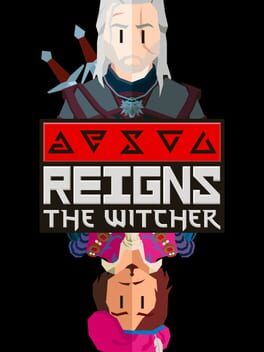
Reigns: The Witcher should not work as well as it does. On paper, boiling down one of gaming’s densest, most morally tangled universes into Tinder-like left and right swipes sounds like a throwaway novelty. In practice, Nerial slices The Witcher down to its sharpest edge: split‑second decisions, long‑tail consequences, and a world that delights in killing Geralt in a hundred creatively stupid ways.
Across PC and mobile, this is one of the smartest uses of The Witcher license outside the main RPGs, and a strong Reigns entry in its own right.
How the swipe structure fits The Witcher’s morality
If you’ve played any Reigns game, you know the rhythm. Cards slide into view, each presenting a situation and two possible responses, one to the left and one to the right. Choices nudge four meters that represent the factions and forces circling Geralt, and tipping any of them too far in either direction usually ends very badly for him.
That structure dovetails with The Witcher’s trademark moral ambiguity far better than it has any right to. Most cards look trivial at first. A peasant begs you to deal with a “beast” in his fields, a sorceress flirts with you in a bathhouse, a merchant offers easy profit. The binary responses feel comfortingly simple until you realize every answer is sitting on top of unseen context that will show up twenty or thirty cards later.
Like the books and RPGs, the game rarely flags the “right” choice. Taking payment from a village might shore up Geralt’s material needs but drain his standing with mages or the common folk. Sparing a monster might please the druids while infuriating a local lord. There is rarely a clean win, only different flavors of fallout, and Reigns’ meters turn that muddy morality into something you can read in a glance without ever turning it into simple good versus evil.
The real coup is how fast it all plays. Witcher quests traditionally take hours to unwind a single dilemma. Here, you are ricocheting between witch hunts, back‑room mage politics and monster contracts in seconds, yet story threads still loop back in ways that feel authored rather than random. It captures the spirit of riding from job to job around the Continent, constantly making snap calls you will be judged for later.
Dandelion’s unreliable narration keeps runs lively
The secret weapon is Dandelion. The whole game is framed as his attempt to craft the ultimate ballad about his best friend, which gives Nerial license to twist canon, exaggerate events, and drop Geralt into scenarios that feel half memory, half drunken embellishment.
Mechanically, that framing matters. Runs are structured as different “tales” Dandelion is working on, and his narration mutates depending on your choices. Die in a particularly ridiculous way and he will gleefully fold it into the next retelling, reshaping encounters or introducing new cards that call back to past failures.
Because he is such an unreliable narrator, the game can comfortably remix familiar Witcher beats without feeling like a lore quiz. One run might play out a loose riff on the Bloody Baron, another might whip through a Lodge of Sorceresses intrigue, but Dandelion’s voice keeps it cohesive. When details change between runs, it reads as bardic improvisation rather than sloppy continuity.
That keeps repetition at bay far longer than in previous Reigns titles. You absolutely will start seeing cards recur, especially if you binge the game, but the writing is consistently sharp enough that even repeat encounters land differently when they are paying off a thread Dandelion has been spinning for several in‑game years. His constant commentary also makes failures entertaining; being roasted in verse for getting Geralt decapitated is oddly motivating.
Storytelling and fan service
This is not a lore‑heavy epic, and that is to its credit. Instead of drowning you in proper nouns, it leans on personality. Geralt is dry and sardonic, Yen is intimidating and cutting, Triss is warm but scheming, Vesemir is the long‑suffering dad you expect. Their appearances are brief but well‑chosen, and the dialog does a good job of implying a larger world without sprawling exposition.
Longtime fans will clock the nods to famous contracts and book moments, but nothing here demands you be a scholar of the saga. A lot of the humor lands even if you only know Geralt as “the grumpy monster guy from that one big RPG.” That accessibility makes the branching structure easier to appreciate, because you can focus on choices rather than constantly Googling who anyone is.
PC vs mobile – where it plays best
On both PC and mobile, the core design is clearly built around short, pick‑up‑and‑play sessions. Cards are big, text is legible, and each decision takes seconds. On a phone, it feels completely natural: thumb, swipe, consequence. Runs fit neatly into a commute or a lunch break, and the quick‑death structure encourages “one more attempt” in a way that is dangerously good for your battery.
On PC, the experience is functionally identical but slightly less magical. Clicking left or right with a mouse is fine, and the game scales well to a larger display, but it lacks the satisfying tactile rhythm of physically flicking decisions away. It works best in windowed mode as a kind of narrative snack between heavier games, something you can alt‑tab to for ten minutes and still accomplish something.
Performance is solid across both platforms. Load times are short, crashes are rare, and the minimalist art pops regardless of screen size. The soundtrack, a playful twist on Witcher‑style folk and lute tunes, loops a bit too quickly if you marathon it on PC, but volume sliders and podcasts exist for a reason.
Does it earn its place among Witcher spin‑offs?
The Witcher ecosystem is crowded with spin‑offs, from Gwent to Thronebreaker and the usual crop of mobile experiments. Reigns: The Witcher earns its spot by understanding what makes Geralt’s world tick instead of stapling the license onto a generic shell.
Where many branded mobile titles lean on shallow power progression or gacha hooks, this one leans on writing. The reward for playing is not a new tier of gear, it is a new twist in a story, a fresh way to die, a new angle on a familiar character. That is far closer in spirit to the source material than yet another energy system or loot treadmill.
It also manages to be genuinely funny without undercutting the darkness that defines The Witcher. Villages still burn, curses still claim innocents, and compromise often feels like failure. The punchlines sit beside bleak outcomes rather than replacing them, which helps avoid the sense that the world’s stakes have been deflated for the sake of a quick laugh.
If you come in expecting a full RPG with deep combat and exploration, you will be disappointed. This is a narrative toybox, not a replacement for The Witcher 3. Its visual style is abstract, its moment‑to‑moment interaction is minimal, and after many hours the card pool’s limits start to show. For players who bounce off Reigns’ brand of minimalism, the license will not be enough to convert you.
But as a compact, replayable companion piece, it justifies itself easily. It feels like listening to Dandelion holding court at a tavern table, spinning a greatest‑hits medley of Witcher tales where you occasionally grab the lute and change the key.
Score
Reigns: The Witcher is a sharp, funny, and surprisingly faithful distillation of Geralt’s world into a two‑button narrative machine. It is best on mobile, perfectly serviceable on PC, and absolutely worth your time if you have any affection for either The Witcher or Reigns.
Score: 8.5 / 10
Final Verdict
A solid gaming experience that delivers on its promises and provides hours of entertainment.