
Review

By Story Mode
A bard, a witcher, and a deck of bad decisions
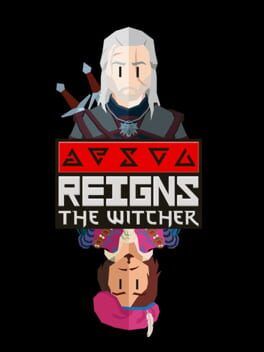
Reigns has always been about compressing sweeping stories into tiny, binary moments. Reigns: The Witcher leans into that harder than ever by reframing the entire game as Dandelion trying to spin Geralt’s messy life into singable ballads. Every run is one of his tellings or embellishments, every card a beat in a story he is half remembering and half inventing.
It is a deceptively simple setup that turns out to be almost the perfect lens for the Witcher universe. Sapkowski’s world has never been neat or canon-obsessed. It is a collage of borrowed myths, abrupt tragedy, filthy jokes, and moral no-win scenarios. Reigns’ shuffled micro-stories capture that tone with surprising precision.
You are still just swiping left or right, but those swipes carry a lot of Witcher baggage.
How Reigns bends Witcher lore without breaking it
Rather than retell the books or CD Projekt’s trilogy, Nerial treats the lore as a grab bag. Dandelion pulls in characters, monsters, and famous incidents, then freely exaggerates, contradicts, and remixes them. One run might open with a straight-faced take on a monster contract you remember from The Witcher 3, and five cards later you are arguing with a sentient drowner about performance royalties.
That chaos is the point. Cards are written as compact vignettes that can slot together in many orders, and those collisions create the feeling of a wandering, oral tradition. In one timeline, Yennefer is the imperious mastermind pulling Geralt across the chessboard of northern politics. In another, she is stuck in a petty squabble with Triss while Nilfgaard burns half the countryside off-screen. Dandelion can spin the same people into romance, farce, or tragedy depending on how the deck is shuffled.
Morality in Reigns: The Witcher is equally fluid. The four classic Reigns meters are reimagined around Witcher tensions: humans, non-humans, sorcerers, and your sense of professional witcherness. Decisions tend to please one or two groups while quietly sowing misery elsewhere. Side with a pogrom-leaning mob to maintain your human reputation and you risk alienating non-humans so badly that dwarven blacksmiths refuse to repair your gear. Take a sorcerer’s politically poisonous contract and your witcher meter might soar while the rest of the world curdles.
The genius is that the game rarely flashes a big red “evil choice” label. It trusts fan knowledge but does not require it. Knowing that witchers habitually take the least bad contract might steer you one way, but the consequences still land as surprises, not quiz answers about canon.
Standout narrative chains that show it off
Some of Reigns: The Witcher’s best work hides in long chains that only reveal themselves after multiple doomed runs.
One of the earliest and strongest involves a seemingly routine monster hunt in a backwater village. On your first attempt, you might accept a quick job from a terrified alderman, slay the beast, and pocket your coin. A few runs later, different cards reveal that the “monster” was driven mad by nearby sorcerous experiments. Keep swiping into that thread and it can branch into a mage cover-up, a non-human refugee crisis, or Dandelion rewriting the whole affair to make Geralt sound nobler than he really was.
Another memorable arc centers on the ever-fraught Geralt–Yennefer–Triss triangle. Rather than lock you into a single romance, the deck keeps revisiting their relationship from different angles. You might stumble into a run where you brazenly juggle them both and your meters fill on a tide of short-term charm. In a later telling, cards expose the emotional fallout and you find yourself desperately swiping to keep your sorcerer reputation from collapsing under the weight of their justified fury.
The game is at its sharpest whenever it lets outcomes bleed across those arcs. A hardline pro-human stance might make a later romance scene with a sorceress feel brittle and conditional. Sparing a cursed monster for moral reasons might unlock Dandelion’s wildly inaccurate “hero rescues innocent maiden” version later. You feel the Bard sanding off the ugly edges of what you actually did, and it works whether you know the source material or not.
There are missteps. A few chains lean too hard on wink-nudge references to the books or Netflix series and will fly over newcomers’ heads. But the majority of the writing strikes a rare balance: specific enough to feel Witcher, loose enough that you do not need a wiki open.
Does the Witcher combat experiment pay off?
In addition to the usual swiping, Nerial wedges in a light, rhythm-inflected combat minigame. When Geralt draws steel, cards give way to a side-scrolling one-lane fight where you dodge, strike, and cast signs to the beat of a minimalist soundtrack.
It is the least essential part of the package. At its best, fighting a Bruxa that freezes your movement or a poison-flinging manticore briefly sells Geralt as more than a talking head. You unlock new signs and small modifiers that add some texture. But it never evolves beyond a pleasant distraction, and repetition creeps in fast when the same handful of enemy patterns reappear.
Smartly, Nerial allows you to automate or skip combat entirely. For a game built around pacing, that option is crucial. Switch it off and Reigns: The Witcher becomes a lean, pure narrative machine. Leave it on and you get occasional bursts of tactile engagement that are just good enough not to wreck the flow.
PC vs mobile vs Switch: where should you swipe?
Reigns has always felt most at home on touchscreens, and that remains true here. That said, every platform has a distinct flavor.
On iOS and Android, the game feels almost tailor-made. Swiping cards on glass is instantaneous and physically satisfying, and the portrait-first layout keeps the UI tight and legible even on smaller phones. Icons for your four meters sit right at thumb level, and subtle haptic ticks on some devices give decisions a little weight. Load times are essentially nonexistent, so it is trivial to knock out a two-minute run while waiting in line.
Battery drain is modest, even on older Android hardware, and the game handles quick app swaps gracefully. Lose your place mid-run to a notification and you can pop back in without drama. The only drawback is that dense dialogue can be a bit squinty on smaller screens; the text scale options help, but players with tired eyes might prefer a tablet or another platform.
On PC, Reigns: The Witcher becomes more of a deliberate sit-down experience. Mouse or trackpad clicks replace swipes, and keyboard shortcuts let you flick choices left or right with quick taps. The card art and environmental backdrops look subtly sharper at higher resolutions, and the soundscape has more room to breathe if you are using speakers or headphones instead of phone drivers.
The tradeoff is that the interface feels ever so slightly over-enlarged when stretched to a 27-inch monitor. Reigns’ minimalist UI is built for intimacy; on PC there is a lot of empty space around your cards. Performance is naturally flawless, but the mechanical simplicity can feel thin if you are in a “PC RPG” mindset and expecting menus and stats rather than a dressed-up deck of decisions. It is still great, but it is better as a second-screen game to flick through between emails than the centerpiece of an evening.
Switch occupies a curious middle ground. Docked, it inherits some of the PC’s problems. Using the stick or buttons to choose left or right works fine, but it never feels as good as a swipe. The minimalist art does not really benefit from being blown up on a TV either, and manual text scaling is almost mandatory if you sit far from the screen.
In handheld mode, though, Switch recovers a lot of ground. Touch controls come back into play, and the game might as well be a slightly heavier mobile port. Performance on Switch is stable, saving and resuming are snappy, and the system’s sleep mode is ideal for the game’s “just one more tale” cadence. If you like curling up on the couch with something more focused than your phone but less committing than booting your PC, Switch handheld is a solid compromise.
Across all platforms, sessions naturally fall into ten- to twenty-minute chunks, with occasional longer marathons once you start chasing specific unlocks or endings. Mobile’s “whip it out anywhere” convenience still makes it the best fit for Reigns’ structure, but there is no outright bad version.
For Witcher diehards vs narrative card newcomers
Reigns: The Witcher is walking a tightrope. It has to satisfy people who can list every school of witcher armor and people whose only exposure to Geralt is a meme about bathtubs.
For hardcore Witcher fans, this is surprisingly strong fan fiction simulator material. The Dandelion-framed structure gives Nerial license to riff on almost every era and interpretation of the character while shrugging off minor contradictions. You are not ruining canon; you are exploring how one vain bard might retell it. Familiar monsters, political flashpoints, and fraught relationships surface constantly, and the writing is sharp enough that you can feel the designers poking at the same questions that animated Sapkowski: what does neutrality cost, who counts as a monster, and how much of Geralt’s legend is PR.
What you will not get is the sort of dense systemic RPG scaffolding CD Projekt builds its games around. There is no inventory management, no branching skill trees, no slow-burn, contiguous epic. If your attachment to The Witcher is deeply tied to open-world wandering and crunchy builds, this will feel like a snack rather than a meal, although it is a very well-seasoned one.
For newcomers who simply like narrative card games, Reigns: The Witcher stands comfortably on its own. You do not need to know why sorceresses dislike being called witches to enjoy the rapid-fire choices and their sometimes hilarious, sometimes grim consequences. The faction meters are introduced cleanly, the early cards on-board you gently, and deaths are fast and funny enough that you never feel punished for not understanding some bit of obscure lore.
If anything, the density of named characters might initially overwhelm absolute beginners. The game trusts you to infer relationships from context instead of pausing to deliver codex entries. But the underlying loops are familiar to anyone who has spent time with games like Cultist Simulator, Card Shark, or prior Reigns entries. As a card-driven story machine, this stands alongside the best of them.
Verdict
Reigns: The Witcher is not a reinvention of Reigns so much as a proof that the format can carry a much heavier narrative and tonal load than it gets credit for. By embracing the improvisational, contradictory spirit of Sapkowski’s world and hanging it on Dandelion’s unreliable narration, Nerial has found a way to make those familiar left and right swipes feel freshly risky.
The combat side dish is forgettable, and on big screens the minimalism can border on austerity. But treated as what it clearly wants to be a pocket anthology of alternate Witcher timelines, shuffled and reshuffled until you have seen every way Geralt can die or disgrace himself it is a rich, replayable little triumph.
Mobile is the ideal home, Switch handheld a close second, and PC a perfectly serviceable way to sneak in a few bad decisions between more serious tasks. Whether you own every Witcher omnibus or just want a new narrative card game to chew on, Reigns: The Witcher is well worth letting into your deck.
Final Verdict
A solid gaming experience that delivers on its promises and provides hours of entertainment.