
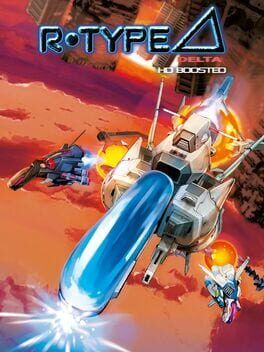
Review

By Headshot
A PS1 Legend Finally Crawls Out Of The Vault
For a long time, R-Type Delta was the great missing link of console shmups. The 1999 PS1 original was trapped on aging hardware and a long-gone PS3 download, spoken about in the same breath as Einhänder, RayStorm and Thunder Force V, yet basically unavailable. R-Type Delta: HD Boosted finally fixes that access problem. The question is whether this is a true revival or a glorified reissue arriving in a scene now dominated by meticulous, modernized love letters like Earthion and reference-grade compilations like Gradius Origins.
The answer lands somewhere in the middle. HD Boosted is a strong way to play a still-excellent shooter, but as a revival it feels oddly timid next to its contemporaries.
Visual Upgrade: Clean, Sharp, And Weirdly Conservative
Delta’s biggest hurdle in 2025 is that it is unmistakably a PS1 game built around chunky, low-poly 3D. HD Boosted gives it the expected treatment: higher resolution, cleaned-up textures, better anti-aliasing, plus a suite of filters and display options. Background geometry and enemy models look far crisper than on original hardware without losing their angular menace, and the grim bio-mechanical aesthetic still pops on modern screens.
The problem is that the upgrade stops at “respectable.” There is no meaningful retexturing pass, no newly lit scenes, no modern rendering flair. Compared to how M2 handled Gradius Origins or how Earthion weaponizes retro pixels with razor-sharp CRT simulation, Delta’s options feel perfunctory. You get toggles for smoothing, scanlines, different color balances, and multiple aspect choices, but little that reimagines the look. Some filters smear the image in a way that actively fights the game’s already-busy visuals.
Purists will appreciate how close this sticks to the PS1 original, and for archival purposes that restraint has value. But if you were hoping HD Boosted would make Delta visually compete with today’s bespoke retro shooters, it does not. It preserves. It does not enhance.
Control Feel, Input Lag, And Performance
Where it counts most, HD Boosted at least avoids catastrophe. Input latency feels tight across platforms, and on Switch and PS5 especially, the game responds crisply enough to support the series’ trademark pixel-precise dodging. Stage 3’s maze of metal jaws and Stage 5’s claustrophobic organic tunnels both demand strict confidence in your hitbox and movement; HD Boosted delivers that.
Performance is capped at the original frame rate and holds it well, which matters when boss patterns flood the screen. There are no noticeable hitches when the stage 2 battleship starts vomiting turrets and bullets at you. It feels like a very stable emulation layer with some modern polish on top, which is good, if not particularly exciting.
Still, when you compare it to the almost unnervingly responsive feel that M2 wrings out of Gradius Origins, you notice the difference. Gradius Origins feels obsessively tuned; Delta HD Boosted feels competently ported.
Ships, Force Pods, And Why Delta Still Matters
The best argument for R-Type Delta in 2025 is not technical, it is conceptual. Delta is where the series’ iconic Force pod and charge shot systems finally fused with a more flexible, build-like ship roster.
You get three core craft from the outset, each radically altering how you approach the game’s slow, puzzle-like stages. The R-9A2 Delta is the classic, conservative pick with a familiar forward-focused arsenal. The R-X is a risk/reward monster whose Force can absorb bullets and dish out obscene damage if you dare park it inside enemy hitboxes. The R-X Albatross, with its transformative Dose mechanic, turns careful grazing and meter management into a power-fantasy payoff.
These ships are not just different skins. Entire sections of stages feel redesigned depending on your choice. With the R-X, you’ll park the Force under ceiling turrets in stage 3 and let it chew; with the R-9A2, you hang back and weave between shots, relying on traditional charge blasts. That level of mechanical identity still holds up against Earthion’s loadout variety and the different routes and ship builds in the Gradius catalogue. Earthion might give you more granular weapon options, but Delta’s three primary frames feel distinct in a way that is instantly readable and satisfying.
HD Boosted does at least surface ship information cleanly and makes it easier to experiment with them thanks to save and assist options. Still, there is no new craft, no remix mode built around alternative pods, no fresh scenario that pushes these mechanics further. Compared with Gradius Origins adding a brand new Salamander 3 and rich training tools, HD Boosted is almost shockingly uninterested in celebrating or expanding Delta’s ship design.
Modes, QoL, And How It Treats New Players
R-Type has always built its reputation on cruelty, and Delta might be the series high point for that philosophy. Enemies snipe you from blind spots, hazards blend into the scenery, and bosses happily unleash patterns you could not possibly anticipate on a first attempt. In the PS1 era, that was part of the appeal. In 2025, it risks alienating anyone not prepared to treat a shmup like a memorization-heavy platformer.
HD Boosted tries to split the difference by layering on difficulty options, some assist toggles, and a modern suite of conveniences. You can tweak lives, credits, and in some configurations use features like save states or limited rewinds. There are scoring and training-style options that make practice less of a nightmare than it was in 1999.
The catch is that the game never really onboards new players into what makes R-Type tick. There is no guided tutorial explaining Force pod positioning, no visualizers for hitboxes or rank-like behavior, no dedicated challenge missions that teach specific techniques. By comparison, Earthion goes out of its way to be readable and immediately enjoyable even if you are not a grizzled arcade veteran, while Gradius Origins wraps a museum of information, training tools, and explanatory text around its games.
Here, you get a handful of modes largely centered on the original arcade-style run, some leaderboards, difficulty settings, and that is about it. If you already know and love R-Type’s sadistic logic, HD Boosted is accommodating. If you are trying to learn it, you are mostly on your own.
Stage And Boss Design: Timelessly Smart, Occasionally Unfair
Once you push through the wall, Delta’s level design is still an absolute clinic in tension and spatial awareness. Stage 1’s cityscape eases you in with broad, readable formations before narrowing into industrial corridors. Stage 3’s giant battleship is a slow, oppressive autopsy of weak points, forcing you to detach your Force, park it in vents, and strafe the exterior under heavy fire. The infamous stage 5, with its organic tunnels and vile growths, remains one of the most unpleasantly evocative bio-horror levels in a shmup.
These stages do not just throw more bullets at you. They weaponize terrain and enemy placement in a way that still feels unique compared to Earthion’s more kinetic, pattern-driven setpieces. Where Earthion revels in rapid-fire spectacle and modern bullet readability, Delta leans on suffocating corridors and gotcha traps that punish improvisation. It can be exhilarating when you finally route these sections perfectly, but the road there will absolutely turn some players off.
Bosses fare better. The grotesque biomechanical monstrosities, from the hulking armored crustaceans to disturbingly fetal cores, are still arresting designs even in scrubbed-up PS1 form. Their patterns are less about screen-filling curtains of bullets and more about controlled pressure and weird movement arcs. They are memorable, and the Force system makes even old fights feel dynamic as you experiment with different ways to anchor your pod.
HD Boosted replicates all this faithfully, but that is the keyword: faithfully. No boss rush mode with custom modifiers, no remix patterns, no optional extra stage that plays with 2025 bullet design. It is what you remember, in better resolution, and absolutely nothing more.
Comparing It To Earthion And Gradius Origins
Stacked directly against Earthion and Gradius Origins, R-Type Delta: HD Boosted feels like the least ambitious of the three.
Earthion is a brand new game that nails the fundamentals of shmup design while drenching itself in painstaking 16-bit craft. Its weapon systems encourage experimentation, its levels flow like a modern speedrun course, and its presentation is confidently stylish. It feels like a conversation with the past. R-Type Delta: HD Boosted, by contrast, is more like a preserved specimen in a glass case.
Gradius Origins, for its part, is the gold standard of retro curation: low-lag emulation, exhaustively documented options, training tools, and even new content in the form of Salamander 3, all wrapped in developer commentary and reverence for history. It treats its subject as something to be explored and learned from. Delta HD Boosted treats its subject as something to be replayed.
That does not mean it fails entirely. In terms of sheer mechanical identity, Delta still hangs with the best of them. The Force pod, charge shot, and distinct ship frames remain some of the most satisfying tools in the genre. Certain stages, particularly the battleship gauntlet and the collapsing, grotesque late-game corridors, offer a kind of oppressive, methodical challenge that you simply do not get from the more flowing rhythm of Earthion or the classic arcade loops in Gradius.
But if you are looking for a definitive modern package, HD Boosted comes off as undercooked next to its peers.
Does It Earn A Place In Today’s Retro-Shmup Scene?
For dedicated shmup fans and R-Type lifers, the answer is yes, with caveats. This is the best, cleanest, and most convenient way to play R-Type Delta, a game that still deserves its reputation as one of the smartest, nastiest horizontal shooters ever made. The ship variety is meaningful, the stage design remains top-tier, and the grim sci-fi mood survives the jump to HD without losing its teeth.
As a revival pitched to a broader modern audience, though, R-Type Delta: HD Boosted is frustratingly conservative. The HD work is solid but safe. The added modes and assists are useful but thin. There is no new content to entice veterans, no serious attempt at onboarding newcomers, and nothing in the overall package that approaches the thoughtful curation of Gradius Origins or the exuberant reinvention seen in Earthion.
If you already love R-Type, you should absolutely pick this up, accept its barebones nature, and enjoy having Delta on current hardware. If you are casually browsing the 2025 retro-shmup boom, however, Earthion and Gradius Origins are the games that feel like living, evolving tributes to the genre. R-Type Delta: HD Boosted is more like a beautifully restored museum piece: indispensable for historians and diehards, but not the crown jewel of today’s crowded shmup lineup.
Final Verdict
A solid gaming experience that delivers on its promises and provides hours of entertainment.