
Review

By Pixel Perfect
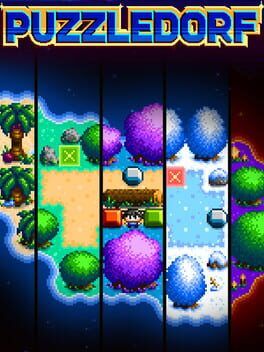
Image: IGDB
Store links: Puzzledorf on Steam
Xbox gets the newest puzzles first, and that sets the review question
Puzzledorf launched on Xbox on August 31, 2026 with Xbox Play Anywhere support, a $9.99 price listed in Xbox Wire’s embedded store panel, and new puzzles that developer Stuart Burfield said would be exclusive to Xbox players for the first two weeks. That is the clearest hook for a Puzzledorf Xbox review: this is a small, clean Sokoban style puzzle game arriving with a platform-specific content beat, but the real buying question is whether its block-pushing core has enough variety to hold up beyond the first few “I see it” solutions.
The confirmed pitch is refreshingly direct. Xbox Wire, in a post authored by Burfield, describes Puzzledorf as a chill and colourful puzzle game where players move coloured blocks onto matching targets. The developer’s own repost on the Stuart’s Pixel Games site repeats the same Xbox launch details, including Play Anywhere, a demo, new puzzles, new mechanics, achievements, colourblind mode, and added languages at launch. TheXboxHub’s launch coverage adds the wider framing: colourful Sokoban-style puzzles on Xbox and PC, retro visuals, Match 3 challenges, and Mirror Mode.
That cluster of details matters for expectation-setting. Puzzledorf is not being sold on spectacle, story, or mechanical chaos. It is selling craft: tight levels, readable rules, clean friction, and the old Sokoban pleasure of realizing the board was teaching you before you knew the lesson. On that front, the available source material points to a strong package. TheXboxHub’s review scored Puzzledorf 4/5 and described it as a particularly strong Sokoban package with a large supply of puzzles. Our assessment lands in a similar space, with one caveat: players who need constant audiovisual escalation may find its stripped-back discipline less exciting than its puzzle count suggests.
The block-pushing fundamentals are simple, but the design asks better questions
The base mechanic is easy to explain because Sokoban has always lived or died on simplicity. You push blocks, you cannot pull them back, and the map becomes a negotiation between space, order, and consequences. Xbox Wire’s developer post says Puzzledorf uses coloured blocks and matching targets, with multiple colours forcing players to juggle blocks around one another. Burfield’s example of a narrow passage with different coloured blocks on either side captures the design philosophy neatly: the puzzle is not about learning a long ruleset, it is about using a small ruleset until the board starts resisting your first instinct.
That is where Puzzledorf earns its place as a compact indie brain teaser. A weaker Sokoban style puzzle game often becomes box-shuffling homework, where the player knows the answer in concept but spends too long doing manual corrections. The better version makes every push feel like a commitment. Puzzledorf’s described design leans toward the latter. The developer says levels are prototyped quickly in Puzzlescript, a free engine used for block-pushing games, then shaped by questions about level form, block placement, and the moment a setup becomes unique. That process sounds modest, but it is exactly how this genre tends to thrive: not through volume alone, but through careful permutations.
TheXboxHub’s review snippet, which calls the game a “skyscraper” of puzzles, suggests the final release is generous rather than slight. The risk, then, is not whether Puzzledorf has content. It is whether the content has sufficient texture. Based on the confirmed mechanics, the answer is broadly yes. Colour matching, tight corridors, position swaps, and multi-block routing give the core enough pressure to create genuine pauses without drowning the player in opaque systems.
Ruins mode gives the package its strongest variety argument
The most important addition for anyone weighing this indie puzzle game review is the Ruins puzzle set. Xbox Wire says the new Ruins puzzles twist classic Sokoban by asking players to match three jewels of the same colour to clear them, with the level completed once all jewels are cleared. The key rule change is movement: when a jewel is pushed, it slides until it hits another object. That one adjustment does a lot of work.
Traditional Sokoban is about one-tile pushes and positional control. A sliding object changes the mental model. Instead of asking only “where do I want this block to end up,” the board asks “what will stop it, and can I build that stop without trapping myself?” Bringing Match 3 logic into that sliding space gives Puzzledorf a different rhythm from its coloured-target foundation. It also creates a clean variety layer without abandoning the language the player has already learned.
This is the right kind of expansion for a compact puzzle game. It does not sound like a random minigame bolted onto a box-pusher. It sounds like a related dialect. The player is still reading spaces, planning sequences, and managing irreversible moves, but the objective shifts from parking blocks to clearing colour groups. For puzzle fans, that distinction can be the difference between “nice idea” and “one more level.”
The time-limited Xbox exclusivity for these updates is also worth noting. Both Xbox Wire and Stuart’s Pixel Games state the new puzzles and mechanics would reach Xbox players first for two weeks before other platforms. That does not make the Xbox version permanently definitive, but it did make the launch window the earliest way to play the expanded content.
Difficulty looks tuned for approachability, not punishment
Puzzledorf’s most appealing trait may be its refusal to confuse cleanliness with softness. Burfield’s Xbox Wire post says accessibility is a top priority and that the game is designed to teach skills through play with a carefully tuned difficulty curve. That is a useful distinction for Sokoban fans. The genre can be brutal when it assumes too much too early, especially because one bad push can quietly ruin a board long before the player notices. A good curve keeps the humiliation low while preserving the satisfaction of a solved route.
The confirmed feature set supports that approach. Achievements were added for the Xbox experience. A colourblind mode is included. New launch languages include German, French, Spanish, Portuguese for Brazil, Japanese, and more, with additional languages planned after release according to the developer post. Those choices do not automatically make the puzzles great, but they do signal a game built to be played by a wider audience than the Sokoban die-hards who already know how to count deadlocks.
TheXboxHub’s 4/5 review verdict strengthens that reading, especially because its published share text praises the game as a large and strong Sokoban package rather than a thin novelty. For players who want a compact indie brain teaser, the likely fit is strong if you enjoy methodical problem solving and can appreciate incremental rule variation. If your puzzle taste leans toward narrative adventure, physics comedy, or fast improvisation, Puzzledorf’s grid-based restraint may feel too quiet.
The best buyer guidance is simple: try the demo if you are unsure about Sokoban pacing. Xbox Wire specifically said a demo was available ahead of launch, and this is the kind of puzzle design where ten minutes tells you a lot about whether the core loop clicks.
Presentation is clean and readable, with charm in restraint
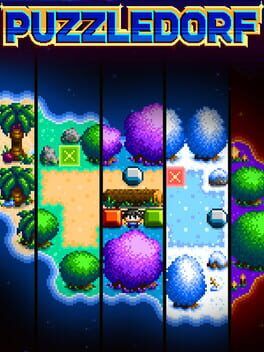
The source material frames Puzzledorf as colourful, chill, and retro-styled. TheXboxHub’s launch coverage mentions retro visuals, while Xbox Wire describes vibrant worlds in the visible store text excerpt and repeatedly emphasizes a colourful tone. That is enough to place the game’s visual ambition: readability first, personality second, clutter nowhere near the board.
For a Sokoban style puzzle game, that hierarchy is correct. The player needs to distinguish blocks, targets, jewels, walls, and movement paths instantly. The inclusion of a colourblind mode is especially important because Puzzledorf’s core rules depend on colour matching. Without an accessibility layer, that design could exclude players from the basic grammar of the puzzles. With it, the game’s clean visual language has a better chance of reaching the audience the developer says it was built for.
This is also where the game’s small-scale craft stands out. Puzzledorf does not need lavish animation to succeed. It needs boards that are legible at a glance and satisfying to solve after a second, third, or tenth glance. The available descriptions suggest that is the priority. The tradeoff is that players looking for dramatic environments or high-end presentation should not expect that kind of reward loop. The pleasure here is quieter: a well-shaped grid, a rule you think you understand, then a layout that makes you understand it better.
Audio and technical presentation are less documented in the provided sources. There are no sourced claims here about frame rate, resolution, soundtrack quality, or platform-specific performance. Given the genre, Puzzledorf is unlikely to be a technical showcase, but the responsible note is that the available material supports confidence in design and accessibility more than in any specific performance metric.
Value, platforms, and who should buy it
At $9.99 according to the Xbox Wire store listing excerpt, Puzzledorf sits in a sensible price band for an indie puzzle game. The value case depends less on production scale and more on puzzle density. TheXboxHub’s review suggests that density is a strength, calling out a supply of puzzles larger than players are likely to need, and scoring the game 4/5. Combined with the Xbox launch’s new Ruins content, achievements, Mirror Mode noted by TheXboxHub’s launch coverage, and Play Anywhere support confirmed by Xbox Wire, the package looks healthy for its price.
Platform availability in the supplied sources is clearest for Xbox and PC. Xbox Wire states the game was coming to Xbox with Play Anywhere on August 31, 2026. TheXboxHub filed its launch coverage across PC News, Xbox One news, Xbox Play Anywhere, and Xbox Series X News categories. That supports Xbox console and PC availability through the Xbox ecosystem, but the provided material does not include a sourced Steam page or a full platform matrix beyond those references.
As a Puzzledorf review for buyers, the recommendation is positive with a narrow target. Buy it if you enjoy Sokoban, compact rule systems, colour-routing puzzles, and a difficulty curve meant to welcome players before tightening the screws. Consider waiting for a sale if you need strong narrative dressing, flashy presentation, or a puzzle game that changes genre every few stages. The variety is real within the block-pushing lane, especially with Ruins and its sliding Match 3 logic, but it remains a disciplined grid puzzler at heart.
Puzzledorf’s best quality is confidence. It knows the size of game it wants to be, then fills that shape with enough mechanical wrinkles to avoid feeling disposable. For players searching “Puzzledorf puzzle game” or “indie puzzle game review” because they want a neat, focused brain teaser, this is an easy recommendation.
Score rationale
The gameplay score carries the review because the confirmed mechanics are focused, readable, and expanded intelligently through Ruins puzzles. The story score is modest because the supplied sources do not point to narrative as a meaningful pillar. Graphics land well for clarity, colour, and retro presentation, with the colourblind mode improving accessibility for a colour-based puzzle structure. Audio receives a conservative score because the provided material does not support detailed praise or criticism. Performance is also scored conservatively: no technical problems are cited in the sources, but there are no hard claims about frame rate, resolution, or platform comparisons.
Overall, Puzzledorf earns its recommendation by doing the small-game thing properly. It gives players a clean rule set, enough puzzle volume to justify the purchase, a new mode that changes how the board is read, and accessibility features that make its colour logic more inclusive. That is enough to make it one of the stronger compact Sokoban-style options on Xbox, especially for players who value elegant puzzle construction over spectacle.
Final Verdict
A solid gaming experience that delivers on its promises and provides hours of entertainment.