
Review

By The Completionist
From today’s vantage point, Puzzle Quest: Immortal Edition on Switch feels almost like a historical document. This is the physical, Limited Run–distributed version of a game that effectively invented the match-3 RPG back in the mid-2000s, now bundled up with its expansions and quality-of-life tweaks and pressed onto a cartridge at last. The big question is whether this relic still feels relevant in a world where Marvel Puzzle Quest, Gems of War and a hundred mobile pretenders have been strip-mined for your time and wallet.
The short answer is that the core design absolutely holds up. The longer answer is that Immortal Edition is both a generous package and an unabashedly old-fashioned one, in ways that will either delight or frustrate depending on what you want from a Switch puzzle RPG in 2025.
A relic, but a potent one
Puzzle Quest’s basic loop is still dangerously compelling. You match colored gems to gain mana, skulls to deal direct damage, and special tiles to build up money or experience. Every move feeds into an RPG-style loadout of spells, gear and passive bonuses. It is turn-based, so you constantly weigh immediate damage against setting up a huge cascade or denying the enemy a juicy four-of-a-kind.
What strikes you today is just how clean and readable this system is compared to modern hybrids. There are no energy timers, seasonal battle passes, or layered currencies designed to slow you down. You win fights, you get gold and experience, you upgrade your character and citadel, you grab new spells and companions. It all feeds back into that same match-3 board in a tight loop that still feels almost impossibly moreish.
The age of the design does creep in around the edges. The infamous “cheating” AI is still very much a thing. The game loves to drop skull cascades into the enemy’s lap, and it is not shy about punishing a single bad move with three extra turns against you. Playing Immortal Edition today, after a decade of more transparent, statistics-driven puzzle AI, makes its rubber-banding feel naked and sometimes spiteful. On higher difficulties, some encounters cross the line from tactically tense to outright obnoxious.
What Immortal Edition actually includes
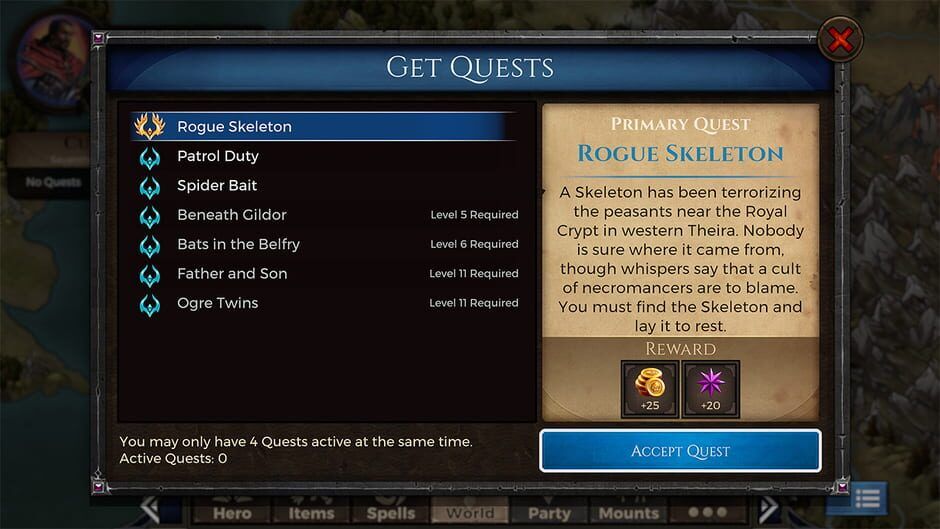
Immortal Edition is pitched as the definitive version, and on sheer content it earns that label. This is effectively Puzzle Quest: The Legend Returns, plus the collected expansions and extra campaigns, rolled together and cleaned up. You get the full original story campaign, the additional quests, extra classes, more companions, items, and a glut of optional side battles scattered across the world map.
If you are coming in fresh, the amount of content is frankly enormous. You can easily sink dozens of hours just experimenting with different classes and builds. The citadel system remains satisfying, encouraging you to invest gold into unlocking new spells, capturing enemies to add their abilities to your arsenal, and training mounts for passive bonuses. Immortal Edition’s additions fold into this without feeling bolted on, with new classes and quests that slot neatly into the existing power curve rather than blowing it up.
On Switch, this physical release benefits from the platform’s hybrid nature more than ever. Puzzle Quest was always a “one more battle before bed” sort of game, and here it thrives in handheld play. Quick sessions while commuting or lying on the couch are natural, and the game’s straightforward turn structure makes it easy to put down mid-quest and pick up hours later without feeling lost.
Quality of life: quietly modern, not transformative
If you remember the original handheld and console versions, you will notice a raft of small but welcome quality-of-life improvements in Immortal Edition. Menus are snappier and more logically laid out. Sorting gear and spells is less of a chore. Loading is brisk on Switch, and autosaving is more reliable. The UI has been modernized, with cleaner fonts, crisper character art and more legible icons.
These changes collectively make the game feel less creaky than a straight port would have. Swapping between spells during build tinkering is smoother, and checking enemy abilities before a fight is less buried in submenus. Progress tracking for side quests is clearer, which matters when the map starts drowning in icons.
Still, this is not some radical remaster. There is no reworked tutorial to better explain deeper mechanics, no real attempt to surface advanced builds or to tame the mid-game difficulty spikes. The sometimes laborious grind between quest tiers remains. If you bounced off the original because of streaky AI or repetitive fights, Immortal Edition does not meaningfully address those underlying complaints. It sands down rough edges rather than rethinking anything structural.
How it compares to Marvel Puzzle Quest and Gems of War
Placed next to modern match-3 RPG hybrids, Immortal Edition feels both refreshingly pure and undeniably old-school. Marvel Puzzle Quest and Gems of War have spent years piling on systems: daily events, live-ops content schedules, crossovers, currencies that gate character acquisition, and all the free-to-play cruft that comes with them.
By contrast, Puzzle Quest: Immortal Edition is a contained single-player RPG campaign on a cartridge. You pay once, you get everything, and there is a clear end point. There are no login streaks to maintain or shops to check every few hours. That alone is a big part of its appeal today. It feels like the genre’s original blueprint before monetization reshaped it around engagement metrics.
However, those later games have also evolved the formula in ways Immortal Edition does not match. Marvel Puzzle Quest’s character-specific abilities, team synergies and tile manipulation powers give its matches a more distinct tactical identity from fight to fight. Gems of War’s troop loadouts and kingdom bonuses encourage deeper theorycrafting and build experimentation. Once you are used to that kind of flexibility, Puzzle Quest’s single-hero structure can feel comparatively rigid.
Immortal Edition remains satisfying for build tinkerers, but the meta does not shift much once you settle on a favorite class. You are optimizing within fixed guardrails rather than exploring wild, emergent combinations. In other words, it plays like a self-contained RPG campaign rather than a living service with a forever-expanding roster. That will be a feature for some players and a drawback for others.
Presentation on Switch
Visually, the Switch version is crisp and functional more than exciting. The new higher resolution artwork does a good job of sharpening up what are, at their core, very old assets. Character portraits are attractive, spell effects are clear, and the gem board is easy to read in both handheld and docked modes.
Longtime fans may miss the grit of the original DS and PSP-era art. Immortal Edition’s shiny UI gloss and slightly generic fantasy aesthetic can feel bland compared to your rose-tinted memories of chunky sprites. That said, the practical benefits of clearer tiles and readable text on a modern screen far outweigh nostalgia.
Performance is rock solid. There are no meaningful hitches or stutters, even when big cascades are going off. Input latency is negligible, which matters more than you might expect in a game where misreading one diagonal match can hand the enemy a free turn. Touch controls would have been a nice bonus for handheld play, but the game sticks to traditional button input. It works fine, but given how natural swiping a match-3 board feels, the absence of touch support is a missed trick.
Audio is, frankly, one of the weaker parts of the presentation. The soundtrack loops quickly and leans heavily on generic fantasy mood pieces that blur together after a few hours. Sound effects do their job but never really sell the weight of your spells or weapon attacks. The audio design is not bad enough to be distracting, but it is miles away from the evocative soundscapes of more modern RPGs.
Physical release value
The question specific to this Switch edition is whether the physical cartridge is worth tracking down if you already own Puzzle Quest in some other form. If you are a collector or someone who prefers ownership untainted by digital storefronts and service closures, this is the cleanest and most future-proof way to keep the original match-3 RPG on your shelf.
For newcomers, the value proposition is strong. You get a huge, fully self-contained campaign with no microtransactions, no internet dependence and no need to worry about balance-altering patches. As a portable match-3 RPG that you can chip away at over months, this cartridge earns its place in a Switch library.
Where it becomes harder to justify is for lapsed fans who have already played Puzzle Quest: Challenge of the Warlords and its expansions to death across PSP, DS, 360 or PC. Immortal Edition’s content additions and quality-of-life tweaks are welcome, but they are iterative rather than transformative. This is very much the game you remember, warts included. If your nostalgia is more about the novelty of the formula than the specifics of its campaign, modern hybrids might scratch the itch in fresher ways.
Does it still feel fresh?
Surprisingly often, yes. The core tension of deciding whether to grab that tempting four-of-a-kind or deny your opponent a potentially devastating skull chain has not lost its bite. The way the RPG systems fold into the board, making every gem match feel like part of a bigger character build, is still clever and satisfying. There is a reason so many games copied this structure for years.
At the same time, Immortal Edition shows its age in pacing and repetition. Side quests blur into each other, difficulty can spike arbitrarily, and the storytelling is serviceable at best. If you try to mainline the campaign, fatigue sets in long before the credits roll. The game shines brightest as a slow-burn comfort title, something you return to for a few battles a day rather than binge over a weekend.
Verdict
From today’s perspective, Puzzle Quest: Immortal Edition on Switch is both a time capsule and a quietly essential release. As a physical package, it finally gives the pioneering match-3 RPG a permanent home on a modern console, with all its key content intact and a fistful of subtle quality-of-life improvements that make it far easier to live with than its original incarnations.
If you are completely new to Puzzle Quest or you have only known the genre through Marvel Puzzle Quest, Gems of War and mobile gacha-laden variants, Immortal Edition is absolutely worth your time. It strips the concept back to its single-player roots and delivers a focused, rewarding campaign that you own outright.
If you are a returning veteran hoping for a bold reimagining, temper your expectations. This is a respectful tune-up, not a reinvention. The AI still feels capricious, the grind still rears its head and the presentation is more workmanlike than exciting.
Even so, the underlying design remains strong enough that, cartridge in hand, it is hard not to get sucked into “just one more fight” all over again. Nearly twenty years on, Puzzle Quest’s particular blend of gems and gear has not lost its magic, even if the spellbook around it is starting to look a little worn.
Final Verdict
A solid gaming experience that delivers on its promises and provides hours of entertainment.