
Review

By Headshot
Premise and tone
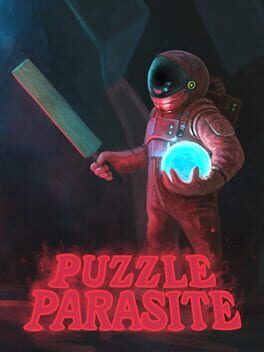
Puzzle Parasite drops you into a sterile sci‑fi facility and wastes little time before giving you two toys that define the experience: a telekinetic gauntlet for hurling energy cores around the environment and a surprisingly hefty cricket bat for smashing bots and redirecting projectiles. The hook is simple. You are an unwilling host to something alien, and every test chamber you clear inches you closer to the truth of who is really in control.
This is not a verbose narrative adventure full of monologues and collectibles. Instead, the story drips out between puzzles through brief voice lines, environmental hints, and the escalating weirdness of the test scenarios. It feels closer to Portal or The Talos Principle than a narrative‑first walking sim. The mystery is there, and it pays off, but it always sits in service to the puzzles rather than the other way around.
Telekinetic powers: the real star
The telekinetic mechanic is the spine of Puzzle Parasite, and it is handled with welcome clarity. You grab glowing energy cores at range, suspend them, and then whip them through the air to slot into sockets, trigger switches, or ricochet across the room to power distant devices. Early chambers keep it very straightforward, teaching you how arcs, velocity, and timing work. It almost feels like learning a physics‑based sport.
As the campaign deepens, the game folds in twists on that basic interaction. Cores start to carry different properties, like powering doors that only stay open while the core is in motion, or overloading circuits if you keep them docked for too long. Suddenly you are juggling several objects in mid‑air, plotting a sequence of throws so platforms raise and turrets fall just as you sprint past. The controls are responsive enough that it feels precise rather than fussy, and chambers are tuned so slight misthrows are recoverable rather than punishing resets.
The strongest compliment I can give the telekinesis is that it stays readable even when rooms become busy. Visual language is clean. Power lines are clearly color coded, interactable objects stand out from the background, and the feedback when you successfully route energy is punchy without being loud. You always understand what your tools can do, which lets the game focus on making you think about how to use them instead of wrestling with the interface.
The cricket bat: more than a gimmick
On paper, a cricket bat in a sci‑fi puzzle game sounds like a cute joke. In practice, Puzzle Parasite leans into it as a genuine second pillar. The bat handles like a melee tool first and a puzzle instrument second. You one‑shot fragile drones, swat away slow‑moving projectiles, and break glass panes that hide alternate routes or optional pickups.
Where it becomes interesting is in how the game combines the bat with telekinesis. Some chambers present you with cores that cannot be grabbed directly, forcing you to bat them across gaps and into moving receptacles. Others ask you to knock projectiles into field generators to toggle gravity, or time a swing so a ricocheting shot trips a chain of sensors behind you while you are already lining up the next telekinetic throw.
Combat never evolves into full arena fights, which is almost certainly for the best. Drones and turrets exist primarily as moving parts in environmental logic rather than as health‑draining threats. They create urgency and rhythm, giving you windows of safety to plan your next step. The bat’s hit detection is reliable and has a satisfying thud, and the game is smart enough not to base any solution on pixel‑perfect trick shots. When it asks you to combine swings with telekinesis, it focuses on understanding patterns, not on twitchy execution.
Puzzle design: brainteaser first, story second
If you are wondering whether Puzzle Parasite is a narrative adventure with puzzles or a puzzle game with a story, it lands firmly in the latter camp. Nearly every room is a self‑contained conundrum that teaches, twists, and then escalates a specific idea before moving on. Narrative beats sit at the edges of these chambers rather than inside them.
The campaign is structured as a series of themed test sectors. Each sector explores a slightly different flavor of problem solving: spatial routing of energy beams, timing‑based gate manipulation, or multi‑stage cause‑and‑effect chains where flipping one system inevitably breaks another. The best sections echo the elegance of classic Portal chambers, where the solution feels obvious in retrospect but completely opaque when you first step in.
Crucially, the game rarely relies on obscure logic. When you are stuck, it is usually because you have not fully internalized how two familiar elements interact, not because the designer hid a switch in a dark corner. Failed attempts teach useful information. That feedback loop keeps frustration at bay and makes those eventual eureka moments feel earned.
Does the core mechanic stay fresh?
Across the full campaign, Puzzle Parasite does a commendable job of refreshing its core toolset without drowning you in new gimmicks. Telekinesis and the cricket bat never change in how they control, but the situations in which you use them keep evolving. Midway through, rotating gravity fields and reflective surfaces join the mix, encouraging you to think in three dimensions. Late‑game puzzles layer timed sequences on top of that, asking you to pre‑plan a series of throws and swings so that the environment practically solves itself once everything is in motion.
There are a few soft spots. One or two late sectors lean too heavily on waiting for moving platforms to cycle, which can make retrying a failed solution feel sluggish. A couple of chambers flirt with repetition, presenting variations on ideas you have already seen rather than genuinely new twists. Thankfully, these are the exception rather than the rule, and even the weaker rooms avoid outright busywork.
What keeps things from going stale is the game’s sense of scale. The campaign is long enough to develop its ideas, but it wraps up before you feel like you are solving the same puzzle in a different skin. The last act in particular is strong, using everything you have learned in layered, multi‑room sequences that feel like practical exams for your telekinetic and batting chops. When the credits roll, it feels like a complete arc instead of an abrupt cut or an overstayed welcome.
Sci‑fi mystery and atmosphere
Story in Puzzle Parasite is intentionally minimalist, but it works. You are not inundated with logs and wall‑of‑text terminals. Instead, the game relies on tone, scattered clues, and the slowly shifting attitude of the facility’s overseers to build its mystery. The “parasite” in the title is not a simple monster, and as you descend deeper into the complex, the line between host and invader blurs in interesting ways.
Visually, the game uses clean, slightly retro‑futuristic environments punctuated by splashes of unnatural color whenever alien tech or parasitic growth shows up. It is not the most technically impressive PC game on Steam, but the art direction sells the contrast between clinical human design and organic intrusion. Lighting is especially helpful in guiding your eye toward interactable objects without resorting to intrusive waypoints.
The soundtrack stays mostly in the background, a mix of cold synths and low percussion that ramps up subtly during more complex puzzles. Audio cues are more important than the music itself. The whine of powered circuits, the crackle of an about‑to‑overload core, and the mechanical chirp of resetting devices all function as nonverbal hints. It is a smart way to help players without splashing explicit hints across the UI.
Verdict
Puzzle Parasite is not a narrative epic, but it is a sharp, focused first‑person puzzler with a memorable twist on familiar tools. The telekinetic gauntlet is satisfying from the first room to the last, and the cricket bat elevates what could have been a one‑note mechanic into something more kinetic and tactile. Its sci‑fi mystery is lean but effective, providing enough context and payoff to frame the puzzles without bogging them down.
If you come in expecting a puzzle‑flavored walking sim, you might find the story too sparse and the difficulty curve more demanding than you hoped. If, however, you are in the mood for a compact campaign of clever, physics‑driven challenges that keep evolving until the credits, Puzzle Parasite is absolutely worth picking up on Steam.
Final Verdict
A solid gaming experience that delivers on its promises and provides hours of entertainment.