
Review

By Night Owl
Overview
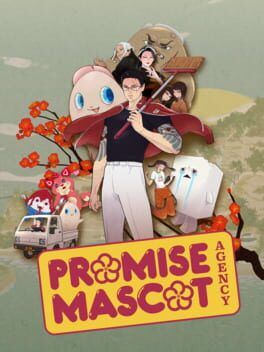
Promise Mascot Agency is what happens when a small-town revitalization drama, a b-tier yakuza redemption arc, and a mascot-management spreadsheet get trapped in the same cursed vending machine. Developed by Kaizen Game Works, it casts you as Michi, an ex-yakuza heavy banished to the nowhere town of Kaso-Machi and handed the keys to a failing mascot agency peopled with rejected, frequently grotesque mascots.
On paper, it is a dream pitch: a story-forward management sim about rebuilding a dying town through bizarre local mascots, solving conspiracies, and juggling the day-to-day grind of a small business. In practice, it is a game where the narrative ambition and character work significantly outpace the management systems meant to support them.
Narrative: Irreverent, dense, and surprisingly tender
Kaizen Game Works already proved with Paradise Killer that they can cram a setting full of eccentric weirdos and still make it cohere, and that talent is on display again here. Kaso-Machi starts as a joke, a one-Poppo convenience store town wrapped in urban legends about a yakuza-killing curse and economic doom. Over time it becomes a believable microcosm of hollowed-out regional Japan, where mascots and tourism campaigns are a desperate lifeline.
The mascots themselves are the standout. These are not just cute creatures in fuzzy suits. They are living, talking embodiments of half-baked branding pitches, local scandals, and cultural anxieties. One moment you are dealing with a depressed fruit mascot questioning their relevance, the next you are negotiating with a borderline-eldritch character designed to sell bottled water. The writing leans hard into absurdity but keeps enough human truth in each arc that the jokes land with a bitter aftertaste.
The script is heavy on banter and throwaway gags, yet it rarely feels disposable. Kaso-Machi’s residents have history, grudges, and secrets that feed directly into the game’s branching mysteries. Michi’s own past with the yakuza threads through everything, and the way the game slowly reconciles his violent history with his newfound role as the face of civic recovery is one of its best tricks.
This is very much a story-first game. Conversations are long, lore is thick, and the tone careens between black comedy, heartfelt melancholy, and earnest small-town optimism. If you liked the density and strangeness of Paradise Killer, you will feel at home. If you want clean, straightforward plot beats, the game’s insistence on overstuffing every situation with weirdness will be exhausting.
Branching mysteries and structure
Promise Mascot Agency is not a traditional linear campaign. You move through days, taking jobs, meeting residents, and gradually unpicking the multiple overlapping mysteries of Kaso-Machi: the economic curse, the town’s past misdeeds, and the reasons Michi was exiled here in the first place.
Choices typically manifest in which jobs you take, which residents you prioritize helping, and how you respond to the increasingly fraught political and economic pressures bearing down on the town. These choices feed into a branching structure that can lock you out of certain storylines or fast-track others. It is not a pure detective game, but there is enough investigative texture in interviewing NPCs, cross-referencing rumors, and following up on leads that it scratches that itch.
Where it stumbles is feedback. The game sometimes hides the consequences of choices too well. Hours later you discover that a seemingly minor decision has pushed a character arc into a cul-de-sac, but the game never really acknowledges the divergence. That opacity is thematically appropriate in a story about messy civic compromise, yet it can feel arbitrary from a player-agency standpoint.
Even so, the endings you can reach feel earned. Several routes bring the town to very different forms of salvation or ruin, and your relationship to both the mascots and the human residents can tilt from exploitative to genuinely collaborative. There is enough branching meat here to justify replays, especially if you are drawn to particular mascots or factions.
Small-town revitalization as game system
At the heart of the design is the idea that every job you send a mascot on, every favor you perform, and every investment you make should feed into Kaso-Machi’s slow crawl back from irrelevance. Conceptually, this is terrific: your business ledger becomes a civic heartbeat.
Mechanically, it is much thinner than it deserves to be. You drive around town, talk to residents, accept gigs, and assign mascots based on a small handful of stats. Complete jobs and you earn money, improve local businesses, and sometimes unlock new story sequences or town upgrades.
The problem is granularity. Most gigs blur into each other. There are occasional bespoke setpieces where a promotional stunt goes totally off the rails or collides with the town’s supernatural weirdness, and these missions are wonderful, but the majority of day-to-day contracts feel like checking boxes. The simulation of Kaso-Machi’s economy is painted with broad strokes. Businesses level up, the town visually improves, new mascots unlock, yet the underlying systems are too lightweight to convey the real tension of trying to keep a failing town afloat.
You never really have to make brutal tradeoffs. Rarely are you forced to choose between short-term profit and long-term civic well-being in a way that matters mechanically. The game gestures at that dilemma constantly in its writing but largely refuses to encode it meaningfully into the numbers behind the scenes.
Business management: Style over spreadsheets
As a management sim, Promise Mascot Agency is aggressively shallow. For some players this will be a welcome relief, for others a deal-breaker.
You hire mascots, level them up through use or simple upgrades, and match their personality and stats to specific gigs. Jobs might ask for a mascot who is cute, scary, or trustworthy, or one that meshes with a client’s brand. There is just enough friction here to engage your brain, but it rarely rises above the complexity of a mobile idle game.
The late-game additions highlight the problem. You eventually branch into contracts in other cities, dabble in merchandising, and juggle more mascots than you can reasonably follow. None of these layers have real teeth. They exist to justify more driving and more dialogue rather than to deepen the economic simulation. Once you learn the game’s simple logic, money stops being an issue and the thrill of “running an agency” evaporates.
If you come in expecting something like Football Manager with fur suits or even the systemic crunch of Two Point Hospital, you are going to be disappointed. This is closer to a narrative adventure with light, sometimes perfunctory job-assignment puzzles than a true management sim.
Moment-to-moment play and pacing
Day-to-day, you will be doing three things: driving around the compact open world of Kaso-Machi, talking to people, and assigning mascots to jobs.
Driving is surprisingly prominent. You spend a lot of time trundling mascot trucks through the town’s streets, soaking in its off-kilter ambience. The open world is small but full of odd landmarks and secrets, and discovering a new weird corner of Kaso-Machi is genuinely satisfying. The problem is that the game leans a little too hard on commuting as padding. There are long stretches where you are essentially a rideshare driver for side quests.
The pacing often sputters. Story arcs crescendo into delightful chaos, then you are snapped back to a long sequence of routine jobs and errands that feel like busywork. Some players will enjoy the lulls as downtime to vibe with the town. Others will feel like the game is deliberately wasting their time between the good bits.
Mascots and characters: The real reason to play
Where everything comes together is in the cast. The mascots are outrageous in design and personality, but their problems are painfully human. They wrestle with burnout, marketability, creative control, and being treated as disposable branding widgets. The way the game anthropomorphizes branding exercises into full-on existential crises is both funny and pointed.
The human side of the cast fares almost as well. Michi is a surprisingly grounded lead, a man defined by violence trying to learn how to sell joy. His relationships with the agency staff, local business owners, and the remaining yakuza threads are complicated and frequently touching. Even minor characters tend to get at least one moment where their cartoon facade cracks and you glimpse something raw underneath.
It is this blend of farce and sincerity that keeps the story compelling, even when the management elements are on autopilot. If you are here for character writing and flavorful dialogue, Promise Mascot Agency delivers consistently.
Platform performance and controls
Promise Mascot Agency is available on PC, Nintendo Switch, PlayStation, and Xbox, and that breadth comes with some tradeoffs.
On PC, performance is generally smooth, with quick loads and snappy transitions between scenes. Mouse and keyboard work fine, though the UI is clearly designed around a controller, and navigating job assignments with a pointer can feel slightly clunky.
Console versions lean into that controller-first design and feel natural to play, but they also expose some technical rough edges. Texture pop-in, occasional hitching while driving, and longer loads on Switch and the previous generation consoles break immersion just enough to be noticeable. None of it is catastrophic, but in a game that already struggles with pacing, extra loading friction does it no favors.
Across all platforms, the interface for managing mascots and contracts is serviceable short of elegant. Sorting and filtering tools are minimal, which becomes a real annoyance once your roster balloons. Thematically, being overwhelmed by mascots fits the premise. Practically, it is just poor usability.
Does the story-management balance work?
As a story-forward management sim, Promise Mascot Agency is lopsided. The narrative depth, irreverent tone, and branching mysteries carry the experience. The mascots are memorable, the town is distinct, and the overarching tale of small-town revitalization in the shadow of corporate and criminal interests is both funny and poignant.
The business mechanics, however, are too slight to fully support that story. They provide scaffolding, not substance. When the script is firing, the shallow management layer barely matters. You are here for the next wild mascot setpiece, not for carefully optimized revenue streams. When the story sags, the lack of systemic depth is impossible to ignore, and the game feels like a beautifully written visual novel that keeps making you do busywork.
If you approach it as a narrative adventure with light sim trappings, there is a lot to love. The world-building is sharp, the characters linger in your mind, and the branching structure gives genuine reasons to see different outcomes. If you demand robust management mechanics that meaningfully intertwine with the plot, Promise Mascot Agency is more style than substance.
Verdict
Promise Mascot Agency is a fascinating, frequently brilliant story trapped inside an undercooked management sim. Its mascots are unforgettable, its depiction of a cursed, economically strangled town is vivid, and its branching mysteries reward curiosity. But the business mechanics meant to make you feel like you are truly steering Kaso-Machi’s fate are too thin and repetitive to carry their weight.
For players who prioritize character-driven storytelling, oddball humor, and a strong sense of place, this is absolutely worth your time. Treated as a narrative-first game with some light booking-agency garnish, it shines. For anyone coming in hungry for a deep management sim about small-town recovery, Promise Mascot Agency flirts with greatness, then shrugs and sends another mascot to a barely differentiated promo gig.
It is a game I am glad exists, one I will be thinking about for a long time, and one that I really wish had been braver and more ambitious where it counts: in the design of its systems, not just the weirdness of its world.
Final Verdict
A solid gaming experience that delivers on its promises and provides hours of entertainment.