
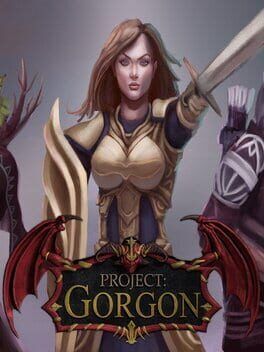
Review
By Apex
Introduction: An MMO That Refuses To Grow Up
Project: Gorgon has been the weird uncle of the MMO scene for nearly a decade, the one people speak about in hushed tones: “You can be a cow in that one.” After years in Early Access, it finally hit version 1.0 on January 28, 2026. No wipes, no relaunch fanfare, just a small indie project planting its flag and quietly saying, “We made it.”
Viewed next to modern theme-park juggernauts like Final Fantasy XIV and retail World of Warcraft, Project: Gorgon looks almost hostile to newcomers. The UI is ugly, the animations are stiff, the tutorial is more of a nudge than an on-ramp, and the game makes a point of not explaining itself. Yet under that crust is one of the most mechanically dense and genuinely surprising MMORPGs you can play in 2026.
The question is whether its eccentric, old-school sandbox design has aged into timeless depth or stagnant stubbornness.
The World And Progression: Curiosity As A Core Mechanic
If you come from modern MMOs, the first thing you notice is what isn’t here. There is no golden path, no quest tracker holding your hand from hub to hub. You start on a beach, poke at a few NPCs, and the game basically says, “Go figure it out.”
Progression is almost entirely skill based. There are no fixed classes. You level combat skills, tradeskills, and social skills independently, combining them into a build that is often as much about solving logistics as killing monsters. Sword and Psychology. Cow and Necromancy. Hammer and Fire Magic. Every combination has tradeoffs, and the more you play, the more you realize that the real meta is knowledge rather than gear.
Exploration is heavily rewarded. Open a random chest and you might find a recipe that permanently changes how you craft. Talk to an obscure NPC at night instead of day and they may reveal a secret quest or unlock a transformation. Accidentally eat the wrong mushroom and you might end up cursed or with a new sidebar skill. The game is constantly nudging you toward experimentation instead of checklist clearing.
In 2026, this design stands in sharp contrast to most MMOs, which frontload spectacle and smooth onboarding. Project: Gorgon is rough, but it makes the world feel like a place instead of a ride.
Combat: Functional, Deep, And Visually Stale
Moment to moment, combat is where the game’s age and budget show hardest. Animations are wooden, enemy telegraphs are rudimentary, and spell effects frequently look like they wandered in from 2005. If you need kinetic combat to stay engaged, this is going to be a problem.
Under the surface, however, the system is more intricate than it first appears. Each combat skill brings its own toolkit of resource management, debuffs, crowd control, and synergies. Psychology uses fear and mental debuffs, Battle Chemistry lets you drop golems and vials, Werewolf leans into brutal melee with night-based bonuses, and Druid wraps your rotation around environmental cycles and nature-themed DoTs.
The real hook is in building a coherent, two-skill loadout that plays off itself. Good builds weave together armor type, damage type, rage management, and mitigation in ways the game never spells out. Players discover powerful rotations by reading tooltips carefully, testing different cooldown pairings, and, inevitably, dying a lot.
Mobs hit hard, even early on. Level-appropriate content expects you to use your abilities with intent, manage your power and armor, and bring consumables. It feels more like an old EverQuest or Asheron’s Call dungeon crawl than modern faceroll questing. That said, some of the difficulty is simple clunk: uneven tuning, janky pathing, unclear combat feedback. Hardcore veterans shrug it off, but a new player used to crisp, readable combat could bounce hard.
Combat in 1.0 is not substantially different in look or feel from years past. Balance passes and new skills, including those added for the Statehelm region, deepen the sandbox, but they do not modernize the fundamental experience. Whether that is a deal-breaker depends entirely on how much you value mechanical depth over presentation.
Crafting And Non-Combat Systems: Where Gorgon Truly Shines
If combat is just “good enough,” the non-combat ecosystem is where Project: Gorgon earns its cult status.
There are dozens of non-combat skills and most of them matter. Surveying, Flower Arrangement, Mycology, Cheese-Making, Civic Pride, Poetry Appreciation, and many more intersect in ways that feel less like fluff and more like an actual economy of knowledge. Every recipe learned, every favor gained with an NPC, every storage slot unlocked feeds into your ability to function in the world.
Crafting itself is slow, demanding, and enormously satisfying if you like long-term projects. You are not dumping generic ore into a single progress bar. You are dragging ingredients from multiple regions, appeasing picky NPC trainers, running favor quests so specific merchants will even talk to you, and planning alts or builds around what you want to produce. The new cap of 100 and beyond for most crafting skills in 1.0 means genuine multi-month progression for enthusiasts.
Storage is its own meta game. There are more than 750 unlockable storage slots scattered across the world, frequently tied to reputation, specific towns, or even oddball tasks. Managing what lives where and how you shuttle goods between regions is almost a light logistics sim, and that friction is deliberate. Gorgon wants you to care about where you are, what you are hauling, and who you know.
In a market full of MMOs where professions are little more than menu clicking, Project: Gorgon’s crafting and life skills feel more like elaborate puzzles. They are also, frankly, incredibly inconvenient. If you love that, you will be lost here for months. If you just want to make a potion without treating it like a thesis project, this will feel like masochism.
The Quirk Factor: Curses, Cows, And Consequences
Almost everyone who has heard of Project: Gorgon knows one fact: you can be turned into a cow. That is real, and it is not the only curse. Lycanthropy, vampirism, and other transformations fundamentally alter your skill options, gear, and even social logistics.
The crucial part is that these systems are not just gimmicks. Becoming a cow is a persistent change with its own skill tree and mechanical identity. Werewolves are bound to day/night cycles and have different expectations in groups. Many curses and transformations are inconvenient enough that you have to plan around them, and reversing them can be a whole progression track in itself.
These weird systems give Project: Gorgon a personality almost no other MMO has. They also highlight its harshness. The game is happy to let you misclick your way into a lifestyle-altering status effect. Tooltips warn you, but they are walls of text. Modern design would wrap these in elaborate confirmation boxes and cinematic reveals. Gorgon shrugs and lets you live with your mistakes.
In 2026, that willingness to give players rope, even if they hang themselves with it, feels refreshing and occasionally infuriating.
Community And Social Design: A Small Town That Knows Your Name
One of the biggest strengths of Project: Gorgon 1.0 is its community. Years in Early Access filtered the playerbase down to people who are either deeply patient, deeply strange, or both. The result is a culture that generally skews helpful, talkative, and invested.
Chat is not a dead scroll of LFG macros and trade spam. People ask questions and get real answers. Veterans regularly ferry new players through dungeons, hand out starter gear, or explain obscure systems. The game’s design pressures help this along. Many NPC services are gated behind favor, so veteran crafters and traders naturally become social hubs. There is no dungeon finder teleporter flattening the world into anonymous instances, so grouping still involves talking and traveling.
Project: Gorgon is not busy in the way major MMOs are. If you log in at off hours, some zones feel sparse. But when you do encounter others, it has that old-school feeling of running into familiar names in the same haunts week after week. In an era where most MMOs quietly nudge you into solo queues, that is valuable.
Presentation, UI, And Performance: 1.0 In Name, 2012 In Looks
Let’s be blunt. Project: Gorgon is ugly by 2026 standards. The world is serviceable rather than evocative, character models are stiff, and lighting is flat. Environments have charm, but only if you can mentally fill in the gaps.
The UI is a clunky sprawl of windows, tabs, and tooltips. Keybind setup, camera options, inventory management, and chat configuration all feel like they escaped rigorous UX passes. Some improvements came with the lead-up to 1.0, particularly in the new starter flow and tooltips, but this is still firmly in “homebrew” territory compared to even mid-budget MMOs.
Performance is mixed. On decent hardware the game runs fine in most areas, but dense dungeons and populous towns can hitch. Some of this is engine age, some is the sheer volume of data being tracked. Loading into new zones can be painful, and there are still occasional weird bugs typical of long-running indie projects.
If visual fidelity and UI polish are non-negotiable for you, 1.0 will not change your mind. The game looks and feels like it escaped from the mid-2010s and then stood still. It is functional, not attractive.
2026 Relevance: Where Gorgon Fits Next To Theme-Parks And Other Sandboxes
In 2026 the MMO landscape is split between ultra-polished theme parks and scrappy survival or extraction sandboxes. Project: Gorgon does not fully align with either camp.
Compared to theme-park MMOs, it offers almost nothing they do in terms of cinematic questing, choreographed raids, or convenience. There is no battle pass, no transmog fashion treadmill engineered to maximize FOMO, no infinite daily checklist. Instead, it offers an almost contrarian fantasy of logging in, picking a small personal project, and working on it at your own pace.
Next to indie sandboxes, especially survival games, Gorgon trades building and territory control for systemic character growth. You are not claiming land or crafting bases. You are crafting a character and a web of relationships, both with NPCs and players. In this sense it feels closer to classic Asheron’s Call than to Albion Online or the latest PvP-centric title.
The downside is that Project: Gorgon is painfully niche. Its aesthetics repel as many people as its systems attract. Content cadence will never match games with large teams and live-service budgets, even though the devs insist that 1.0 is the beginning of a new era of updates rather than an endpoint.
Yet the game fills a space that almost nothing else does. If you want an MMO where:
You are treated like an adult who can read and experiment.
Your biggest progression barriers are knowledge and logistics instead of gear score.
The social fabric is built on necessity rather than matchmaking.
Then Project: Gorgon is uniquely positioned, even now.
Verdict: Who Should Play Project: Gorgon 1.0?
Project: Gorgon is not secretly a diamond in the rough that only needs a bit more polish to go mainstream. It is proudly, stubbornly rough. The graphics are outdated, the UI is archaic, the onboarding is inadequate, and some systems cross the line from “old-school” into “unnecessarily punishing.” If you need instant gratification, it will feel like a relic that escaped from an alternate timeline where usability guidelines never got written.
But if you can push through that first miserable, confusing handful of hours, there is a shockingly rich MMORPG underneath. The sandbox systems intertwine in clever ways, the crafting and life skills are deep enough to sustain entire playstyles, and the community is one of the most genuinely cooperative and curious you will find in the genre today.
In 2026, Project: Gorgon 1.0 is not for everyone, and it is not trying to be. It is for the players who still remember when MMOs were places to learn and tinker rather than rides to be consumed. If you count yourself among them, download the free Steam demo and give it an honest evening. If the game’s ugly face and abrasive first impression do not scare you off, you may find one of the last true sandbox worlds still evolving.
If they do, that is fine too. Project: Gorgon will be in its corner of the MMO universe, quietly growing stranger, deeper, and more itself.
Final Verdict
A solid gaming experience that delivers on its promises and provides hours of entertainment.