
Review

By Pixel Perfect
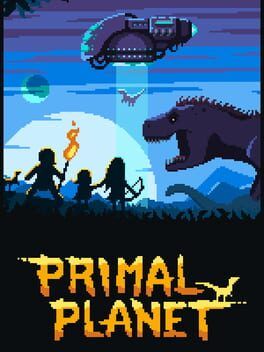
Image: IGDB
Store links: Primal Planet on Steam
A small prehistoric adventure gets a bigger spotlight
Primal Planet arrived on PlayStation 5 and Xbox Series X|S on October 28 after its PC release, according to Martin Cid Magazine, which also reported a $19.99 console price and a 10% launch discount for PlayStation Plus members and Xbox players at launch. That wider release is the concrete test for an unusually dense solo-developed game: Pretty Soon publishes it, Press Play Media identifies Seethingswarm as the developer, and Martin Cid names Albert van Zyl as the creator behind the Seethingswarm label.
That context matters for this Primal Planet review because the game is trying to braid together several systems that can easily fight each other. The sources consistently describe it as a Metroidvania, action platformer, survival game, and light RPG, set in a prehistoric world where humans and dinosaurs share space with hostile tribes and, eventually, an alien invasion. The risk is obvious. Survival crafting can slow a Metroidvania to a crawl, while Metroidvania gating can make survival systems feel like menu work stapled onto exploration.
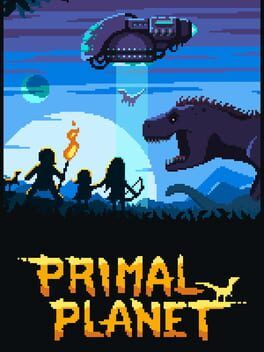
Primal Planet largely avoids that trap. Its strongest idea is that the prehistoric setting gives ordinary genre actions a fresh texture. You are not gathering resources because a crafting checklist says so; you are doing it because this world feels dangerous before it feels convenient. Press Play Media’s PS5 review notes that the journey begins when a Tyrannosaurus Rex attack separates an unnamed caveman from his family, and that the story is told almost entirely without dialogue through character animation, environmental storytelling, and staged scenes. That wordless approach gives the adventure warmth before the progression systems start stacking up.
Exploration works because supplies have consequences
The best stretch of the Primal Planet game is the part where every new screen asks a small practical question. Do you press forward with low health? Do you risk an encounter for bones, herbs, meat, wood, or stone? Do you spend resources now, or keep them for a deeper push? Press Play Media describes an interconnected world spanning forests, jungles, mountains, and extensive underwater areas, with secrets, hazards, and region-specific creatures. That structure gives the map the right Metroidvania pull: routes close, reopen, and loop back with new purpose.
The survival layer is strongest when it feeds that loop directly. Campfires are reported as safe places to rest, cook, save, craft, and invest experience. Eating raw meat can have negative consequences, according to Press Play Media, which turns a campfire from scenery into a valuable destination. Experience gained from combat, secrets, and other activities can be spent on health, attack power, movement, and underwater endurance. New abilities such as double jump and aerial dash then fold back into exploration in familiar Metroidvania fashion.
What helps Primal Planet stand out is that some crafted tools change how you read the environment. Press Play Media highlights spears that can be thrown into walls to create temporary platforms, while flaming spears can act as portable torches that clear obstructive vegetation. That is exactly where Primal Planet indie survival design feels most convincing. The game is not asking you to stop exploring so you can craft; it makes crafting part of the route-finding language. At its best, a spear is a weapon, a key, a platform, and a survival decision in one clean pixel-art object.
The creature threats give the world its pulse
Primal Planet’s prehistoric hook would fall flat if dinosaurs were only themed enemies with different hitboxes. The sources suggest something more lively. Seeking Tech, after playing the first hour on PS5 Pro with a review code from Pretty Soon, says the Jurassic world feels alive because dinosaurs, insects, fish, and other animals fill the levels, with creatures often attacking one another. That detail is important because it changes the player’s job from clearing rooms to reading ecosystems.
Press Play Media makes a similar point from the full PS5 review, noting that even small predators can be serious threats in the early hours. That creates a useful shift in tone. A small dinosaur can be a lesson, a warning, or a resource problem, depending on your supplies and position. The game appears to be at its least interesting when reduced to direct combat, and at its most interesting when it asks you to watch, prepare, and choose the safest ugly option.
Sino, the small dinosaur companion, gives those threats a softer counterweight. Seeking Tech reports that Sino follows the player and helps in combat, with a mini skill tree of its own. Martin Cid Magazine adds that a second local player can control Sino, turning the companion into a couch co-op role rather than a second copy of the main character. That is a smart fit for a game built around family and protection. The co-op player is smaller, faster, and connected to the hero’s movement through the shared adventure. Even in single-player, that companion concept gives the world a little companionship without breaking its survival tension.
The pacing is heartfelt, then uneven in the middle
Primal Planet’s story has a clean emotional engine: a caveman father trying to reunite with and protect his family after a T. Rex attack. Press Play Media says the setup later expands to include hostile tribes and an unexpected alien invasion, which pushes the premise from prehistoric family drama into stranger pulp territory. The key creative choice is silence. With almost no dialogue, the game leans on animation and environmental staging to communicate fear, affection, surprise, and loss.
That approach gives Primal Planet a distinct identity, but the pacing does not hold at the same level throughout. Press Play Media specifically notes that much of the narrative momentum sits at the beginning and end, leaving the middle portion feeling underdeveloped. That matches the structural risk of a hybrid game: once the opening emotional charge settles, the player is left with crafting, upgrades, traversal, and combat to carry the center.
Those systems are usually sturdy, but they can become busy. Press Play Media calls out the large number of upgrades as occasionally over-elaborate, with some improvements offering less practical value than others. That is the rare place where Primal Planet’s generosity works against its clarity. A leaner progression screen might have made the strongest abilities shine brighter. Instead, the middle hours can feel like a prehistoric backpack full of useful tools, neat curiosities, and a few upgrades you take because the menu is there.
A familiar genre mix gains identity through craft
The phrase Primal Planet metroidvania will tell genre fans the broad shape: exploration, ability gating, hidden paths, combat, backtracking, and mobility upgrades. The prehistoric setting is what gives that shape a different silhouette. Martin Cid reports that the store page uses the coined label dinovania, and while the term is cute, the better evidence is mechanical. Dinosaurs are not background decoration. Campfires, food, spears, underwater endurance, and creature behavior all contribute to the same sense of a hostile natural world.
The pixel-art presentation supports that identity. Martin Cid describes Primal Planet as a pixel-art metroidvania, while Press Play Media credits its expressive animations and environmental storytelling for carrying a wordless plot. That matters because small games often live or die by readability. In Primal Planet, the visual language has to communicate emotion, danger, interactable space, and puzzle logic without leaning heavily on dialogue.
There are limits to what the provided source material confirms about audio and technical performance. The available reviews and impressions emphasize visual life, movement, and systems rather than music, sound design, or frame-rate analysis. TheXboxHub’s review listing gives Primal Planet 3.5/5 and its shared description calls it a unique experience worth playing through, with the caveat that players should remember to quit out when taking a break. That warning points to a practical save or session-handling concern, although the excerpt does not provide enough detail to diagnose the exact issue. For buyers, the safest takeaway is to treat campfire saves and quitting properly as part of the routine.
Verdict: a rough-edged survival Metroidvania worth tracking down
Primal Planet earns its recommendation because its best ideas are connected. Exploration creates risk, risk makes resources valuable, resources reshape traversal, and the dinosaur-filled world gives those familiar loops a stronger personality than the genre labels suggest. This is the kind of indie game where the craft shows in small decisions: a spear that doubles as a platform, a campfire that becomes a planning point, a pet dinosaur that can be AI help or a second player’s role.
The caveats are real. The middle stretch reportedly lacks the same narrative force as the opening and ending. The upgrade system can sprawl. The source material does not support calling the audio or performance standout features, and TheXboxHub’s quit-out warning is worth respecting until players know exactly how the save flow behaves on their platform. If you demand a frictionless, combat-first action platformer, Primal Planet’s resource layer may feel like extra weight.
For Metroidvania players who enjoy route discovery, survival pressure, and expressive wordless storytelling, though, Primal Planet has enough identity to rise above genre familiarity. It is warm without being soft, dangerous without turning cruel, and clever in how it lets a prehistoric world shape the verbs you use. On PC via Steam, PS5, and Xbox Series X|S, this is a strong pick for players who want a compact indie adventure with teeth, heart, and a few rough scales.
Final Verdict
A solid gaming experience that delivers on its promises and provides hours of entertainment.