
Review

By Night Owl
Pragmata Review
After years of trailers, delays, and understandable skepticism, Pragmata finally has to answer the only question that matters: was Capcom actually building something worth the silence? The answer, happily, is yes. This final console launch build is not just a polished recovery from a long development cycle. It is one of Capcom’s strongest new IP debuts in years, a sci-fi action adventure that understands spectacle is meaningless without mechanical identity.
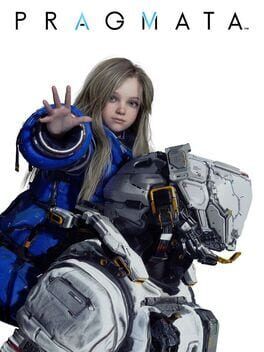
What gives Pragmata that identity is its partnership structure. Hugh handles movement, shooting, and immediate survival, while Diana transforms every combat encounter and environmental obstacle through a layered hacking system. On paper, that sounds like the kind of dual-character gimmick that can bog down the pace. In practice, Capcom threads it together with remarkable confidence. Combat asks you to think in two lanes at once, but it rarely feels overloaded. Instead, the game creates a satisfying rhythm where positioning, enemy pressure, and quick puzzle-solving all feed into each other.
That rhythm is the foundation of the entire experience. Gunfights are not pure character-action set pieces, and they are not straightforward third-person shooting galleries either. Enemies are often protected by systems or shields that Diana has to disrupt through brief but active hacking sequences, so every encounter gains an extra layer of urgency. The key is that hacking never feels detached from the action. Capcom is smart enough to keep the puzzle logic readable and brisk. You are not pausing the game to do homework. You are breaking defenses, opening weak points, and creating small windows of advantage while the battlefield stays dangerous.
This design could have collapsed if the controls or encounter layout were even slightly off, but the final console build is disciplined. Hugh moves with enough weight to sell the hostile, industrial science fiction atmosphere, yet he remains responsive when fights become chaotic. Diana’s contributions are just as important because she is not treated like a glorified keycard. She is the reason Pragmata stands apart from dozens of competent sci-fi shooters. Her hacking turns support mechanics into the central dramatic idea of play: two vulnerable figures surviving through trust, timing, and coordination.
That same partnership carries the story. Capcom pitches Pragmata as a mystery-driven science fiction narrative, and the good news is that it does not disappear into vague lore muttering. The storytelling is much clearer than the game’s early marketing suggested. There is still plenty of intrigue, and the lunar research station setting leans hard into sterile isolation, malfunctioning systems, and a quiet sense of human failure, but the emotional core remains legible. Hugh and Diana are not abstract symbols wandering through expensive concept art. Their bond develops with warmth and restraint, giving the game a human center that keeps the stranger sci-fi turns grounded.
Importantly, clarity does not mean overexplanation. Pragmata avoids the trap of drowning every scene in exposition. Instead, it gives the player enough context to understand the stakes, enough mystery to stay curious, and enough character interplay to care when revelations land. Some late story beats still flirt with genre familiar ideas about AI, corporate ambition, and technological collapse, but the execution is stronger than the premise alone would suggest. Capcom keeps scenes moving, and the writing generally trusts the player to follow along without turning every emotional beat into a lecture.
The delayed production clearly benefited the game most in pacing and presentation. This does not feel like a release shoved out to meet an old promise. It feels reworked, tightened, and repeatedly tested until the different design pillars finally clicked. The transitions between combat, traversal, environmental puzzle-solving, and cutscene storytelling are smooth in a way that usually only happens when a studio has had time to throw out weaker ideas. If there is a recurring criticism, it is that a few later encounters lean a little too hard on repeated hack-and-break patterns. Even then, the game usually introduces enough environmental variation or enemy combination changes to stop repetition from becoming a serious drag.
On console, Pragmata also delivers the kind of technical performance that makes the long delay easier to forgive. The current hardware finally gets a game that looks designed around its strengths instead of merely scaled up from older ambitions. The lunar facility is loaded with reflective surfaces, dense machinery, dramatic lighting shifts, and striking contrast between cold metallic interiors and uncanny futuristic displays. More importantly, the spectacle holds together during actual play. Performance is stable where it counts, image quality remains clean, and the game avoids the stutter and instability that so often undermine modern action releases on day one.
There are flashier games, and there are larger games, but Pragmata feels like one of the first wave of current-generation titles that really understands the difference between visual fidelity and hardware showcase design. The environments are detailed, yes, but they are also built to support the game’s mechanics and mood. Fast loading, dense effects during combat, and seamless shifts between exploration and set piece moments all contribute to the impression that Capcom made this for modern machines rather than merely shipping on them.
If you measure the result against the years of delay, the answer is surprisingly straightforward: yes, it paid off. Not because Pragmata is some impossibly revolutionary masterpiece, but because it arrives as a complete thought. The action is distinctive, the puzzle-hacking is genuinely integrated instead of decorative, the story is coherent enough to sustain its mystery, and the technical side supports the design rather than sabotaging it. That combination matters. Too many ambitious sci-fi games have one strong hook and three compromised systems orbiting around it. Pragmata feels balanced.
Capcom has made a game that earns its confidence. It does not simply survive the burden of years of anticipation. It uses that extra time to become sharper, stranger, and more convincing. As a debut for a new IP, it is impressive. As a console showcase for current hardware, it is one of the clearest signs yet that this generation is finally finding its identity.
Pragmata was worth the wait, and more importantly, it feels like it knew exactly what it needed that extra time to become.
Final Verdict
A solid gaming experience that delivers on its promises and provides hours of entertainment.