
Review

By Pixel Perfect
A sequel that actually grows up
Planet of Lana 2: Children of the Leaf picks up right where the first game left off, but it does not just repeat that gentle, three‑hour trek with a new coat of paint. Wishfully has built a sequel that feels like the same world seen a few years and a few scars later. It is bigger, louder and more mechanically involved, yet it still leans on quiet, wordless storytelling and the bond between Lana and Mui.
The risk is obvious. The original Planet of Lana worked because it was so compact: a short cinematic puzzle‑platformer in the Inside, Limbo and Oddworld lineage, built around clean environmental puzzles and some striking vistas. Children of the Leaf tries to broaden almost every part of that formula, from the size of its levels to the complexity of its puzzles and the intensity of its set‑pieces. The result is a sequel that is more uneven, but also more memorable when it hits its stride.
Deeper puzzles built around a stronger duo
The most meaningful evolution is in the puzzle design. The first game’s challenges were simple and readable, often boiling down to “move the crate, pull the switch, command Mui.” Planet of Lana 2 keeps that foundation but layers more rules on top. Lana is more athletic this time, able to clamber and swing with a bit more freedom, and Mui’s toolkit of abilities has expanded, so the designers can build more multi‑stage scenarios around them.
The average puzzle in Children of the Leaf involves several interacting systems rather than a single trick. You might be redirecting beams of light to grow and shrink alien flora, timing platform movements while Mui scrambles through vents, and coordinating stealth routes between patrolling hybrid machines. Many of these sequences hit that ideal cinematic puzzle‑platformer sweet spot where the logic is just complex enough that you feel clever the moment it clicks.
The flip side is that the game dips into trial and error more often than its predecessor. A handful of late‑game sequences flirt with fiddliness, especially when Lana’s more precise jumps intersect with moving hazards and strict timing windows. There are sections where the solution is clear but executing it against twitchy patrol paths or physics objects feels more tedious than tense. Rock Paper Shotgun and Polygon both call this out, and it is a fair criticism: the closer Planet of Lana 2 leans to an action game, the more obvious its slightly stiff animation and input buffering become.
Still, the balance overall tilts in the game’s favour. The midpoint stretch especially is packed with thoughtful, layered setups that make smart use of the expanded cooperative verbs. If you wanted more brains from a sequel, not just more spectacle, you get it here.
Set‑pieces that finally justify the “cinematic” label
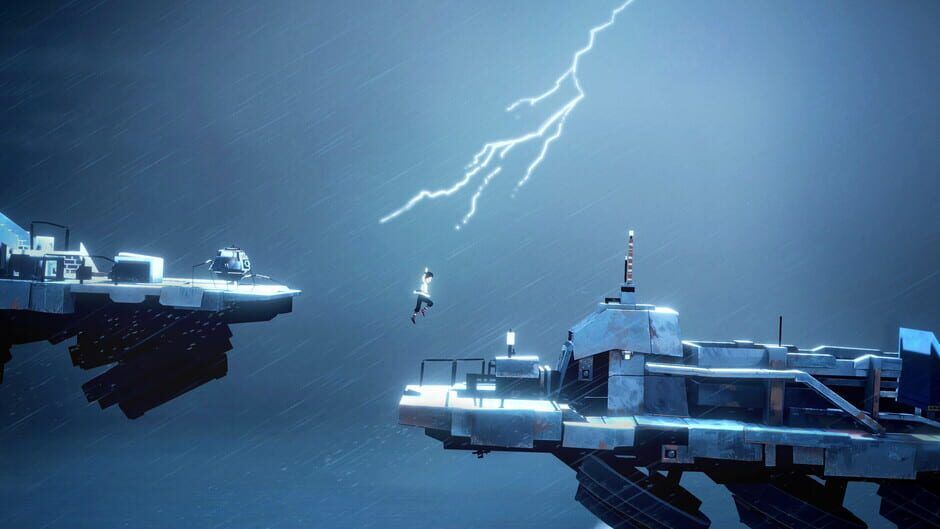
If the first Planet of Lana occasionally gestured toward cinematic spectacle, Children of the Leaf embraces it outright. Large sections are built around momentum rather than contemplation, from collapsing forest canopies to rail‑bound escapes under crackling alien searchlights. The camera pulls back or swings dynamically as structures topple and creatures stampede around you, and the level transitions dissolve almost invisibly into these moments.
Crucially, these sequences usually remain interactive rather than simple quick‑time events. You are still reading environments, still positioning Lana and Mui to clear obstacles or slip through gaps in patrol routes. The difference is pace. Where the original reserved its big chases for the third act, Planet of Lana 2 spreads them more evenly through its five to six hour run, using them as punctuation between slower, puzzle‑heavy areas.
This approach will not work for everyone. Some critics read it as a loss of intimacy, and there are stretches where the game is almost too eager to throw you into another chase before you have had time to absorb the last one. But when the pacing lands, it feels like a natural evolution for a story that is explicitly about a world tipping from uneasy calm into all‑out upheaval.
A wider, messier story that mostly holds together
The narrative scope is where Planet of Lana 2 takes its biggest swing. Where the first game was a tightly framed rescue story, Children of the Leaf widens the lens to show more of Novo, more of Lana’s people, and more of the invading machine ecology. There are new settlements and factions, new machine archetypes, and a stronger sense of the planet’s pre‑invasion history.
Dialogue remains sparse; the game continues to rely heavily on its invented language, expressive animation and environmental storytelling. Polygon highlights how this language work deepens the sense of place, and it pays off in several standout scenes where body language, framing and score do more than words could. The relationship between Lana and Mui, now seasoned partners rather than fearful strangers, has a lived‑in warmth that helps ground the story even as it grows more mythic.
That ambition comes at a cost. A couple of secondary characters feel underdeveloped, and some of the broader lore beats land as gestures rather than fully realised ideas. The middle hours flirt with bloat, looping through one too many “new region, new locals, new twist on the invasion” arcs before driving hard toward the finale. You can feel what Rock Paper Shotgun gets at when it suggests the sequel sometimes chases scale for its own sake.
Even so, the key emotional beats hit. The back half delivers a few gut‑punch moments that equal or surpass anything in the original, and the closing stretch ties the expanded stakes back to the small, wordless bond that has always carried this series.
Hand‑painted apocalypse, upgraded
Visually, Planet of Lana 2 is stunning on every platform. The hand‑painted aesthetic from the first game returns with greater variety and depth. You still get the silhouettes of strange megafauna shambling across far horizons, but now there are dense canopy interiors, glistening subterranean ruins and cities half reclaimed by both nature and machinery.
Foreground and background layers are richer and busier without turning into visual noise. Subtle parallax, particulate effects and shifts in colour temperature give each region a clear identity. Hybrid machine designs are a highlight, playing with unsettling combinations of organic locomotion and mechanical surfaces, and the animation work across both friend and foe sells the world as a living ecosystem rather than a static backdrop.
Audio design supports that visual ambition. The score leans on orchestral swells and quiet, melancholic motifs, carefully deployed so that the game’s quiet walks feel as considered as its climaxes. Ambient soundscapes vary dramatically between regions, and machine noises remain wonderfully unnerving, from distant metallic shrieks to the bassy rumble of walkers passing just out of sight.
Platform showdown: Switch 2 vs PC and current consoles
Children of the Leaf launches on essentially everything, but the experience does differ by hardware. The good news is that, unlike some cinematic indies that buckle outside of PC, Planet of Lana 2 is consistently solid wherever you play, with the Switch 2 port in particular avoiding the worst handheld compromises.
PC
On a capable PC, Planet of Lana 2 is the cleanest and most flexible version. Resolution scaling, higher quality shadows and textures, and the ability to lock a stable 60 frames per second or higher let the art really breathe. Steam Deck and other portables run it comfortably at 60 with modest tweaks, and full desktop rigs barely sweat, as multiple outlets note.
Control‑wise, both gamepad and keyboard setups feel fine, though this style of game is clearly tuned for a controller. The slightly deliberate acceleration on Lana’s movement is most forgiving here, where frame pacing is rock solid and inputs feel that bit snappier.
PS5 and Xbox Series X
On current high‑end consoles, Wishfully’s own comments and independent testing line up: PS5 and Xbox Series X target 4K at 60 frames per second. There are no separate performance or quality toggles to agonise over; the game just runs well. Image quality is crisp, and the painterly assets scale beautifully to large screens without nasty aliasing or texture shimmer.
Xbox Series S steps down to 1440p at 60 but maintains the same general visual profile. Across all three, load times are very short, which benefits a game that still uses quick respawns to soften its occasional one‑hit‑fail sequences.
If you care about seeing the art at its absolute sharpest outside of PC, these are the machines to use. Input latency feels fractionally tighter than on Switch 2, though the difference is most noticeable if you bounce between versions.
Switch 2
The Nintendo Switch 2 edition is surprisingly close to the big boxes. Nintendo Life calls it the “definitive console version,” and it is easy to see why. Resolution appears to sit comfortably at or near the screen’s native target in both docked and handheld modes, with a stable 60 frames per second in typical play. Dynamic resolution scaling kicks in more aggressively during the busiest set‑pieces, but the painterly style hides the softening well.
Compared with PS5 and Series X, the most visible cuts are in distant geometry and some lighting nuance. Far background elements lose a bit of fine detail, and volumetric effects are slightly pared back. Texture clarity is also a notch below, especially on larger TVs. In handheld use, those differences melt away, leaving you with an experience that feels almost one‑to‑one in motion.
Crucially, the port avoids the common pitfalls that sink many cinematic platformers on weaker hardware. Input timing is consistent, animation playback never hitchy, and audio mix parity is strong. Faster loading compared with the original Switch, plus the portable form factor, arguably makes this the best way to take in Children of the Leaf as a guided, storybook‑style journey.
Older consoles and first Switch
On PS4, Xbox One and the first‑generation Switch, the experience is a tier down but still playable. Frame rate targets 30 rather than 60 and can wobble during some of the larger set‑pieces, and resolution is visibly softer. The art direction continues to shine, but this is the one context where the tighter timing windows in certain sequences can be undermined by performance dips.
If you have any choice at all, Switch 2, PS5, Series X or PC should be your targets. The game’s careful animation and colour work deserve hardware that can keep up.
Verdict
Planet of Lana 2: Children of the Leaf is not the flawless, understated miniature that its predecessor was. It goes broader, it gets messier and it occasionally stumbles into the trap of sequel bloat. Some puzzles lean too hard on repetition and twitchy timing, and portions of the expanded lore feel sketched in rather than fully realised.
Yet taken as a whole, this is a confident, generous follow‑up that deepens the original’s strengths more than it erodes them. The cooperative puzzle design is smarter, the set‑pieces finally match the word “cinematic,” and the emotional highs are as affecting as anything in the first game. Marry that to strong technical execution across PC, current consoles and an excellent Switch 2 port, and you have one of the most accomplished cinematic puzzle‑platformers since Inside.
If you bounced off the first Planet of Lana entirely, the sequel’s bigger scale and slightly sharper teeth probably will not change your mind. But if you were left wanting more from Novo, more from Lana and Mui, and more from that gorgeous, mournful world, Children of the Leaf delivers exactly that, in a form that feels like genuine growth rather than simple repetition.
Final Verdict
A solid gaming experience that delivers on its promises and provides hours of entertainment.