
Review

By Parry Queen
Setting sail again
Pirates Outlaws 2: Heritage arrives on Steam Early Access as a follow-up to one of mobile’s sleeper-hit deckbuilders. The first Pirates Outlaws took the Slay the Spire template and filtered it through a pulpy pirate comic, with tight turn-based combat and a progression grind that got its hooks into you. Heritage is pitched as the bigger, smarter sequel that turns that loop into a full-blown naval campaign.
In its current Early Access state, Heritage already feels like a proper sequel rather than a reskin, but it is also very obviously mid-voyage. What is here is promising and often engrossing, especially for veterans, yet some balance rough edges and a still-growing feature set make this feel like a strong foundation rather than a finished treasure haul.
What’s actually in Early Access
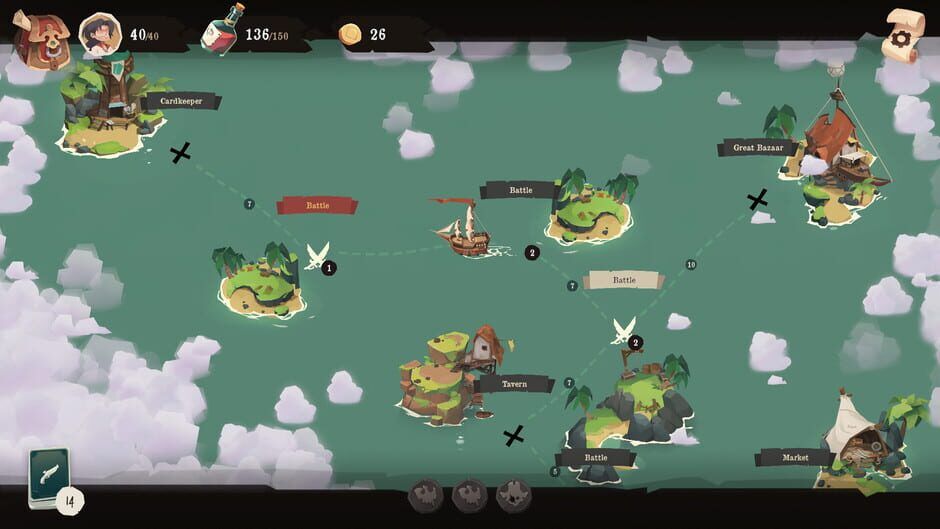
The Steam build gives you a full run-based structure with multiple map regions, a handful of playable pirates, and a healthy pool of cards and relics to experiment with. You chart a course across node-based sea maps, hopping between battles, events, taverns and shops before squaring off against chunky boss encounters.
The headline “Heritage” layer, which ties your expeditions together, is present but not yet fully fleshed out. You earn long-term resources and unlocks between runs, slowly expanding a legacy of upgrades, traits and new crew members. It works today as a clear sense of forward motion, but you can see the gaps where more islands, pirates and legacy perks are clearly intended to dock later in Early Access.
Several promised elements from the store page are either only partially implemented or not in yet. The broader roster of pirates feels thin for a sequel, the event variety repeats a bit too quickly on extended play, and the narrative framing is mostly flavor text rather than a true campaign spine. The developers have been upfront about using Early Access to add more characters, regions and heritage systems, so what you get right now is a compact but replayable slice of the full design.
Iterating on the original’s core loop
Moment to moment, Heritage still lives or dies by the same core loop that powered the first game: fight, loot, tweak deck, survive one more island. It remains a familiar mix of hand management, energy budgeting and positioning, but almost every element has been given a little twist.
Combat is snappier and more tactical. Enemies telegraph attacks clearly, status effects are easier to read, and the UI does a better job surfacing damage previews and block numbers than the first game ever did. The lane-based movement and different weapon ranges add a situational layer that was missing before, pushing you to think about where your pirate stands instead of just what they play.
Runs feel more curated too. Event nodes often offer multi-step choices with delayed consequences, rather than simple single-pick rewards. Shops are more generous with card removal and targeted upgrades, and boss fights lean harder into unique mechanical tricks instead of just being beefier normal enemies. Veterans will immediately notice how much less dead air there is between interesting decisions.
What is important is that the original’s lean, almost arcade-like tempo survives the extra systems. Heritage doesn’t smother the loop in overwrought narrative or ponderous progression bars. A fresh run still comes together quickly, and the average expedition length is comfortable rather than bloated, which is critical for a roguelike you’re meant to replay dozens of times.
Heritage, meta-progression and the long game
The new Heritage layer is the marquee addition and the piece that most clearly separates this sequel from its predecessor. Instead of just unlocking new characters and cards in a straight line, you are slowly restoring and expanding a broader pirate legacy. That takes the form of long-term upgrades, expanded card pools and new twists on existing pirates that only emerge over many hours.
Functionally, Heritage acts as a series of incremental nudges. You might increase starting resources for certain pirates, add rare cards into the discovery pool, or tweak the odds of finding specific relic types. None of it is dramatic on its own, but as your legacy matures, early runs feel less constrained and more expressive.
For returning players, this is a double-edged cutlass. On one hand, it gives you a satisfying lattice of long-term goals beyond just “beat higher difficulties.” On the other, some veterans will bristle at how much early power is locked behind Heritage ranks, since the original Pirates Outlaws was already grindy. If you bounced off that progression treadmill the first time, this sequel’s layered unlock structure might feel more like barnacles than meaningful growth.
New players are in a better spot. Heritage gently eases you into complexity, letting your card pool and relic variety expand as you become more comfortable with the fundamentals. Early runs are narrower but less overwhelming, and the promise of tangible upgrades after each failure helps soften the roguelike sting.
Balance for veterans vs new recruits
Balance in the Early Access build is a work in progress, and how much that bothers you will depend on which side of the plank you stand on.
Veterans will probably chew through the opening difficulties quickly. Some pirate archetypes and card synergies are already clearly ahead of the curve, letting experienced players snowball into near-untouchable builds with a bit of luck. On higher challenge tiers, however, certain enemy compositions can hard-punish specific playstyles in a way that feels more swingy than fair, especially when damage spikes outpace the defensive tools currently available.
New players, meanwhile, face a different set of rough edges. The tutorialization has improved over the first game, with clearer tooltips and better explanation of core mechanics like armor, status effects and lane positioning. Even so, there are moments where the game assumes an existing familiarity with deckbuilders and expects you to intuit why particular cards are strong or how certain relic synergies work.
The developers have signaled they are listening for feedback on balance, and this Early Access slice bears that out. Some card values already feel like they are on their second or third pass, and the viability gap between “good” and “trap” choices is narrower than in the early days of the original. Still, at this stage, expect occasional runs that live or die by the relic lottery and a few bosses that can feel overtuned for where they appear on the map.
Presentation and feel
Visually, Heritage is a clear step up from its predecessor without losing the thick-lined, comic-book identity. Backgrounds are more detailed, attack animations have extra punch, and the whole package looks sharper at desktop resolutions. Sound effects and music are serviceable, falling into the familiar sea shanty meets Saturday-morning-cartoon space, but they support the loop well enough.
On PC, the interface is mostly comfortable. Mouse controls are responsive, card text is readable, and key information is front and center. There are still a few awkward moments that betray its mobile DNA, such as nested menus and occasionally fussy tooltips, but this is a far cleaner first impression than the original made when it hit larger screens.
Performance in this Early Access build is stable on modest hardware, with no significant hitching during animation-heavy turns and only minor loading blips between nodes.
Early verdict
As an Early Access offering, Pirates Outlaws 2: Heritage is already a robust roguelike deckbuilder with a strong grasp of what made the original work. The core loop is tighter and more tactical, the meta-progression is deeper and more considered, and the new Heritage layer hints at a long tail of experimentation for dedicated players.
At the same time, the current content slice runs a little lean on character variety and event diversity, and balance clearly needs another round or three of tuning, particularly at the high end. If you are a returning captain hungry for more naval card combat, there is enough here to justify boarding early and watching the systems evolve. For newcomers, Heritage is already a solid entry point into the series, though you may want to keep in mind that some of the rougher edges are being sanded in real time.
If Fabled Game Studio can follow through on its roadmap of added pirates, regions and heritage options while keeping the balance in check, this sequel has every chance to graduate from promising voyage to modern roguelike staple when it leaves Early Access.
Final Verdict
A solid gaming experience that delivers on its promises and provides hours of entertainment.