
Review
By Apex
Premise: STALKER Online Meets Tarkov Lite
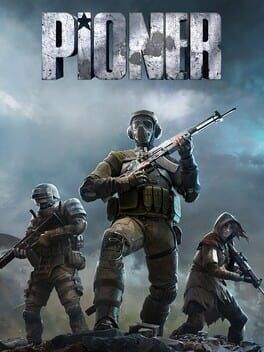
Pioner finally shuffles onto Steam after years of moody trailers promising a grim Soviet island, rotting facilities, and a blend of STALKER, Metro, and Escape from Tarkov. In broad strokes, the team actually nails the pitch. You spawn in a bleak military hub, rain cutting across rusted corrugated roofs, NPCs muttering in Russian while a haunting score hums underneath. It is a proper Eastern European apocalypse, not a theme park wasteland.
Structurally, Pioner sits somewhere between a hub based MMO shooter and an extraction game. The social base gives you vendors, crafters, quest givers, and a place to tinker with gear. From there you load into large outdoor sectors, instanced dungeons, and high risk "Shadowlands" style areas where death means losing the kit you brought in. On paper that is a compelling hybrid of Fallout 76 style questing with Tarkov like risk and reward.
In practice, the foundation is promising, but today it feels like a rough concept pitch that stumbled into Early Access before its systems, content, and netcode were ready.
Gunplay: Heavy, Punishing, And Weirdly Inconsistent
If you are here for guns, Pioner is half way to something special. Weapons have real meat behind them. Assault rifles buck hard, old shotguns slam your view, and time to kill is low enough that a sloppy peek can erase you. Ballistics feel weighty, with noticeable recoil patterns and a satisfying crack to most firearms.
Then the seams start to show. Hit registration online is inconsistent, especially in busier areas. Sometimes enemies soak entire bursts with no clear feedback, other times a stray round through foliage drops a target instantly. Desync in PvP is obvious. You will die around corners, trade kills that clearly were not trades on your screen, and occasionally watch an enemy teleport a few steps as the server catches up.
Enemy AI does little to sell the illusion of a dangerous island. Human enemies either lock on like aimbots across open fields or stand in the open, eating bullets without flanking or using cover properly. Mutants swing through overly long attack animations and can be kited easily once you learn their tells. That is particularly disappointing in an extraction adjacent game where unpredictable NPC behavior should be part of the tension.
The basic shooting feels better than many bargain bin survival titles, but if you are coming from Tarkov or even Hunt Showdown, you will immediately feel the lack of nuance in weapon sway, suppression, and tactical movement. Pioner wants to be hardcore, yet regularly undermines itself with janky AI and network issues that make skill expression unreliable.
Buildcrafting And Progression: Interesting Ideas, Thin Execution
Pioner leans hard into RPG progression. You earn experience for quests and kills, harvest materials from the world, and funnel it all into a web of weapon mods, armor sets, and perks.
On the positive side, there is genuine flexibility. You can build a heavily armored rifleman, a stealthy scout with suppressed weapons and mobility buffs, or a support focused player specced for healing and utility. Weapon modification is granular enough to let you chase specific recoil and handling profiles. Faction reputations unlock unique blueprints and cosmetic flourishes, and there is a clear loop of running jobs to push a particular build.
The problems are pacing and friction. Early hours are a slog of low tier junk and repetitive chores before the interesting gear starts to unlock. Crafting often demands rare materials from higher risk zones but the extraction balance is not tuned well enough to make that risk feel fair. Lose a couple of kits to server lag or buggy AI and you suddenly hit a wall of grinding the same safe routes for basic resources.
There is also a lack of build defining perks that meaningfully change playstyle. Many passives are minor numeric bonuses to recoil, reload speed, or damage. That can matter at high levels, but during Early Access the system feels statistically deep rather than mechanically expressive. Compared to Fallout 76, which at least lets you do wild, broken card combinations, or Tarkov with its deep attachment meta, Pioner is currently more about linear efficiency than creative builds.
Extraction And Looting: Tarkov Aspirations Without The Tension
A lot of Pioner’s marketing leans on extraction shooter DNA, and you can see the Tarkov influence clearly. The most dangerous zones operate on a bring your own kit model. You load in with gear you cannot magically recover if you fail to extract, you sweep for loot, complete objectives, then race to exits while watching your back.
Where Tarkov builds unbearable tension through ruthless lethality, tight audio design, and a deep simulation of armor, ammo, and injuries, Pioner currently feels like a cosplay of that experience. Armor and ballistics exist, but the feedback is muddy. Damage numbers and health chunks do not clearly communicate why you died in three shots this raid and survived a whole magazine in the next.
Extraction timers and exit design rarely produce the desperate last minute clashes that define the genre. Many runs devolve into quietly hoovering up loot from predictable routes, then jogging to a relatively safe gate. When PvP does happen, the previously mentioned netcode issues turn what should be heart pounding firefights into coin flips.
Compared with Fallout 76, Pioner’s zones are comparatively more dangerous and less forgiving, which is welcome, but Fallout’s world at least feels cohesive and reactive. Pioner’s instance based structure, recycled enemy placements, and limited environmental interactivity make its island feel more like a series of shooting galleries loosely tied together than a living ecosystem.
MMO Layer: Hub Chatter Over Real Presence
Marketing likes to call Pioner an MMO shooter, but in Early Access it behaves more like a session based co op shooter with a shared lobby. The hub can be busy at peak times, filled with players sorting inventory, emoting, and queueing for missions. Out in the world, though, you often feel alone outside of specific group activities and the higher risk extraction zones.
Quests are standard MMO fare. Fetch items, kill X mutants, escort a convoy, defend a point. Narrative framing and voice work carry some of that weight. The Soviet sci fi tone, mysterious experiments, and bleak humor give it a distinct flavor compared to the more pulpy Fallout 76. Unfortunately, quest structure rarely takes advantage of the setting. The same few enemy archetypes are recycled to exhaustion, with backtracking through familiar bunkers and swamps long before you are done with a region.
Group content fairs slightly better. Instanced dungeons and factory raids are where Pioner most closely hits the fantasy of a grim Tarkov style co op assault. When everything behaves, coordinated pushes through dark corridors with limited supplies can be thrilling. The issue is that those highlights are buried under repetition and technical problems.
Performance, Stability, And Technical State
This is where Pioner’s Early Access label bites hardest. Even on capable hardware, performance is unreliable. Dense areas around the hub and some indoor complexes frequently dip well below a comfortable frame rate. CPU spikes during firefights or when multiple players converge in one space are common. Settings tweaking helps at the margins, but there is no escaping the sense that the engine and netcode both need substantial work.
Bugs range from annoying to raid ruining. Enemies sometimes clip into geometry, making them impossible to finish off. Loot containers vanish or refuse to open. Extraction triggers fail to recognize that your squad is in the zone. Rubber banding and stutter appear more often during peak hours, suggesting server strain the team has not fully handled yet.
It is technically playable, and you can absolutely grind out progression if you are patient, but you are paying to be a network test subject as much as a player. Given the mixed Steam reception, a large chunk of the community is already airing the same grievances, citing server instability, bugs, and unfinished systems as core reasons for negative reviews.
Content Volume: Wide Map, Shallow Waters
In terms of raw hours, Pioner offers a decent chunk. The overworld sectors are sizeable, there are a handful of instanced raids and dungeons, and the faction system gives you reason to repeat specific mission types. If you treat it as a long term hobby game, though, the cracks appear quickly.
Enemy variety is limited. You will fight the same human factions and a narrow roster of mutants again and again. Many dungeons reuse art assets and encounter layouts. Faction missions lean on the same objectives with minor permutations. It all starts to blur together faster than it should in a game that wants to live or die on replayable runs.
Compared to Fallout 76 at a similar stage, Pioner has a stronger aesthetic identity but less playful mission design. Compared to Tarkov, its raid pool feels smaller and less intricately designed. That is not fatal in Early Access, where the promise of new regions and enemy types can carry some goodwill, but right now you have to really love the loop to push past the repetition.
Buy Now Or Wait
So, does Pioner’s current Early Access build justify buying in?
If you are a patient fan of grim Eastern European shooters, comfortable with jank and willing to be part of a long haul development, there is a real chance you will find a harsh, fascinating world here worth poking at. The atmosphere is excellent, core shooting is decent when the servers behave, and the hybrid of MMO questing with extraction risk is at least distinct from just copying Tarkov outright.
Everyone else should wait. The game’s mixed reception on Steam is not some overblown pile on. It reflects an experience where technical issues, weak AI, repetitive content, and half baked systems routinely smother the glimpses of brilliance. Right now, Pioner feels less like the next great extraction MMO and more like a very expensive public beta.
If the developers can stabilize performance, deepen enemy behavior, and add more high quality raids and story content, Pioner could grow into the cult classic its trailers have teased for years. Until then, treat it as an intriguing prototype. Put it on your wishlist, keep an eye on patch notes, and let other players stress test Tartarus Island for you.
Final Verdict
A solid gaming experience that delivers on its promises and provides hours of entertainment.