
Review
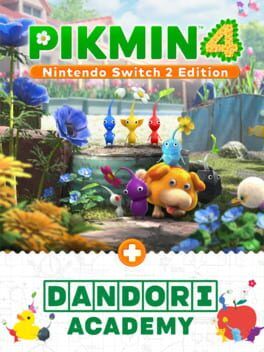
Image: IGDB
A paid upgrade built around patience, not spectacle
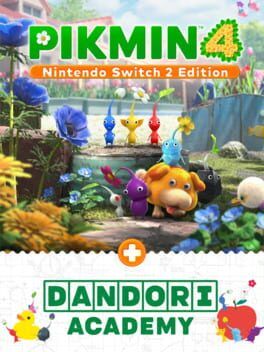
Pikmin 4 Nintendo Switch 2 Edition + Dandori Academy launches as a $9.99 / £7.99 upgrade, according to Nintendo Life and CGMagazine, with a release date listed by CGMagazine as November 12, 2026. The tension is immediate: this is a paid Switch 2 edition of one of Nintendo’s strongest late Switch releases, yet its largest new mode is being rolled out over time rather than arriving all at once.
The confirmed package is specific. Nintendo Life reports native 4K resolution while docked, GameShare support for Dandori Battles, and a new Howl-Out feature that uses the Switch 2 microphone to issue commands to Oatchi. My Nintendo News reports the resolution jump as 900p to native 4K in TV Mode and 720p to 1080p in handheld mode. Multiple outlets, including Nintendo Life and Nintendo Insider, report that the game remains at 30 frames per second rather than moving to 60fps.
That makes this Pikmin 4 Switch 2 review less about whether Pikmin 4 is still excellent and more about whether Nintendo has priced the upgrade correctly for the audience it is chasing. For newcomers buying Pikmin 4 Nintendo Switch 2 Edition as their first trip into the garden, the answer is much easier: the base adventure remains broad, accessible, and dense with content. For returning players, Dandori Academy has to do most of the work, and it does that work cleverly, if cautiously.
The visual upgrade is clean, but the frame-rate ceiling limits the wow factor
Pikmin 4 was already unusually well positioned for a hardware bump. Its tiny scale, oversized household environments and tactile material work made it one of the better-looking Nintendo Switch games before any Switch 2 update. Nintendo Life says the new version plays in native 4K while docked and looks even better on the newer hardware, while Nintendo Insider also highlights the 4K TV output as a strong fit for the game’s natural environments.
The upgrade is easiest to appreciate in the places where Pikmin 4 already excelled: close-up surfaces, foliage, water, toys, food, treasure and the readable chaos of a busy squad. My Nintendo News describes the result as a substantial resolution increase, with handheld mode rising to 1080p. That matters for a strategy game because visual clarity is mechanical clarity. When you are routing 60 to 100 tiny workers, tracking treasure paths and reading enemy positions, a sharper image reduces friction.
The caveat is equally clear. Nintendo Life, My Nintendo News and Nintendo Insider all report that Pikmin 4 remains locked at 30fps. Nintendo Life calls the missing 60fps boost disappointing, and that is the right benchmark for a paid current-hardware edition. Pikmin does not need 60fps the way a competitive shooter does, and My Nintendo News argues that the series has historically prioritized environmental detail and many on-screen Pikmin over higher frame rates. Still, Switch 2 editions have trained players to expect either a performance jump, new content substantial enough to compensate, or both. Here, the sharper image is real, but the upgrade does not redraw the feel of play.
The absence of mouse controls is stranger. Nintendo Life notes that the game lacks Mouse Mode despite Pikmin 4 using a stick-controlled pointer, and Nintendo Insider similarly calls the omission notable given how natural pointer-style control would seem for the series. For a game about fast selection, throwing, assigning and correcting errors under pressure, mouse input could have been a meaningful strategy-layer upgrade rather than a novelty. Its absence leaves the Switch 2 feature set feeling selective.
Dandori Academy understands Pikmin’s best skill test
Dandori Academy is the main reason this edition exists. Across the source material, its structure is consistent: players tackle challenge stages built around collecting treasure efficiently, practicing during the week and taking weekend exams for medals, scores and rewards. Nintendo Life reports that 72 stages are planned over the next year. Nintendo Insider says the mode offers easy, medium and high-end difficulty tiers, comparable online leaderboards, and a reward system tied to performance points.
As strategy design, the premise is exactly where Pikmin 4’s systems are most expressive. The main campaign is generous by series standards, and CGMagazine notes that Pikmin 4 gives players more room to proceed at their own pace than the earlier entries with harsher clocks. Dandori Academy re-centers the pressure without forcing it into the campaign. It asks a clean question: how much better can your routing become when every wasted second is visible?
That is where the mode earns its place. Video Chums praises the challenge layouts for pushing players to think quickly, build shortcuts, recruit Pikmin efficiently and coordinate Oatchi with the squad. Nintendo Insider describes stages with limited Pikmin counts, treasures, enemies, bosses and strict time pressure. Those details matter because Dandori is not raw speed. It is sequencing. The strongest runs in Pikmin are economic puzzles: which object moves first, where Oatchi creates leverage, when a squad split is worth the risk, and whether an enemy should be cleared now or bypassed until the route has produced enough carrying capacity.
For returning players, this is the appealing part of the package. Dandori Academy gives Pikmin 4 an arcade spine that the base campaign only occasionally foregrounds. It turns the game’s soft adventure structure into a repeatable optimization loop. If you enjoy shaving days from the campaign, perfecting Dandori Battles, or replaying challenge maps until the route clicks, the academy is a natural extension rather than a tacked-on distraction.
The monthly rollout weakens the launch-day value
The problem is not the idea of Dandori Academy. It is the pacing of access. Nintendo Life reports that only six new challenges are available each month, meaning players who clear or ace them quickly can be left with weeks before the next slate. Nintendo Insider reports the monthly set as two challenges from each difficulty level. That makes the headline number of 72 stages accurate according to the covered reviews, but it also makes launch value more conditional than the marketing figure might suggest.
This staggered format has a strategic upside. It gives Pikmin 4 a reason to return to the conversation across the year, and the exam structure suits a community built around scores and routing discoveries. A monthly cadence can create a meta, where players compare routes, identify optimal starts, and gradually improve as the academy changes its map pool. For players who treat Dandori as a seasonal routine, that cadence could be healthier than dumping every stage at once.
But as a buyer’s guide, the tradeoff is hard to ignore. If you are paying for the Pikmin 4 upgrade on day one because you want a large expansion-sized addition, Dandori Academy may feel thin at launch. Nintendo Life’s criticism that the mode feels slight early on is persuasive because it comes from the structure itself, not from the quality of the stages. Six challenges can be excellent and still leave returning players wanting a deeper immediate catalogue.
This is where the upgrade feels more like a long-tail service layer than a traditional expansion. That does not make it bad. It does make timing important. The player who checks in every weekend may get better value than the player who wants to binge the full addition in a single week.
Oatchi voice commands and GameShare are welcome, but secondary
The Switch 2-specific extras are pleasant, but none changes the strategic foundation. Voice commands let players issue spoken instructions to Oatchi through the Switch 2 microphone. Nintendo Life describes the feature as sweet but occasionally inconsistent, while Vooks says it can be responsive for simple commands like Ride and Charge but also sensitive enough to trigger prompts without deliberate input. Vooks also notes that sensitivity can be adjusted.
That matches the likely place for the feature in serious play. Voice commands are charming, especially for younger players or for anyone who enjoys treating Oatchi like an actual companion, but reliability is everything in Dandori. A false trigger or missed instruction under a clock can cost a medal route. For casual exploration, the feature adds personality. For optimization, buttons remain the safer control economy.
GameShare support is more practical. Nintendo Life reports GameShare support for cross-console Dandori Battles, and Video Chums notes that friends can play through GameShare and GameChat even if only one player owns the game. That is a valuable social addition because Dandori Battles have always been strongest when they create immediate pressure between two planners. It also makes the edition easier to recommend to households or friend groups where one copy can seed multiplayer sessions.
Vooks also points out that some additions associated with Pikmin 4’s current state were already added before this Switch 2 edition, including a Field Camera, Decor Pikmin links inspired by Pikmin Bloom, and Relaxed and Fierce difficulty settings. That distinction matters. New buyers get the full modern package, but returning Switch owners should not mistake every quality-of-life or side feature for paid Switch 2 upgrade content.
Newcomers get the best version of a generous strategy adventure
For a first-time player, Pikmin 4 Nintendo Switch 2 Edition is easy to recommend. The base game’s appeal remains intact: approachable real-time strategy, layered exploration, creature management, treasure hunting, rescue objectives and optional efficiency challenges. Video Chums emphasizes that the original experience remains intact and broadly accessible, with a laid-back campaign and optional challenge for players who want to push harder.
The important point for newcomers is that Pikmin 4 is not an intimidating strategy game in the traditional PC sense. It teaches through small tasks, then gradually asks players to coordinate more systems. Oatchi gives the campaign a flexible tactical anchor, and the day structure creates soft planning without the sharper survival anxiety associated with earlier Pikmin entries. CGMagazine’s read that Pikmin 4 lets players go at their own pace while still emphasizing preparation captures the design balance well.
Switch 2 improves that first impression mainly through image quality. A sharper handheld mode and native 4K TV output make the miniature world easier to parse and more attractive to inhabit. The lack of 60fps is a disappointment, but it does not undercut the game’s central appeal for a new player in the way it might for a reflex-heavy action game.
Dandori Academy also lands better if you have not exhausted Pikmin 4 before. Instead of feeling like a small add-on after a completed campaign, it becomes a training gym alongside a large adventure. Newcomers can finish a few story days, jump into academy practice, learn better routing habits, then bring those lessons back into the main game. In that context, the monthly rollout feels less restrictive because the base campaign is still doing so much of the heavy lifting.
Score and verdict
Pikmin 4 Nintendo Switch 2 Edition + Dandori Academy is a better entry point than it is an essential return ticket. The upgrade delivers a sharper, cleaner version of an already excellent game, and Dandori Academy is conceptually the right new mode because it celebrates Pikmin at its most tactical: route planning, multitasking, time pressure and efficient use of Oatchi.
The score is held back by the parts Nintendo left on the table. A paid Pikmin 4 upgrade without 60fps is understandable but disappointing. A paid Switch 2 Pikmin release without mouse controls is harder to defend, especially when the series’ pointer-based command style seems so compatible with the feature. The academy’s 72-stage promise is attractive, yet the six-per-month rollout makes the launch package feel slimmer than the total number suggests.
Returning players should buy now if they love score chasing, Dandori routing and the idea of checking in across the year. If you mostly want new story content, new areas, new enemies or a transformed campaign, wait until more academy stages are available. Newcomers can start here with confidence. They get the strongest version of Pikmin 4, plus a challenge mode that can turn good habits into mastery over time.
Final Verdict
A solid gaming experience that delivers on its promises and provides hours of entertainment.