
Review
By Story Mode
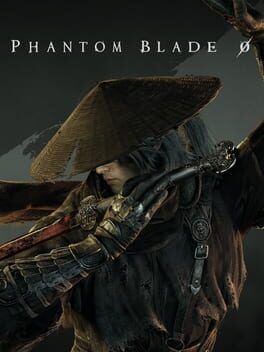
Image: IGDB
Store links: Phantom Blade Zero on Steam
A major action debut lands with one clear tension
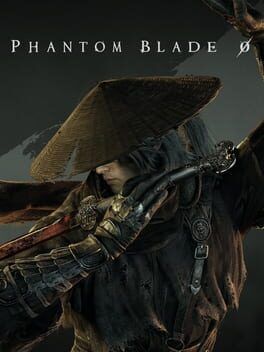
Phantom Blade Zero arrives with one of the strongest early critical receptions of 2026. OpenCritic lists S-GAME’s action RPG in the 100th percentile of scored games, with multiple outlets posting 9/10 reviews and DualShockers listed at 9.5/10. Push Square calls it one of the PS5’s strongest action games, PCGamesN describes it as a new action RPG benchmark, and IGN reports spending 50 hours with a game whose combat matched its long-running promise.
That consensus is the useful starting point for this Phantom Blade Zero review because it also exposes the central tradeoff. The game’s swordplay, boss choreography, weapon variety, world design, art direction, and music are being praised with unusual consistency. Its storytelling, opening structure, camera, traversal restrictions, bugs, and occasional performance issues are also recurring points of criticism across the supplied reviews.
The result is a game that seems to deliver where action players most need it to deliver. S-GAME has been clear, according to PCGamesN, that Phantom Blade Zero is primarily an action RPG rather than a Soulslike. The distinction matters in practice. Sources describe a game that borrows the tension of reading enemy patterns, guarding space, and surviving punishing boss phases, but frees the player from the more restrictive stamina economy associated with many Soulslike encounters.
On PS5, based on the reviews available, Phantom Blade Zero is best understood as a high-speed wuxia action RPG with Metroidvania structure, cinematic boss staging, and enough rough narrative connective tissue to make the first hours harder to parse than they should be. Its promise was style. Its strongest achievement is that the style appears to be backed by systems.
Combat gives Phantom Blade Zero its pulse
The strongest thread across every source is Phantom Blade Zero combat. Push Square reports that normal attacks, dodges, and parries do not consume stamina, while continuous blocking and heavy attacks do. That single design choice reshapes the feel of the game. Instead of rationing every step and slash, Phantom Blade Zero pushes players into motion, asking them to stay aggressive, react cleanly, and turn defense into attack.
Press Start explains the system through Sha-Chi, the resource that powers heavy actions and guarding while also functioning as an enemy pressure meter. Parrying correctly chips away at an opponent’s Sha-Chi. Emptying it creates a Guard Break, opening a window for punishment. Blue-flashing attacks can be parried, while red-flashing attacks demand a dodge. PCGamesN also highlights those blue and red tells, noting that successful defensive timing slows the action and lets Soul shift position with cinematic force.
That structure gives Phantom Blade Zero gameplay a strong rhythm: read, answer, break, unload. It could have become repetitive if enemies behaved similarly, but the supplied reviews repeatedly cite enemy variety, weapon variety, and encounter design as the difference-maker. Push Square points to two primary weapons plus Phantom Edges, limited-use tools that can destroy shields, strike at range, launch fire, or alter a fight’s tempo. Press Start adds that switching primary weapons can restore Sha-Chi when its cooldown allows, encouraging rotation instead of attachment to a single safe option.
The appeal is not only speed. It is decision density. Heavy attacks feed Power Surge techniques, Phantom Edges create tactical interruptions, parries build pressure, and dodges create survival lanes against attacks that cannot be blocked. The game gives Soul the visual grace of a martial arts hero, then makes that grace mechanically legible. For players who want action that feels expressive without turning into button-mashing, Phantom Blade Zero appears to hit the rare middle ground.
Boss fights turn spectacle into a test of attention
The boss design is where Phantom Blade Zero’s style has to prove it can carry weight over dozens of hours. On that front, the source material is unusually emphatic. IGN’s review headline emphasizes memorable boss fights and compelling combat. Console Creatures praises spectacular bosses and rewarding weapon variety. PCGamesN describes battles with multiple phases, arena-scale attacks, huge laser beams, blades falling from above, leaps across arenas, and other unique attack patterns that force adaptation beyond standard sword exchanges.
The important detail is that these fights are not described as cutscene spectacle with occasional interaction. They are pattern-reading duels built around Phantom Blade Zero’s defensive grammar. Press Start says bosses demand attention to reach, timing, and attack patterns, and that learning them feels like studying an opponent rather than merely memorizing a sequence. That distinction is important for an action RPG built around repetition. A good boss teaches through injury, then lets the player answer with sharper timing and better tool use.
There are caveats. OpenCritic’s listing for Gameblog’s 9/10 review notes frustration from difficulty spikes, particularly with certain bosses. Press Start, playing on Hellwalker difficulty, found some regular enemies too spongy and said repeated familiar encounters could interrupt pacing. Those criticisms do not undercut the broader praise, but they do help set expectations. Phantom Blade Zero seems less concerned with perfectly smooth escalation than with giving players a succession of high-impact duels, some of which may spike harder than the surrounding level.
For action fans, that is probably an acceptable bargain. A boss roster can forgive an uneven ramp if the fights stay readable, varied, and mechanically rewarding. Based on the supplied reviews, Phantom Blade Zero’s best encounters are the reason to play, and its weaker combat moments sound like friction around the edges rather than cracks in the core.
Progression hides Metroidvania bones under wuxia staging
Phantom Blade Zero is being marketed and reviewed as an action RPG, but PCGamesN argues that its structure is deeply Metroidvania in practice. The review cites exploration, backtracking, keys, secret bosses, blocked paths, and route discovery as core to the experience. Push Square similarly describes multiple maps that grow increasingly open-ended, filled with optional quests, side streets, hidden items, and additional pursuits that funnel back into combat.
That matters because it changes the role of progression. This is not only a corridor between boss arenas, according to the supplied reviews. Console Creatures praises rewarding exploration and flexible progression, while IGN points to a surprising number of secrets and quests in its levels. Those details suggest that Phantom Blade Zero’s world gives players reasons to step off the critical path, test new weapons, and return to earlier spaces with a better understanding of routes and systems.
The same area design draws criticism when the illusion breaks. Console Creatures lists restrictive traversal and too many invisible walls among its negatives. That is a meaningful complaint for a game whose maps invite scrutiny. A world can be richly staged and still frustrate if ledges, alleys, and visual openings do not behave consistently. In a martial arts fantasy where Soul moves like smoke in combat, being stopped by invisible boundaries during exploration can feel especially jarring.
Still, the progression picture is broadly positive. The sources describe a game that understands the pleasure of earning mastery over both weapons and space. The best version of Phantom Blade Zero appears to be found when exploration feeds the arsenal, the arsenal changes the next fight, and the next fight sends the player back into the world looking for another hidden edge.
The story has a sharp premise and a troubled opening
Phantom Blade Zero’s narrative setup is clean on paper. Soul is a former enforcer connected to The Order, framed for murder, hunted by former allies, and kept alive by an artificial or tainted heart with only 66 days left. Console Creatures, Push Square, IGN, and Noisy Pixel all describe variations of that premise, with Soul searching for a cure while navigating betrayal, Wulin’s martial underworld, and supernatural corruption.
The problem, according to nearly every supplied review, is delivery. Console Creatures is especially critical of the opening, saying the game jumps between eight days in the past, sixteen years earlier, another heart-selection scene, and the present with too little explanation. IGN similarly criticizes the early hours for moving between present day, years ago, months ago, and days ago while burying the player in exposition, characters, and mystical terminology. Push Square says poor storytelling threatens the game’s pace through frequent flashbacks and tedious collectibles.
That weakness does not appear to ruin the journey, but it does put pressure on the combat to carry the opening stretch. Noisy Pixel calls the story the game’s weakest aspect while still coming away impressed overall. IGN notes that Soul and some supporting characters are likeable enough to soften the frustration. Console Creatures says much of the narrative becomes clearer through main quests, side missions, NPC conversations, and collectibles.
For players who come to action RPGs primarily for narrative momentum, Phantom Blade Zero may be uneven. The premise has urgency, but the telling appears cluttered. For players who can tolerate a messy first act in exchange for combat and world texture, the story sounds serviceable with flashes of stronger character work. The heart is there. The editing is the wound.
Presentation impresses, while performance still needs scrutiny
The visual and audio picture is one of Phantom Blade Zero’s major strengths. Console Creatures praises the art direction and soundtrack. PCGamesN highlights beautiful locations and the arena presentation of major fights. Push Square points to motion-captured animations that make Soul and his enemies glide, flip, and strike with a dance-like flow. Noisy Pixel notes that Phantom Blade Zero is built in Unreal Engine 5, a major leap for a studio associated with smaller-scale and mobile work.
That leap comes with some roughness. IGN cites occasional performance issues. Console Creatures mentions occasional bugs and awkward camera angles, along with underwhelming English voice acting. OpenCritic’s summary of GamingBolt’s 9/10 review also flags technical and polish issues despite praising the combat, bosses, and exploration. The supplied material does not provide enough confirmed detail to compare PS5 graphics modes, frame-rate targets, or PS5 Pro enhancements in a technical sense, though Press Start’s review is explicitly labeled around PS5 Pro.
So the practical advice is simple. If your priority is responsive Phantom Blade Zero PS5 combat, the available reviews suggest the game succeeds where latency and animation feel matter most. If you are sensitive to camera trouble, bugs, or unstable performance, it may be worth checking post-launch patch notes and technical analysis before buying. The current critical consensus does not frame these issues as deal-breakers, but it does make clear that Phantom Blade Zero is not perfectly polished.
The soundtrack and art direction seem to carry the cinematic promise. The question for cautious players is whether the technical blemishes are rare enough to fade behind the rhythm of the fights. Based on the supplied reviews, most critics answered yes.
Verdict and Phantom Blade Zero score
Phantom Blade Zero delivers on the stylish action RPG promise where it counts most: combat rhythm, weapon expression, boss design, and the sense of moving through a dangerous martial arts underworld with lethal grace. Its best systems appear tightly interlocked. Parry timing pressures Sha-Chi, Sha-Chi breaks open enemies, weapon switching sustains momentum, Phantom Edges widen tactical options, and bosses force all of that knowledge into sharp, cinematic tests.
Its flaws are also clear. The opening story structure is messy, the timeline is overworked, and multiple outlets criticize exposition, flashbacks, or narrative clutter. Traversal can feel restricted by invisible walls. Technical rough edges, bugs, camera issues, and performance dips are cited often enough that players should not expect a flawless launch experience. English voice acting also appears to be a weak point, according to Console Creatures.
Even with those limits, this is the kind of action game that earns patience. The supplied reviews describe a debut AAA console effort from S-GAME that competes through feel rather than scale alone. It looks stylish, but the more important achievement is that the style seems playable, readable, and mechanically rewarding across a long adventure.
Phantom Blade Zero score: 9.0 out of 10. Gameplay is the standout at 9.7, with boss design and combat depth driving the recommendation. Story lands lower because the premise is stronger than the telling. Performance earns a cautious score because reported issues exist, though they do not appear to overwhelm the experience. For PS5 action fans, this is a strong buy. For story-first players or those waiting for technical certainty, a patch or sale may be the safer path.
Final Verdict
A solid gaming experience that delivers on its promises and provides hours of entertainment.