
Review

By MVP
A new curse for a new coast
Paranormasight: The Mermaid’s Curse does not try to outdo the original by going bigger. Instead it goes narrower and stranger, shifting from Tokyo’s dense backstreets to the Ise‑Shima region’s sleepy summer islands and leaning hard into mermaid folklore. It is a smart move. On mobile especially, that change in scale makes the story feel tighter and more immediate, and it gives the writers a specific cultural vein to mine instead of another grab bag of urban myths.
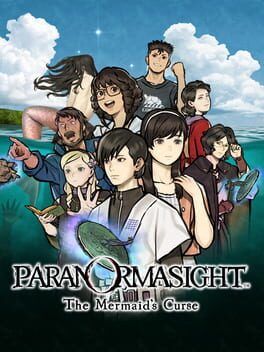
The remote island of Kameshima is the hub for everything here. You get the same photographic backgrounds and painterly character art as the first game, but now it is all fishing docks, coastal shrines and crumbling seaside pensions. In daylight it looks almost like a travel brochure; at night, the fixed camera angles and long empty piers make every screen feel like it is hiding something just off frame. It is less outright grotesque than Honjo, but no less unsettling.
That sense of place matters because Mermaid’s Curse is, once again, a game about stories people tell themselves. Where Honjo revolved around old ward legends, this time it is competing versions of a mermaid myth, passed down by divers, priests and opportunistic locals. The more you bounce between perspectives, the more you realise nobody is being honest about what the mermaids really are, or what immortality would actually cost on a small island where everyone knows everyone.
Multi‑perspective structure: leaner, clearer, still devious
The original Paranormasight’s big trick was its branching board of timelines and protagonists, letting you hop between curse bearers to unlock new routes. Mermaid’s Curse keeps that multi‑perspective approach, but trims a lot of the cruff that made late‑game Honjo feel like homework.
You still have a story chart that lays out each character’s route as tiles. Tapping any node drops you into that scene, complete with clear indicators of where key decision points sit. The difference is in how aggressively the sequel cross‑wires them. Clues you uncover while playing Yuza’s route, for example, quietly update your options in another character’s chapter, and the chart makes those dependencies explicit. On mobile, where you might be dipping in for a ten‑minute session between other tasks, that clarity is huge.
There are fewer protagonists overall, but they are better defined, and the game is more willing to let their routes collide early and often. Rather than saving big perspective flips for late twists, Mermaid’s Curse leans into smaller, nastier reversals along the way. It does not just withhold information; it actively lies to you through framing, then forces you to revisit scenes from another angle and catch the lines you missed.
Crucially, the pacing benefits. Honjo’s mid‑section sometimes bogged down in fetch‑questy dialogue loops. Here, most chapters have a clear investigative spine and a sharp endpoint, the sort of structure that works beautifully for mobile play. You can finish a whole route chunk on a commute and feel like you actually progressed the overall mystery, rather than unlocking three more boxes to tick on the flowchart.
Mermaid myths as both lore and puzzle fuel
The mermaid legends that anchor this sequel are not just flavour text. They drive almost every meaningful decision you make. Early on, you get competing accounts of what happens if you consume mermaid flesh, how the island’s pearl‑diving economy is tied to the myth, and what the local shrine actually protects. Those contradictions are not just world‑building. They are raw puzzle material.
Several of the best sequences hinge on whether you have been paying attention to which characters come from families with deep ties to the sea versus those who only recently moved to Kameshima, or on whether you caught that a particular ritual chant varies slightly between tellings. The game is at its strongest when it trusts you to make those connections yourself, without underlining them in neon.
It also understands that folklore can be horrific in quiet, mundane ways. Some of the most effective scenes are not jump scares or curse deaths, but conversations where villagers casually rationalise decades of exploitation because “that’s just how things are here.” That low‑key cruelty makes the supernatural stuff land harder when it does show up, and it gives the eventual reveals about the true nature of the “mermaids” real emotional weight.
Puzzle design: fewer gimmicks, more intent
Paranormasight’s debut built a reputation on fourth‑wall tricks and meta puzzles that asked you to fiddle with system settings or abuse save files. Mermaid’s Curse does not abandon that streak of mischief, but it uses it more sparingly and with much clearer intent.
Moment to moment, this is still an adventure‑style visual novel where you scour static scenes, poke at suspicious details and choose dialogue options. The difference is that most puzzles now sit at a clean intersection of character knowledge, player observation and the physical layout of Ise‑Shima. You are less often guessing what weird UI gimmick the writers want you to trigger and more often interrogating where someone could have realistically gone between tides, or who would have overheard a whispered confession in a tiny guesthouse.
The mobile version benefits particularly from this tightening. There are far fewer instances where you are stuck repeating a scene, hunting for a single missed hotspot. When the game does hide a solution, it usually has the decency to make the wrong choices entertainingly fatal or at least revealing of character, so it rarely feels like pure trial and error.
That said, the back third still slips into over‑explanation. Once a certain late‑game twist collapses several routes together, you get a couple of sequences where the “puzzle” is simply selecting every dialogue option in order to squeeze out exposition. It is not enough to sink the experience, but it does flatten the momentum after some wonderfully nasty earlier chapters.
Pacing: built for bite‑sized dread
Pacing was one of the first game’s only real weak spots, and Mermaid’s Curse clearly knows it. On mobile, the structural changes land particularly well. Chapters are compact, signposted and designed to be read in short bursts without losing the thread.
Important recaps are woven into character monologue rather than shoved into overt “Previously on” dumps, and the story chart does a good job of highlighting which older scenes now have new context. Combined with generous auto‑save and quick resume, it means you can close the app mid‑conversation and come back hours later without feeling lost.
The trade‑off is that the story rarely gives you long stretches of freeform investigation. If you were hoping for more open‑ended sleuthing than Honjo, this sequel will disappoint. It is still a heavily authored experience, just one that has trimmed much of the dead air between revelations.
Mobile UX: smart tweaks, small annoyances
Square Enix has clearly treated mobile as a first‑class platform rather than an afterthought port. The touch interface feels natural. Tapping to advance, pinch‑to‑zoom on background details and simple swipe gestures to flip between menus all work smoothly. Long‑press context hints let you inspect key terms from the in‑game glossary without breaking flow, which is invaluable when juggling multiple variants of the same mermaid tale.
Dialogue text is crisp, with scalable font options that actually go large enough for smaller phones. The log is easy to scroll through, and quick‑skip works as expected for repeat playthroughs or alternate endings. Auto‑advance speed has a wide range, so you can tune it for either active reading or a more “sit back and watch” experience.
There are a few rough edges. Some of the smaller UI buttons inherited from the Switch layout feel cramped on older devices, particularly the tiny icons used to open the wider story chart. And occasional tooltips still reference button prompts from the console version, which can be mildly confusing if you did not touch the original on Switch.
Overall though, this is the rare visual novel that feels like it belongs on a phone. The cadence of its chapters, the immediacy of tap‑driven investigation and the pick‑up‑and‑play nature of the flowchart structure all complement short, interrupted sessions.
Performance and presentation on handheld screens
Technically, Mermaid’s Curse is not pushing hardware, but the port still matters. On mid‑range Android and iOS devices the game holds a steady frame rate in its few animated sequences, with quick transitions and snappy load times between scenes. I did not encounter crashes or obvious memory leaks, even after extended backgrounding.
The photographic backdrops look particularly sharp on high‑dpi mobile screens, and the grainy filters the series is known for translate well without smudging fine detail. Character portraits retain their expressive shading, and subtle lighting changes between day, dusk and night have more impact on a smaller, closer‑held display than they did on TV.
Audio is equally solid. Headphones are strongly recommended. The distant surf, cicadas and creaking boats all contribute to the sense of place, and the soundtrack hits a sweet spot between mournful and menacing. On phone speakers some of the quieter ambient cues get lost, but key stingers and voice cues still land.
Battery drain is moderate rather than severe. The game is mostly static imagery with light animation, so extended sessions do not roast your device. There is no always‑online requirement, and it behaves well in airplane mode, which is ideal if you plan to chew through routes while travelling.
Verdict
Paranormasight: The Mermaid’s Curse is a confident, carefully tuned sequel that understands exactly what worked about its predecessor and where it needed trimming. The Ise‑Shima setting gives it a distinct identity, the multi‑perspective structure is cleaner and more purposeful, and the mermaid myths are not just spooky window dressing but the backbone of both narrative and puzzle design.
On mobile, those strengths are amplified. Short, punchy chapters, a well‑designed touch interface and rock‑solid performance make this one of the most satisfying horror mystery experiences you can carry in your pocket. It stumbles a bit in its exposition‑heavy final act and never fully recaptures the first game’s wildest mechanical surprises, but in return you get a tighter, more mature piece of storytelling.
If you bounced off Honjo due to pacing or found its trickiest puzzles a little too pleased with themselves, Mermaid’s Curse is the redemption arc. If you loved the original, this is not just more of the same. It is a sharper, saltier refinement that makes a strong case for Paranormasight as one of the most exciting horror mystery series running right now.
Final Verdict
A solid gaming experience that delivers on its promises and provides hours of entertainment.