
Review

By Pixel Perfect
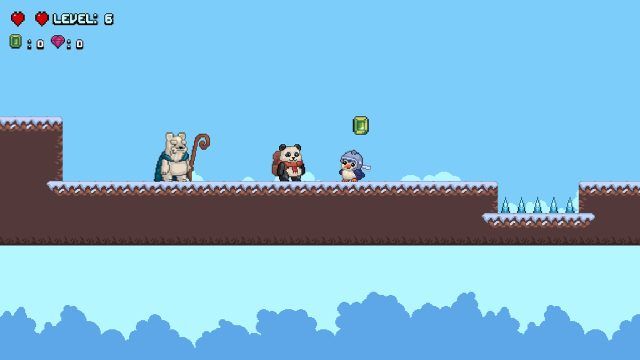
Image: thexboxhub.com
A small Xbox release with a clear promise and a tougher question
Panda: Shards of Aurora arrived in the middle of a crowded September Xbox window with a simple pitch: a pixel-art platformer on Xbox and PC built around 30 icy levels, dangerous enemies, hidden gems, and a sizeable 2000 Gamerscore, according to TheXboxHub’s launch coverage. That is the concrete appeal. It is compact, readable, completion-friendly, and seemingly aimed at players who like small platform adventures with collectables to sweep up along the way.
The harder question is whether that structure adds up to a memorable Panda Shards of Aurora puzzle game, or whether it sits in the growing pile of inexpensive indie platformers that are pleasant for an evening and gone by the next morning. TheXboxHub’s September 22 review landed at 2.5 out of 5 and summed up the experience as something the reviewer expected to forget, calling it “just kind of… there.” That is a blunt assessment, and it frames the main tension for this Panda Shards of Aurora review: the game has enough shape to be a legitimate short-form platforming diversion, but the available critical record suggests it struggles to leave a mark.
For players searching for Panda Shards of Aurora Xbox impressions, that distinction matters. A modest game does not need to reinvent puzzle-platforming to be worthwhile. It does, however, need a hook, a satisfying rhythm, or a craft detail that carries the player through repeated jumps, hazards, and gem hunts. Based on the sourced coverage, Panda: Shards of Aurora appears to have the checklist of a functional indie platformer. The issue is whether the moment-to-moment loop has enough friction, surprise, and personality to justify picking it up now instead of waiting for a discount or treating it as a Gamerscore chase.
Gameplay loop: 30 icy stages, hidden gems, and familiar platforming pressure
The clearest confirmed structure comes from TheXboxHub’s news report, which describes Panda: Shards of Aurora as a pixel-art platformer with 30 levels, enemies, hidden gems, and an icy setting. That gives the game a familiar arcade-adventure spine. You move through discrete stages, survive hazards and hostile creatures, and keep an eye out for optional collectables tucked away from the main route. For a small platformer, that can be enough if the levels escalate cleanly and the collectables encourage interesting risk.
The phrase “puzzle adventure loop” fits the apparent intent better than a pure action-platformer label. Hidden gems usually ask players to read layouts, check suspicious corners, and decide whether a detour is worth the danger. In games like this, the best stages create a small conversation between movement and observation: Can I reach that ledge? Is the enemy placement pointing me toward a secret? Is this alternate path safer, or is it bait? Panda: Shards of Aurora’s promise lives in those small decisions.
The concern is that the reported critical response does not suggest the loop develops into something distinctive. TheXboxHub’s 2.5/5 review score and its “kind of… there” verdict point toward a game that functions but does not consistently excite. That does not mean the Panda Shards of Aurora gameplay is broken, and the supplied sources do not support calling it technically poor or mechanically faulty. The safer judgment is more specific: the known level count and collectable framework make it easy to understand, but the available review evidence suggests the stages may lack the spark needed to turn a straightforward run into a must-play puzzle-platforming route.
Pacing is the make-or-break point for a compact platform adventure
Thirty levels can be a strength. A short platformer has room to avoid bloat, keep ideas moving, and reward players who want a completeable weekend game rather than an open-ended commitment. Panda: Shards of Aurora benefits on paper from that scale. The level count reported by TheXboxHub is large enough to feel like a full small release, but contained enough that completionists can realistically think in terms of finishing rather than sampling.
That same compactness exposes pacing problems quickly. If a game’s core verbs are familiar and its visual theme stays within a narrow icy palette, each level needs to justify its place with a new arrangement, a sharper enemy setup, a trickier gem location, or a stronger platforming sequence. Without that steady escalation, 30 stages can feel less like a journey and more like a checklist. TheXboxHub’s lukewarm review language strongly implies that Panda: Shards of Aurora lands closer to the latter than it should.
This is where buyer expectations matter. If you approach Panda: Shards of Aurora as a lightweight Xbox puzzle platformer, the pacing may be acceptable. If you want a game that steadily builds its mechanics, surprises you with level concepts, or sticks in your head after the credits, the reported response is less encouraging. The game seems best suited to players who enjoy the comforting cadence of clearing stages and finding collectables, not those looking for a precision-platforming showcase or a puzzle game with a sharp identity.
Presentation: pixel art charm, icy atmosphere, limited evidence of standout craft
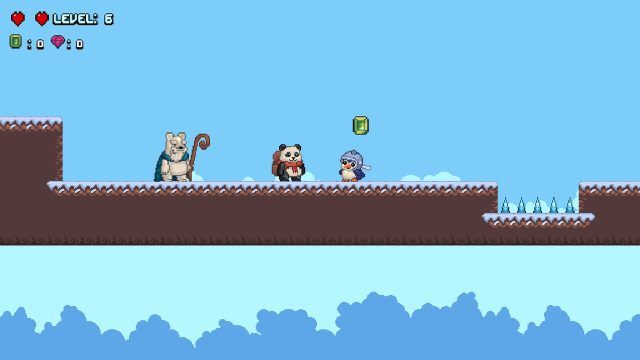
The confirmed presentation angle is clean and easy to market: Panda: Shards of Aurora is a pixel-art platformer set across frozen environments. The required review image from TheXboxHub shows the game leaning into characterful, readable 2D presentation rather than high-end spectacle. For a small indie platformer, that can be a sensible choice. Pixel art ages well when the animation, silhouettes, and tileset readability are strong, and icy worlds can give designers useful contrast between cold backgrounds, enemy shapes, and gem pickups.
The problem is that presentation in a small game has to do more than signal genre. It needs to help the mechanics feel tactile. A jump should look as good as it feels. A hazard should be legible before it punishes you. A secret should be hinted at through art placement rather than feeling randomly hidden. The available sources confirm the broad style but do not provide enough evidence to praise animation, soundtrack, interface clarity, or performance specifics in detail.
So the fairest assessment is cautious. Panda: Shards of Aurora appears visually approachable, and its icy pixel-art setting gives it an immediate identity in screenshots. The sourced review record, however, does not indicate that the presentation lifts the game beyond its familiar premise. That is often the difference between a small platformer that becomes a personal recommendation and one that simply fills a storefront slot.
Xbox value: 2000 Gamerscore is a real hook, but it cuts both ways
One of the most concrete selling points in TheXboxHub’s launch coverage is the 2000 Gamerscore attached to Panda: Shards of Aurora. For a segment of the Xbox audience, that is practical information rather than trivia. Small games with generous achievement lists often find an audience among completionists, especially when the structure is level-based and the objectives are clear.
That value proposition is real, but it also complicates the review. A high Gamerscore total can make a modest game more attractive to achievement hunters while doing little for players who judge value primarily by mechanical freshness or long-term memory. If your main question is “Can I get a compact platformer and make progress on my Xbox profile?” Panda: Shards of Aurora has a clearer pitch. If your question is “Is this one of the stronger indie platformers I should play this month?” the answer is much less convincing.
Platform availability is another practical plus. TheXboxHub described the game as available on Xbox and PC, with its coverage filed under Xbox One, Xbox Series X, and PC news categories. Its review also appeared under Xbox Series X reviews. That makes Panda Shards of Aurora Xbox coverage especially relevant for console players, though the provided sources do not include pricing, install size, accessibility options, or detailed performance data. Those are meaningful unknowns for a buyer’s guide, so the safest advice is to check the live storefront before purchase if price, achievements, or platform compatibility are your deciding factors.
Verdict: worth a look for completionists, a wait for most puzzle-platform fans
Panda: Shards of Aurora has the outline of a cozy small-platformer pick: 30 icy stages, hidden gems, enemies, pixel art, Xbox and PC availability, and 2000 Gamerscore. Those confirmed details make it easy to understand who the game is trying to serve. It is built for players who like direct level progression, collectable hunting, and the low-friction satisfaction of clearing a compact adventure.
The weakness is distinction. TheXboxHub’s 2.5/5 review and forgettable verdict line are difficult to ignore because they speak directly to the game’s biggest risk. A puzzle-platformer can be simple and still excellent, but it needs either unusually tight movement, clever stage design, expressive presentation, or a memorable pacing curve. The sourced response suggests Panda: Shards of Aurora does not consistently deliver those higher-order pleasures.
Our score lands at 5 out of 10. That is not a dismissal of the game’s audience. Achievement hunters and players who actively seek smaller Xbox platformers may find enough value here, especially if the price is right. Everyone else should wait, watch a few minutes of Panda Shards of Aurora gameplay, and treat it as a discount pickup rather than an urgent play. It looks serviceable, chilly, and compact, but the current evidence points to a game that slips away too easily once the gems are gathered.
Final Verdict
A solid gaming experience that delivers on its promises and provides hours of entertainment.