
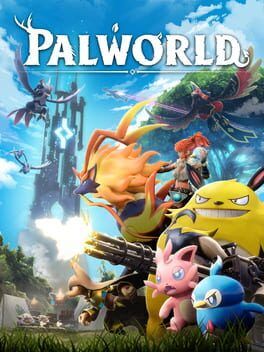
Review

By The Completionist
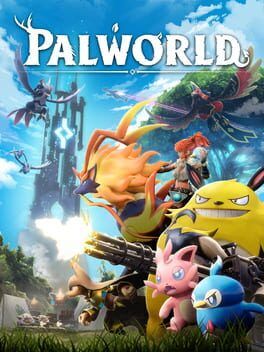
Image: IGDB
Store links: Palworld on Steam, Palworld: Palfarm on Steam
Full release, same wild pitch, much stronger structure
Pocketpair launched Palworld 1.0 on July 10, 2026 for PC, PlayStation 5, Xbox Series X|S, and Xbox One, according to Mobalytics, bringing the survival crafting monster collector out of Early Access after roughly thirty months of public development. That is the concrete change behind this Palworld review: the question is no longer whether the viral “creatures plus guns plus work camps” premise can grab attention for a weekend. It is whether the full release can sustain dozens, or hundreds, of hours once the joke wears off.
On that front, Palworld 1.0 is a far sturdier game than its reputation suggests. IGN’s updated review, based on more than 160 hours in the 1.0 update, says the worst technical rough edges have been smoothed over, progression has been streamlined, and many missing pieces have been added. Game8’s PC review reaches a similar conclusion, scoring it 92 and arguing that exploration, progression, base building, automation, and Pals constantly strengthen one another. TheXboxHub’s Xbox Series X review also lands high at 4.5/5, saying players can easily get dozens of hours from the game and that the 1.0 update improves the experience.
My own verdict sits in that same positive range, with a little more caution for players who bounce off survival repetition. Palworld 1.0 succeeds because its systems are unusually good at handing you another reason to leave base, catch something, craft something, breed something, upgrade something, or return home with a plan. It still has the genre’s familiar friction: resource bottlenecks, pathfinding oddities, blunt combat repetition, and a world that can feel underpopulated between set pieces. But as a full release, it now feels like a coherent survival RPG loop rather than a proof of concept propped up by a meme.
Progression is the glue holding the strange hybrid together
Palworld’s early hours are deliberately primitive. IGN describes the opening as a survival setup where the player is dropped into Palpagos with little protection, then pushed to build shelter, craft gear, avoid starvation or cold, and work through an upgrade tree that eventually moves from clubs and bows to firearms, sci-fi armor, laser cannons, and mounted combat on giant Pals. That arc is the game’s most reliable pleasure. You can feel your character, your roster, and your base becoming more capable in parallel.
The RPG side is light, but effective. Leveling is less about elaborate dialogue choices and more about unlocking verbs: better tools, better weapons, better base structures, better Pal handling, and better ways to explore. Game8’s review is right to frame Palworld as a dense sandbox where every system feeds the next. A new capture is rarely cosmetic. It may solve a production problem, open a traversal route, shift a boss strategy, or give you a reason to redesign part of your camp. That keeps the checklist from feeling like disconnected chores for far longer than most survival crafting games manage.
The tradeoff is that Palworld’s progression can still be relentless. Metacritic’s critic excerpts include one review noting that the 1.0 release is very different from Early Access, with a revamped quest system, expanded map, and scattered civilization, while still calling the gameplay loop “pretty relentless” and the game “an acquired taste.” That is fair. If your tolerance for gathering, crafting, and repeating preparation cycles is low, 1.0 has not transformed Palworld into a pure action RPG or a traditional creature-battling campaign. Its best rewards still come from planning, grinding, optimizing, and accepting that the next breakthrough usually asks for one more expedition.
Base automation is brilliant when it behaves, frustrating when it does not
The most important thing Palworld does differently from other survival games is make the creature collection part of your production chain. Pals are party members, mounts, laborers, defenders, and long-term build pieces. That gives monster collecting a practical weight that many creature RPGs lack. A Pal is not valuable only because it wins fights. It may mine, haul, craft, farm, generate power, or keep an assembly line moving while you are out pushing into a more dangerous region.
This is where Palworld 1.0 most clearly outgrows the viral premise. The satisfaction comes from watching a base begin as a campfire and workbench, then gradually become a layered operation where your captured creatures turn raw exploration into usable momentum. Mobalytics identifies base automation as one of the pillars of the hybrid, alongside survival crafting, monster collecting, and third-person shooting. Game8 also praises the way combat, exploration, base building, progression, and automation reinforce one another.
The problem is that automation exposes every rough edge in the simulation. Game8 notes occasional pathfinding hiccups and minor building frustrations. IGN is sharper, saying base building remains fairly janky even after 1.0 improvements. Metacritic’s user excerpts are harsher, with one player complaining that Pals can get stuck, ignore assignments, prioritize unexpected tasks, or stop working. My experience aligns with the middle of that spread: the automation fantasy is strong enough to carry the game, but it is not clean enough to disappear into the background. When a production line works, Palworld feels like a survival RPG with a living party ecosystem. When it fails, you become a foreman troubleshooting creature AI instead of an adventurer. Buyers should treat base management as a core activity, not a side feature.
Combat has spectacle, build value, and a repetition problem
Palworld’s combat is intentionally messy in concept: player weapons, Pal abilities, dodging, mounts, boss arenas, and survival preparation all collide. At its best, that creates memorable escalation. IGN describes the endgame image well: the same character who began with primitive gear can eventually fire advanced weapons from the back of a giant dragon. Mobalytics says 1.0 adds new weapons and revamped Tower Bosses, while also introducing the long-teased World Tree region as a major late-game destination.
The buildcraft is more compelling than the shooting by itself. Choosing which Pals to bring, which passives or roles matter, and how to prepare your gear gives encounters a layer of planning that keeps them from becoming pure trigger work. Metacritic’s critic excerpts highlight the depth of Pal mechanics, passive abilities, and breeding systems as a source of strategic freedom and replayability. That is where the RPG pleasure lives. The strongest fights are won before they begin, when you decide what your roster is supposed to solve.
Still, combat is one of the easiest systems to criticize. One Metacritic critic excerpt calls combat far too frequent. A user review excerpt complains that guns lack impact, melee feels stiff, enemy AI rarely challenges in interesting ways, and bosses can become dodge routines while a Pal does much of the work. I would not go that far across the whole game, because the surrounding progression gives combat useful stakes. But the moment-to-moment action is not as refined as the collection, crafting, or automation loops around it. Palworld is strongest when combat is the payoff for preparation. It is weaker when the game leans on repeated skirmishes to fill travel time.
Palpagos has a better narrative spine, but its world still thins out
Palworld 1.0 gives its setting more shape than the Early Access version had. Mobalytics says the full release adds a proper narrative spine, new Pals, floating islands, offshore base building, a reworked Wildlife Sanctuary ecosystem, and the World Tree region. Game8 says the story is told through both the main quest and the world itself, citing distinct regions, memorable characters, environmental storytelling, optional journals, and details that reward slower exploration.
That matters because Palworld’s tone is stranger than its elevator pitch. It can look playful, absurd, and toy-like, then slide into exploitation, poaching, labor, faction violence, and ecological unease. Game8’s story score of 8/10 reflects that environmental texture while noting that the main structure can become repetitive and that regional conflicts do not always feel connected. Metacritic’s critic excerpts also mention unexpectedly serious themes beneath the surface.
The weakness is density. IGN says many areas are still largely empty and that settlements can feel lifeless. That criticism lands. The map is better at creating reasons to move through it than reasons to believe every inhabited space has a social life. Floating islands and endgame regions add spectacle and exploration goals, but Palworld’s worldbuilding still works best as a systems playground with lore fragments rather than as a fully realized RPG society. For a completionist, that creates a specific kind of appetite: there is plenty to chase, catalogue, optimize, and uncover, but fewer authored relationships or quest chains than RPG players may expect from the size of the world.
Performance, platforms, and the Xbox buying question
The confirmed platform picture is broad. Mobalytics lists Palworld 1.0 for PC, PlayStation 5, Xbox Series X|S, and Xbox One, with Pocketpair as both developer and publisher. TheXboxHub reviewed it in its Xbox Series X category and awarded 4.5/5, making this a relevant Palworld Xbox review as well as a PC-focused survival crafting recommendation. IGN’s updated review says the worst technical rough edges have been smoothed over in 1.0, although it also says base building remains janky and the world still has thin spaces.
That leaves the practical advice. If you played Early Access and thought Palworld was almost there, 1.0 is the version most likely to convert you. The quest system, expanded map, new regions, boss updates, gear additions, and overall smoothing reported across IGN, Game8, Mobalytics, TheXboxHub, and Metacritic’s critic excerpts all point to a fuller game. If you disliked the fundamental loop of gathering, crafting, catching, assigning, upgrading, and repeating, 1.0 does not replace that loop. It improves and expands it.
For Xbox players, the main question is tolerance for simulation roughness. TheXboxHub’s high score suggests the console release holds up as a value proposition, and the shared platform list means Xbox players are not being treated as an afterthought. But the same caveats apply: base construction and Pal behavior can still interrupt the fantasy, and combat repetition may wear down players who want a sharper shooter or a traditional monster-battling campaign. Palworld 1.0 is easiest to recommend to players who enjoy survival crafting first, monster collecting second, and RPG progression as the connective tissue between them.
Final Verdict
A solid gaming experience that delivers on its promises and provides hours of entertainment.