
Review

By MVP
OPUS: Prism Peak Review
The launch praise for OPUS: Prism Peak is not just launch-week heat. This is the real thing. SIGONO’s latest narrative adventure absolutely deserves to be in the early conversation for the year’s best story-driven indies, and more importantly, it deserves to be judged as more than a polite, tasteful little tearjerker. It is a sharply made, emotionally intelligent game built around a photography mechanic that actually deepens the way you move through its world, read its characters, and process its themes.
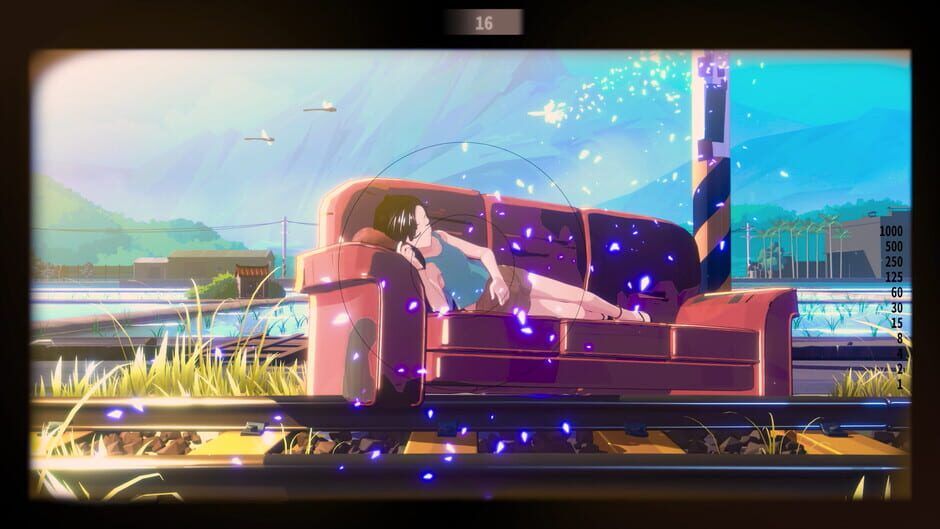
That distinction matters because plenty of narrative adventures coast on mood. They hand you gorgeous scenery, whisper a few sad lines about memory and loss, and hope the rest fills itself in. OPUS: Prism Peak is much more deliberate than that. Its premise places you in a mysterious realm as a photographer trying to understand where you are, what this place wants from you, and how the fragments of memory tied to it fit together. The camera is not a gimmick pasted on top of a walking simulator. It is the core verb, the lens through which the game asks you to pay attention.
The photography hook works because the act of framing an image becomes a form of interpretation. You are not just snapping collectibles or hunting arbitrary targets. You are observing spaces, noticing emotional details, and deciding what matters enough to preserve. That gives exploration a stronger sense of purpose than the genre usually manages. Even when the puzzle design stays light, the camera gives each area a quiet tension. You are always looking for meaning, not just progression.
SIGONO is smart enough not to overcomplicate this system. Prism Peak is not trying to be a technical photography sim, and that restraint is a strength. The joy comes from composition, discovery, and the narrative consequences of what you see, not from fiddling with endless settings. The result is accessible but not shallow. The game trusts players to connect emotional and visual clues on their own, and that trust pays off repeatedly.
The strongest surprise is how naturally the mechanic feeds the storytelling. The OPUS series has long had a reputation for earnest, melancholy writing, and Prism Peak continues that tradition while feeling more structurally confident than many of its peers. Its emotional beats are not simply delivered in monologues. They emerge through place, pacing, visual symbolism, and the intimate act of choosing where to point the camera. It understands that memory can be selective, that images can preserve and distort at the same time, and it builds much of its dramatic power around that idea.
That does not mean every scene lands perfectly. There are moments where the script edges close to familiar indie-game solemnity, and a few revelations feel telegraphed earlier than the game probably intends. But even when Prism Peak brushes against sentimentality, it rarely collapses into it. The writing has enough specificity, and the presentation enough sincerity, to keep the emotional core grounded. When the game reaches for sadness, it has earned the right.
Its pacing is similarly strong, if not flawless. For most of its runtime, Prism Peak moves with a patient, measured rhythm that suits both the mystery and the photography-centered exploration. It gives scenes room to breathe, which is exactly what a game like this needs. Wandering through painterly environments, pausing to examine a detail, and realizing that a single image might unlock a deeper understanding of the world is where the game is at its best.
There are stretches, especially in the middle, where that patience can drift toward inertia. A few sequences feel like they are preserving atmosphere at the expense of momentum, and players looking for denser puzzle escalation or more dramatic mechanical variation may start to feel the edges of the format. This is a narrative adventure that knows what it is, but that also means it occasionally settles into a soft sameness. Still, it recovers well, and its final act brings the emotional and thematic threads together with enough clarity to justify the slower build.
Visually, the game makes an immediate impression. Its dreamy, painterly art direction gives every location a hushed, fragile beauty that fits the story’s reflective mood without reducing the world to pretty wallpaper. The environments are not just nice to look at. They are designed to be read, scanned, and emotionally interpreted. That is a crucial difference for a game where looking is the primary action. The sound design and music do a great deal of work here too, carrying scenes with a gentle, aching tone that never feels manipulative.
As for performance, OPUS: Prism Peak is well suited to Nintendo’s hardware because its strengths are atmospheric and artistic rather than twitch-driven. On Switch, the experience is comfortably playable and the visual identity survives intact, though the presentation is naturally less crisp than what players on stronger hardware might hope for. On Switch 2, the game is the cleaner fit, with sharper image quality and a more polished overall presentation that better complements the art direction. Nothing about Prism Peak suggests a technical showcase, but it also does not need to be one. What matters is that the mood remains stable and the act of photographing the world remains smooth enough not to break immersion. Based on the available launch information and reception, it appears to clear that bar on both systems, with Switch 2 simply offering the more flattering version.
The bigger question is whether this stands among 2026’s best narrative adventures or merely joins the pile of respectable indies that people praise for a week and forget by autumn. On that front, OPUS: Prism Peak clears the higher bar. It has a central mechanic with thematic weight, a visual identity that serves the design rather than decorating it, and an emotional story that feels genuinely authored instead of algorithmically assembled from grief, nostalgia, and soft piano cues. It may not revolutionize the genre, and players allergic to slow, contemplative games will not suddenly convert here. But within its lane, it is exceptionally accomplished.
What makes it stick is not just that it is sad, or pretty, or gentle. It is that all of those qualities are organized around a compelling idea: that the things we choose to frame, remember, and revisit define us as much as the things we leave outside the picture. Few narrative adventures build their mechanics and themes so tightly together. Fewer still do it with this much grace.
So yes, the glowing reception is deserved. OPUS: Prism Peak is not simply another well-liked indie with immaculate vibes and a decent script. It is one of 2026’s standout narrative adventures so far, and one of the more convincing examples of how a small-scale game can make a single interaction feel meaningful across an entire story.
Score: 8.8/10
Final Verdict
A solid gaming experience that delivers on its promises and provides hours of entertainment.