
Review

By Big Brain
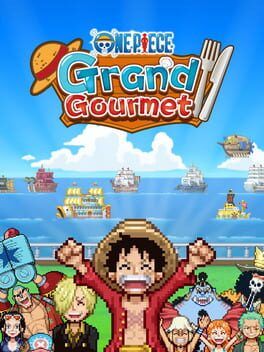
Image: IGDB
Store links: One Piece: Grand Gourmet on Steam
A licensed restaurant sim is a strange fit until the loop starts paying out
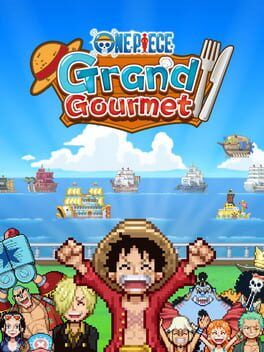
One Piece: Grand Gourmet’s central bet is concrete and unusual: Kairosoft and Bandai Namco Entertainment have turned One Piece into a restaurant management sim, with Luffy and Sanji rebuilding their reputation through food rather than fights. That premise could have collapsed into novelty. Instead, the published review material points to a cozy, busy management game that works because Kairosoft’s old loop is well matched to One Piece’s cast-driven structure.
Siliconera describes the setup as beginning with a shipwreck that separates the Straw Hats, leaving Luffy and Sanji together. After Luffy accidentally causes damage tied to a small Baratie replica, Patty and Carne explain that Sanji and Luffy imposters are damaging both the Baratie name and the Straw Hats’ reputation. With a player-created chef and a duck-chef named Tori, the pair runs a smaller restaurant to clear their names, expose the imposters, and reunite the crew.
That is the tension running through this One Piece Grand Gourmet review: the license gives the game a clear progression map, but the Kairosoft structure determines whether the journey is worth repeating for hours. The answer, based on the available coverage, is yes for players who enjoy incremental management, steady unlocks, and fan-service through systems rather than high-stakes action. It is less convincing for players who want a polished console-first interface, difficult optimization, or a deeper narrative treatment of the source material.
Kairosoft’s economy fits One Piece because every character can become a goal
The strongest design choice is how Grand Gourmet turns One Piece’s enormous supporting cast into a management economy. Siliconera reports that each location asks players to meet five objectives, including outselling the false Baratie and imposters, finding missing Straw Hat crew members through Wanted signs, and turning customers into fans. That structure gives the game a practical answer to a common licensed-game problem: instead of cameo appearances sitting outside the mechanics, the characters feed the loop.
The core restaurant model is familiar Kairosoft. According to Siliconera, Sanji handles cooking while the player expands the restaurant, manages meal sets, gathers ingredients, and unlocks recipes by sending Luffy and other crew members to explore, completing customer wishes, shopping, receiving gifts, or collecting from placed items. Meal sets are built from a main dish, side dish, dessert, and drink, then leveled over time. MonsterVine similarly frames meal crafting as a metagame in which players can push taste, price, or appearance depending on their current goal.
That matters for long-term play because it creates several parallel economies instead of a single cash grind. Fans can return even when the restaurant ship is in different waters, Siliconera says, while exploration unlocks characters, recipes, ingredients, gifts, and other progression pieces. GamersHeroes adds that staff can include Straw Hat Pirates or customers who like the player enough, and that table comfort affects earnings. The result is a management loop where layout, menu choice, customer affinity, exploration, and recruitment all push each other forward.
From a strategy perspective, Grand Gourmet appears strongest when it asks players to decide which bottleneck matters next. Do you chase the ingredient that enables a recipe? Do you gift the right item to convert a customer into a fan? Do you adjust the dining room for comfort and higher revenue? Do you pursue the objective that unlocks the next cooking battle? The sources consistently describe frequent rewards and constant activity, which suggests a game built around short optimization cycles rather than punishing failure states.
The One Piece license is doing real work, not sitting on top of the sim
Several reviews highlight that Grand Gourmet’s One Piece integration goes deeper than branding. MonsterVine says the game moves sea to sea, serving characters in chronological order, and praises the selection for including obscure figures such as random Loguetown shopkeepers and one-off supporting characters alongside major villains and allies. That breadth is important because Kairosoft games thrive on unlock lists. One Piece gives Grand Gourmet an unusually large pool of recognizable rewards.
Siliconera’s description of Wanted signs and customer tips also gives the license a mechanical role. Missing Straw Hats are not simply unlocked through a menu. Players find them by placing signs and attracting information from specific customers. That is a good fit for a seafaring restaurant sim because it makes location, clientele, and crew recovery part of the same management problem.
MonsterVine also praises the dialogue and pixel art as accurate to the source material, noting that exaggerated expressions associated with Eiichiro Oda’s manga translate well into small sprites. DayOne likewise calls out Kairosoft’s pixel art while describing the flow of familiar characters, ingredients, and restaurant upgrades. The consensus is that Grand Gourmet understands the appeal of seeing a large cast compressed into charming management-game form.
The story itself draws a more mixed response. MonsterVine calls the premise delightful and specifically connects the frauds to the Fake Straw Hat Crew from the Return to Sabaody arc. TheSixthAxis, by contrast, says the narrative setup is rushed and sloppy enough that the reviewer wished it had not been included. Those reactions are not actually contradictory. They point to a game where the scenario is more useful as a progression wrapper than as a compelling One Piece story. Fans may enjoy the references and character dynamics, but the management loop is the real engine.
The cozy pacing hides a busy, sometimes messy interface
Grand Gourmet is frequently described as relaxing, but the moment-to-moment flow is not idle. MonsterVine says that roughly every 20 seconds, a new customer request appears, a customer arrives, or a dish is ready to be made. DayOne calls it fast-paced and says players can be inundated with pop-ups and menus early on. That constant stimulus is central to the Kairosoft appeal: there is almost always a small decision, reward, or notification waiting.
The important distinction is that busy does not appear to mean hard. TheSixthAxis says the game does not rely on escalating difficulty or complex friction, instead letting activities, characters, customization options, and requests pile up as the ship grows. That makes it closer to a low-stakes growth sim than a demanding restaurant operations game. GamersHeroes calls it broadly appealing and frames it as a lighter palate cleanser between heavier releases.
There are real caveats. TheSixthAxis reports clunky elements including weak sound design, missing sentence-ending punctuation in places, obtuse controller navigation, choppy touch interactions, rough transitions, and clickable areas that do not always match visuals. MonsterVine also notes small translation errors. These are not dealbreakers in the available reviews, but they do define the buyer profile. If you are tolerant of Kairosoft’s dense menus and mobile-rooted presentation, Grand Gourmet’s charm and reward cadence seem to carry it. If you expect a high-budget licensed console interface, the rough edges will be more visible.
This is where the One Piece Grand Gourmet Kairosoft pairing shows both upside and risk. Kairosoft’s format gives the game a proven reward economy, but the same format brings interface habits that can feel scrappy in a larger Bandai Namco collaboration. The best version of this game is played as a cozy spreadsheet of character affection, recipes, and room tiles. The weakest version is when too many pop-ups and submenus compete for attention before the player understands which numbers matter.
Progression is generous, but optimization fans may want sharper resistance
The best management games generate tension through scarcity, timing, and tradeoffs. Grand Gourmet seems to generate most of its tension through completion pressure rather than survival pressure. Siliconera says each region culminates in a cooking battle against the imposters once its objectives are complete, using the foods players have created and leveled to win judges over. That gives the recipe system a clear payoff, even if the surrounding game remains approachable.
GamersHeroes describes expansion as especially easy. Players can add themed biome tiles, such as Skypiea or Thriller Bark-style areas, and the walls, ceiling, exits, and tables convert around the chosen floor type. That is elegant for cozy play because it reduces construction friction and lets players focus on unlocking customers and facilities. It also signals that Grand Gourmet is not trying to be a demanding layout simulator in the vein of a harsher tycoon game.
TheSixthAxis reports that there is an endpoint after about 50 in-game days, but the structure remains open-ended, with the ability to keep playing or reset with a new game plus-like feel. For Kairosoft fans, that is a valuable long-tail hook. You can refine your restaurant economy after the main arc, chase more customer conversions, and keep experimenting with the menu ecosystem. For players who need escalating challenge, that same openness may feel flat once the unlock cadence slows.
My scoring leans on that tradeoff. As a Kairosoft One Piece game, Grand Gourmet appears strategically satisfying because the systems interlock cleanly: customer wishes feed fans, fans feed recipes and staffing, exploration feeds ingredients, and leveled meals feed cooking battles. As a pure management challenge, it sounds lighter than genre veterans may want. The pleasure is in compounding progress, collection, and themed optimization rather than mastery under pressure.
Who should buy One Piece: Grand Gourmet, and who should wait
Buy One Piece: Grand Gourmet if you already like Kairosoft’s management rhythm, if the idea of a One Piece management sim sounds charming rather than sacrilegious, or if you want a cozy game built around constant small rewards. Siliconera calls it a time-sink in line with other Kairosoft titles, MonsterVine calls it addictive and charming, and GamersHeroes gives it an 85% while describing it as widely appealing. Those are strong signals for players who want a low-stress sim with recognizable characters and lots of incremental progress.
One Piece fans who care about deep cuts seem especially well served. MonsterVine’s praise for obscure character inclusions suggests this is built for players who enjoy the broader world of the manga and anime, not only the central crew. The chronological journey through seas and the character-specific requests give fans reasons to keep pushing the restaurant forward.
Wait or discount-watch if your main concern is polish. TheSixthAxis flags controller friction, rough touch interactions, low-end sound design, punctuation issues, and inconsistent click areas. MonsterVine mentions translation errors. None of the cited reviews treat those problems as fatal, but they are relevant for a licensed release attached to a major franchise. Players sensitive to interface roughness should treat Grand Gourmet as a Kairosoft game first and a Bandai Namco collaboration second.
The practical platform picture is incomplete in the provided source material. GamersHeroes identifies Kairosoft and Bandai Namco Entertainment as the companies behind the game, and MonsterVine links to Bandai Namco’s game page, while TheSixthAxis discusses console controls and touch controls. The sources supplied here do not provide a confirmed full platform list, price, file size, or performance specifications, so this review cannot responsibly make claims about those details. Check the storefront for your device before buying.
Score and verdict
One Piece: Grand Gourmet succeeds because it understands that the best use of One Piece in a management sim is structure. Every customer can be a lead, every fan can become part of the economy, every recipe can become a step toward beating the imposters, and every new sea can bring a fresh unlock chain. Kairosoft’s formula gives that cast a machine to live inside.
It is also visibly limited by the same formula. The reported interface issues, small localization errors, modest sound design, and light challenge ceiling keep it from being an essential management game for players outside the cozy sim lane. The story framing appears functional and cute rather than substantial. Still, as a buyer’s guide call, this is an easy recommendation for Kairosoft fans and One Piece completionists, with a clearer caution for players seeking polish or pressure.
GameLoop score: 8.0 out of 10. Grand Gourmet is a warm, busy, smartly licensed restaurant sim whose reward loop carries the voyage, even when the presentation creaks.
Final Verdict
A solid gaming experience that delivers on its promises and provides hours of entertainment.