
Review

By Night Owl
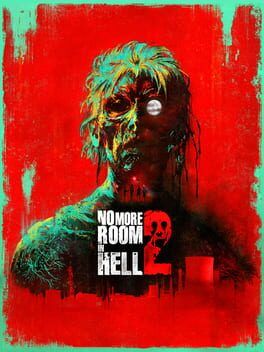
Image: IGDB
Store links: No More Room in Hell 2 on Steam
A 1.0 launch with real pressure behind it
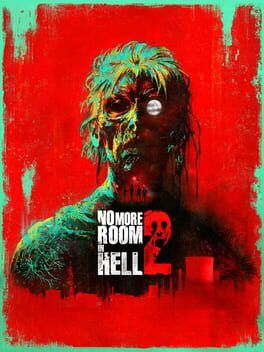
No More Room in Hell 2 arrived in 1.0 on August 11, 2026, according to Metacritic’s public listing, after what The Escapist and GameSpot both describe as a long and uneven early-access period. That is the central tension of this No More Room in Hell 2 review: Torn Banner Studios is no longer selling a promise to patient survival fans. The sequel to the 2011 Source mod, as Metacritic summarizes it, now has to stand as a full co-op horror game in a crowded zombie field where players have years of muscle memory from Left 4 Dead, State of Decay, DayZ, Project Zomboid, and the original No More Room in Hell itself. The good news is that the 1.0 version appears to have landed far better with critics than its troubled development might have suggested. Metacritic lists the game as “Generally Favorable,” with PC coverage based on eight critic reviews and an Xbox Series X listing based on one critic review. TheXboxHub scored the Xbox Series X version 4/5 and called it a brilliant online game, while GameSpot wrote that most of the balancing, bug, and design problems it saw during early access had been washed away in the current build. The caveat is visible in the same Metacritic listing, where user reception is marked “Mixed or Average.” This is a sequel with a strong identity, but that identity is deliberately abrasive: slow zombies, thin supplies, long missions, permanent character loss, and co-op pressure that punishes players who treat it like a sprinting horde shooter.
Eight responders, one bad night in Pennsylvania
The structure is the sequel’s strongest hook. GameSpot describes No More Room in Hell 2 as a first-person zombie-survival game built for teams of eight, a size that sits between small squad co-op and the larger sandbox survival games that often turn zombie fiction into social simulation. That middle ground gives each run a different pulse. You are large enough as a group to split duties, lose contact, and recover from a mistake, but small enough that one scream over voice chat can change the whole room. The missions, according to GameSpot, unfold across large Pennsylvania maps with lateral space to explore, moving from woods to residential neighborhoods, downtown areas, graveyards, and other settings steeped in classic zombie imagery. The best-sounding setup comes from campaigns where players begin alone and have to locate one another through exploration. That design choice matters because horror often dies the moment a full squad stacks up like a tactical firing line. No More Room in Hell 2 instead lets dread seep in before the rescue fantasy begins. A player moving through trees, boarded windows, or a quiet street is not waiting for a jump scare so much as counting doors, corners, stamina, and the distance to another human voice. GameSpot specifically praised the game’s Romero-like slow burn, and that description fits the sequel’s reported strengths better than comparisons to faster arcade co-op. This zombie survival horror works because the dead do not need to be acrobats. They only need to be numerous, persistent, and close enough to make every missed swing feel expensive.
Teamwork comes from scarcity, not scripted heroics
No More Room in Hell 2 is at its best when cooperation grows out of ugly practical needs. The sources describe a game where objective completion, extraction, infection management, ammunition conservation, and physical positioning all sit on the same scale of risk. GameSpot notes that even a single zombie can cause trouble, with melee kills often requiring four or more head-focused swings. That one detail reshapes the tempo. If every corpse takes commitment, then a doorway is a resource, a flashlight beam is a warning, and a teammate’s stamina bar is part of the group inventory. The Escapist’s review adds another useful layer through its account of infection: a player reported hearing voices telling him to kill himself, then developed deeper coughs before collapsing and turning. That kind of horror is not simply cosmetic. It creates suspicion and urgency inside the team, especially when the safest decision may be cruel. The sequel also has special variants on higher difficulties, according to The Escapist, while GameSpot says the normal setting finds the better balance between danger and breathing room. That distinction is important for buyers. If you want a clean power fantasy, No More Room in Hell 2 will feel deliberately stingy. If you want a co-op horror game where panic comes from someone wasting a magazine, opening the wrong route, or failing to admit they are infected, Torn Banner’s design has teeth. Its teamwork is not built around class ultimates or spectacle. It is built around who has a bandage, who still has stamina, who can swing without getting grabbed, and who is brave enough to go back for the player coughing in the dark.
Permadeath is the sequel’s sharpest weapon
The defining system is the Responder roster. The Escapist reports that players recruit Responders with generated appearances and starting perks, with customization options available in the creator. Progression is split between account XP and character XP. Account XP gradually unlocks more items and perks for future Responders, while individual Responder levels provide perk points over time and can steer a survivor toward roles such as stronger shooting, stamina-heavy movement, or field medic support. This could have been ordinary live-service seasoning, but the death rules change the flavor. According to The Escapist, if a character dies without a respawn, disconnects from the server, or fails to extract, that character is lost along with scavenged gear, invested perks, and resources tied to loadout progress. That makes No More Room in Hell 2 unusually committed to consequence for a session-based co-op game. It borrows some of the emotional pressure often associated with longer-form survival titles, then compresses it into missions where strangers or friends have to decide how much risk a single life is worth. The system will divide players. Permanent loss can create unforgettable stories, especially when a veteran Responder goes down because the team got greedy. It can also make disconnects, matchmaking chaos, and difficulty spikes feel harsher than they would in a disposable run-based shooter. The design succeeds because it gives danger a memory. It asks zombie fans whether they want every mission to leave a scar, and it is honest enough to punish the answer.
The dead are frightening, though the weapons are less convincing
Combat is effective because it is stressful, not because every weapon feels elegant. GameSpot’s Metacritic excerpt singles out subpar shooting mechanics as a weakness, even while praising the game’s mix of State of Decay-like stakes and tight Left 4 Dead-style co-op. That criticism tracks with the broader design described across the reviews: No More Room in Hell 2 wants firearms to feel precious, loud, and risky, but there is a difference between intentional discomfort and a gun that lacks satisfying feedback. The sequel sometimes benefits from that roughness because bad aim and poor rhythm make zombie survival messy. It also loses some pleasure when a firefight should feel desperate but instead feels mechanically plain. Melee fares better as a pressure system. The fact that basic undead take repeated head blows gives each encounter a horrible physicality, especially when stamina and spacing are in play. Enemy design leans heavily on classic shamblers, with GameSpot noting the undead bursting from caskets, breaking through doors and windows, and moving through graveyards in imagery drawn from decades of zombie cinema. Higher difficulties may push too far. GameSpot warns that there can be too many zombies on harder settings, reducing the contrast between quiet dread and explosive danger. The Escapist similarly frames Normal as the point where tougher enemies and special variants begin to raise the stakes after a calmer Beginner tier. For most players, Normal sounds like the intended haunt: dangerous enough to make mistakes matter, controlled enough to let the atmosphere breathe.
Atmosphere, audio, and performance caveats
The sequel’s atmosphere appears to be one of its most reliable strengths across platforms. GameSpot says the console version does not look as nice as the PC edition it had played during early access, but still credited the game with a strong sense of atmosphere wherever it is played. That is the right lens for the visuals. No More Room in Hell 2 is less about pristine horror-show polish than spatial anxiety: woods that swallow silhouettes, houses that invite bad searches, and public spaces that feel wrong because they are too quiet until they are not. Audio is especially important in that kind of design, and the source material gives several examples of sound carrying survival information. The Escapist’s infection anecdote, with voices and worsening coughs, points to sound as both mood and warning system. Doors and windows breaking under undead pressure, noted by GameSpot, also matter because the game’s dread depends on knowing that a barrier is temporary. On performance, the available source material supports caution rather than a sweeping technical verdict. The Escapist calls the early-access period tumultuous and says it suffered from patch issues. GameSpot says many earlier balancing, bug, and design problems have been addressed in the current 1.0 form. TheXboxHub’s Xbox Series X review is positive, but the supplied text does not provide frame-rate details or technical settings. Practical guidance follows from that: PC players should check the Steam listing and current community feedback before buying if stability is their top concern, while Xbox Series X players have at least one positive platform-specific review but less publicly aggregated critic coverage than PC, according to Metacritic.
Replay value and verdict
No More Room in Hell 2 has the kind of replay value that depends on appetite for risk rather than a giant checklist. The eight-player format, large mission spaces, variable starts, Responder perks, difficulty gates, and permanent character loss all encourage repeated runs, but they do so by making each extraction feel like a story that can end badly. The Escapist argues that starting traits make Responders feel meaningfully different, which is crucial because character loss only works if a survivor has an identity worth mourning. GameSpot’s long-term early-access perspective is also encouraging, since it suggests the 1.0 release better realizes Torn Banner’s intended slow-burning horror than earlier builds did. Still, this No More Room in Hell sequel is not an automatic recommendation for every zombie fan. Players who want fast shooting, constant spectacle, or low-friction matchmaking may bounce off its patience, its punishing death rules, and its intentionally vulnerable survivors. Players who miss zombie games where the dead are heavy, ugly problems rather than target practice should pay attention. In 2026, No More Room in Hell 2 delivers tension by making safety temporary, teamwork fragile, and survival costly. It is a strong co-op zombie survival horror game with some rough combat feel and platform caveats, but its best runs have the rare quality of making silence feel like an enemy.
Final Verdict
A solid gaming experience that delivers on its promises and provides hours of entertainment.