
Review
By The Completionist
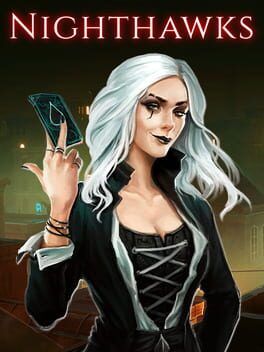
Image: IGDB
Store links: Nighthawks on Steam, Alpha-Nighthawk on Steam, Nighthawk on Steam
An 800,000-word vampire RPG lives or dies by its appetite for text
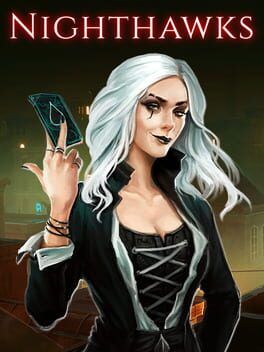
Nighthawks arrives on September 22, 2026 for PC, Mac, and Linux through Steam and GOG, according to Rue Morgue, with a script reported at more than 800,000 words and more than eighty fully voiced characters. That is the essential promise and the essential risk of The Curiosity Engine's vampire RPG, published by Wadjet Eye Games: this is a game built around reading, choosing, and inhabiting a long undead life one night at a time.
That scale creates a clear divide for prospective players. PC Gamer's review called it a well-written vampire chronicle for players who are not put off by reading a lot of words, while Rock Paper Shotgun described a five-act structure made up largely of vignettes that can be memorable but uneven. Both observations point to the same tension. Nighthawks has the breadth of a large narrative RPG, but its pleasures are closer to interactive fiction, urban fantasy serials, and social stat-building than to party combat or loot-driven progression.
As a Nighthawks review, the useful question is not whether there is enough vampire material here. There is plenty. The better question is whether its dense prose, episodic structure, and role-playing checks create momentum across dozens of scenes. The answer is mostly yes for players who want to role-play a social predator navigating a newly exposed undead society, and less so for genre fans hoping for a sharper mechanical spine beneath the writing.
A city built around visible vampires gives the premise real shape
The strongest setup detail is also Nighthawks' cleanest departure from familiar vampire RPG tradition. PC Gamer described it as a world where the masquerade is gone: everyone knows vampires are real. Rock Paper Shotgun similarly frames the player as a newly made vampire entering a city where that revelation has already changed public life. Rue Morgue adds that the protagonist arrives six months into their unlife in a city that has publicly promised the undead a second chance.
That matters for the role-playing texture. You are not simply hiding from human society. You are negotiating with it, exploiting it, being judged by it, and deciding how much of a monster you are willing to become while humans and vampires are still working out the rules of coexistence. PC Gamer notes that supernatural traits remain mysterious to most people despite the public revelation, which lets Nighthawks keep some gothic uncertainty without rebuilding the old secrecy premise from scratch.
The city is arranged around nightly exploration. Rock Paper Shotgun names three neighborhoods: the down-and-out Cradlebridge, the red light district Angelbreach, and the upper-class Fountaincourt. You take control of the titular Nighthawks nightclub and rise quickly in importance, which gives the game a social hub and a reason to care about reputation, contacts, and leverage. Its backdrops and portraits, according to Rock Paper Shotgun, help sell grime, tension, and nighttime atmosphere even when some tertiary portraits are reused. The result is a city that feels designed for encounters rather than freeform traversal, but those encounters carry enough class, vice, and fear to make the map feel socially legible.
Progression favors identity, habits, and social leverage over combat depth
Nighthawks is most interesting when it treats character building as a record of behavior. PC Gamer and its syndicated text via Head Topics describe a text-based RPG structure reminiscent of Fallen London or Citizen Sleeper: choose a location from a map, enter a choose-your-own-adventure-style scene, and test abilities tied to traits that grow through use. Rock Paper Shotgun cites levelable traits such as brawling and seduction, along with special skills, including one playthrough ability that could draw echoes of the past from a corpse.
That approach gives progression a pleasingly diegetic quality. Head Topics describes a biker gang initiation that raises an exhibitionist trait, which can eventually feed into seduction and infamy, while sewer travel can push the player toward faster movement through those routes. Bringing companions on quests increases their respect. Fighting thugs raises brawling. These are small systems, but they suit a vampire story because your build becomes a portrait of what you repeatedly choose to do after death.
Character creation also supports the fantasy. PC Gamer's review materials describe background selection, a vampire sire, and a single supernatural power. Rue Morgue lists examples including Mesmerism, Natural Dominion, and Tenebrous Form, while other provided text mentions powers such as speaking to corpses or turning into shadow. In practice, that means Nighthawks is at its best when a scene asks who your vampire is: a manipulator, a brute, a shadow, a social climber, or a frightened immortal trying to keep a conscience intact.
Combat is intentionally secondary. Head Topics describes simple fights where vitality drains while impact sounds play, with more involved encounters adding skill checks and choices such as fighting dirty or pulling back to recover. That is enough to give danger a mechanical presence, but it does not make Nighthawks a tactics RPG. Players who judge an RPG primarily by encounter design will find the combat thin. Players who judge builds by how often they unlock dialogue, social routes, and flavorful consequences will get much more out of it.
The best vignettes turn vampire fiction into social pressure
Rock Paper Shotgun's review identifies the game's best writing as self-contained stories that use vampire fiction to examine obligation, oppression, and connection inside isolation. Two standout vignettes, as described there, involve freeing two very different women from restrictive obligations. One draws power from an old cultural hold surrounding an ancient vampire. The other works through a more modern allegory shaped by the fact that vampires have only recently become public knowledge.
Those examples capture what Nighthawks does well. Its premise lets old gothic concerns meet modern bureaucracy, prejudice, sex work, policing, class anxiety, and social performance. The nightly structure gives the writing room to focus on one person, one location, or one dilemma, then fold that experience back into the larger question of how vampires and humans can share a city.
The tone also seems deliberately broader than horror alone. Rue Morgue characterizes the project as balancing gothic dread with humor and hope, and credits writer Richard Cobbett, known for work on Failbetter's Sunless Sea and Sunless Skies. That background tracks with the reported structure: this is an RPG that enjoys a good premise, a strange social rule, and a cruel little joke, then asks whether your vampire responds with empathy, hunger, opportunism, or calculation.
For lore-minded RPG players, that is the hook. Nighthawks is compelling when it lets you learn the city through cases, favors, allies, and reputations rather than codex dumps. Its worldbuilding is strongest when a small encounter reveals how recent vampire visibility has changed a workplace, a relationship, a police interaction, or a survival strategy.
The same structure can make the campaign feel fragmented
The cost of the vignette structure is momentum. Rock Paper Shotgun says the main story builds on itself but still feels separated into individual slices across five acts. That is an important warning for anyone coming to this Nighthawks game review hoping for a single driving plot with constant escalation. The campaign appears designed as a chain of episodes, not a continuous thriller.
That can slow the experience even when the prose is strong. A dense text RPG needs each scene to either deepen the player character, complicate the city, or push a relationship forward. When a vignette does all three, Nighthawks sounds unusually rich. When it leans on a broad thread without a fresh twist, Rock Paper Shotgun suggests it falters, citing anti-vampire sentiment as a less successful connecting idea than the sharper individual stories.
Presentation has a similar tradeoff. Rock Paper Shotgun praises painterly backdrops, characterful portraits, flavorful sound effects, and catchy music, but notes that reused portraits can stand in for minor characters and that the music may feel catchy partly because it recurs often. This does not sound like a production failing so much as a prioritization. The art, audio, and interface support the writing. They rarely seem positioned to carry the experience on their own.
That is why the prose density is the decisive factor. If you enjoy reading long scenes, checking social options, and living with a gradual accumulation of choices, Nighthawks' volume is a feature. If you tend to skim RPG dialogue to reach combat, exploration, or loot decisions, the same volume will feel like resistance.
PC availability, Steam caveats, and the buyer's-guide verdict
The confirmed launch plan, according to Rue Morgue, is September 22, 2026 on Steam and GOG for PC, Mac, and Linux. PC Gamer's review box listed the game as single-player, with price TBA at the time of review, and Steam Deck status unknown. PC Gamer also listed its review hardware as Windows 11 with an Intel Core i9, 32GB RAM, and an Nvidia RTX 4060. The provided source material does not include final system requirements, final price, or verified Steam Deck results, so buyers should check the storefront before purchase.
There is also an availability complication worth separating from the review itself. In a separate report, PC Gamer said that before launch Nighthawks had been removed from Steam search and delisted in certain countries after Valve classified it Adults Only, with the report quoting that as very bad news for the team. The provided materials do not establish the current regional status after release, so the practical advice is simple: if Steam does not surface the game in your region, check the official Wadjet Eye channels and the GOG listing.
As an RPG, Nighthawks is easiest to recommend to players who liked the social texture of Failbetter-style interactive fiction, the schedule-and-location rhythm associated with Citizen Sleeper comparisons, or vampire fiction that treats immortality as a civic problem as much as a curse. It is harder to recommend to players wanting crunchy combat, lavish animation, or a campaign that never pauses for another self-contained tale.
Score rationale: the story and role-playing systems carry the experience, with strong worldbuilding, meaningful identity-based progression, and several reported standout vignettes. The weaknesses sit in pacing, repetition, and combat simplicity. Nighthawks is a thoughtful, word-heavy vampire RPG whose best nights are memorable, but its structure will test anyone who needs every scene to bite with equal force.
Final Verdict
A solid gaming experience that delivers on its promises and provides hours of entertainment.