
Review

By MVP
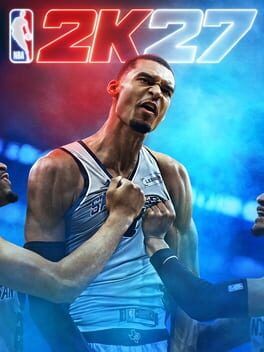
Image: IGDB
Store links: NBA 2K27 on Steam
A better basketball game trapped in familiar 2K economics
The clearest confirmed improvement in NBA 2K27 is on defense. Across the available review material, the strongest praise lands on the same part of the floor: contests matter more, defenders have finer control, and the five-on-five game feels less tilted toward unstoppable shot-making than it did in recent entries. GamingBolt says Visual Concepts has made defenders more influential over ball handlers, with right-stick control over posture and arm position. IGN also reports that being near a shooter and putting a hand up now alters attempts in a way that makes full games feel more competitive.
That is the good news, and it is meaningful. A basketball sim lives or dies on whether possessions feel earned, and NBA 2K27 appears to make stops feel like a skill again. The tension is that the rest of the product still asks players to live inside the modern NBA 2K economy. Gamepur reports that MyPLAYER builds still cannot be refunded for VC or attribute points, even with the new Build-as-You-Go progression system. IGN criticizes the continued emphasis on microtransactions and describes additions such as MyCareer Eras and MyNBA Legacy as features that spotlight recurring series problems. Athlon’s summary captures the split neatly, calling NBA 2K27 an excellent basketball game inside an occasionally exhausting NBA 2K product.
That split defines this NBA 2K27 review. If your priority is NBA 2K27 gameplay, especially offline five-on-five or competitive games where defense should matter, this is one of the more encouraging annual steps the series has taken. If your priority is NBA 2K27 MyCareer, NBA 2K27 MyTeam, or experimenting with NBA 2K27 builds without spending cautiously, the same structural warnings still apply.
Defense finally has enough tools to change possessions
The best NBA 2K27 gameplay change is defensive agency. GamingBolt reports that defenders now have more minute control over movement, including easier right-stick inputs to raise hands, block shots without fouling, and cut off passing lanes. IGN’s review lines up with that impression, saying shot contests are more effective and that the balance between offense and defense makes online and offline play feel better.
That matters because NBA 2K has often struggled to make good defense feel as expressive as good offense. In 2K27, the defender’s body position appears to carry more weight. GamingBolt notes that contact animations stand out when posting up on offense or bodying up on defense, while The Outerhaven says the expanded ProPLAY animation set makes transitions between movements more natural. The Outerhaven also says star players are more recognizable through how they move and attack, using Stephen Curry and Giannis Antetokounmpo as examples of players who should not feel interchangeable.
The offensive side is more demanding rather than dramatically reinvented. GamingBolt describes improved ball handling and a floor highlight that shows which direction a player’s weight is leaning, giving dribblers clearer feedback when committing to a move or cutting back. The same review says ankle-breaker moments felt more common. IGN, meanwhile, says offense feels largely familiar but slightly more challenging, especially because Rhythm Shooting is less forgiving than in NBA 2K26.
Shooting remains divisive by design. GamingBolt says the universal green-or-miss meter is back and more tightly tied to each shooter’s motion, with the green window changing based on ratings, coverage, and whether the player is stationary or moving. IGN says jumpers require hitting the green portion of the meter and notes that Rhythm Shooting’s timing and down-up motion may not feel worth mastering for players comfortable with the classic button release. The reported result is a higher skill ceiling, but also more friction for casual players and anyone who rotates between many different shooters.
The new logic-based Dunk Meter follows the same philosophy. IGN reports that the meter now appears on drives and rim attempts, not only Skill Dunks, and accounts for defender positioning. In practical terms, even a well-timed dunk can fail against a properly positioned elite rim protector. That may frustrate players who expect every clean input to end in a poster, but it fits 2K27’s broader court identity: ratings, timing, positioning, and body contact all matter.
MyCareer progression is more flexible, but VC mistakes still stick
NBA 2K27’s biggest MyCareer progression idea is Build-as-You-Go, but the name can be misleading. Gamepur explicitly reports that players cannot refund a MyPLAYER build to recover VC or attribute points. Once VC is spent on attributes, there is no traditional free respec system that lets players reset the character and get that investment back.
That single fact should shape how players approach NBA 2K27 builds. Build-as-You-Go makes development more flexible, according to Gamepur, by letting a MyPLAYER grow around disciplines such as Shooting, Finishing, Playmaking, Defense, Rebounding, and Physicals. The guide says repeated play in an area, such as three-point shooting, can progress that discipline and connect to rewards, Badge Progression, or Badge Tokens. Build Specialization adds discipline-specific quests that can reward Cap Breakers, cosmetics, and Badge Synergy.
The flexibility is real, but it operates inside the build you already paid into. Gamepur says Badge Tokens are used to equip badges, while attributes and physicals determine which badges a build qualifies for and how many tokens they require. Multiple Badge Loadouts allow players to save combinations and switch before games. That is a useful improvement for adapting to matchups or mode needs, especially for players who bounce between park-style games and organized five-on-five. It does not erase the cost of bad early attribute decisions.
That distinction is the heart of NBA 2K27 MyCareer. The mode appears more forgiving in how a player evolves from game to game, but not in how it treats spent VC. For players who enjoy grinding a single archetype and tuning badges, this should feel better than a rigid builder. For players who like to test several NBA 2K27 builds before settling on a main, the safest advice is still to plan first, spend later, and assume there is no full refund path unless 2K announces otherwise.
MyTeam and franchise modes add hooks, with uneven follow-through
The source material points to meaningful mode activity, but the praise is less unanimous than it is for on-court play. ESPN says NBA 2K27’s MyTeam lets players build a team by completing challenges and acquiring player cards. That confirms the core loop remains built around collection, team-building, and challenge completion. For players who like roster puzzles and card progression, NBA 2K27 MyTeam appears to stay in its lane rather than change the business model around it.
The unresolved issue is how that loop intersects with live-service pressure. IGN criticizes NBA 2K27 for an ever-growing emphasis on microtransactions, while The Outerhaven notes that VC remains lurking in the background. The available excerpts do not provide exact pricing, pack odds, or reward-rate data, so any harder claim about MyTeam economy balance would go beyond the sources. Still, the pattern described by multiple outlets is clear enough for buying advice: the basketball inside MyTeam may benefit from the improved defensive model, but players sensitive to monetized progression should wait for deeper economy impressions before committing serious time or money.
Franchise-style play receives a similarly mixed signal. GamingBolt says NBA 2K27 offers ways to experience the NBA as an individual player, a real-team manager, or the builder of a custom team, and describes the broader package as stronger on and off the court. ESPN highlights the appeal of older NBA generations, saying the game does justice to arenas, jerseys, and lineups from past eras. IGN is less positive, calling MyNBA Legacy one of the new additions that acts as a magnifier for long-running issues and describing some features as half-baked.
That disagreement is worth preserving rather than flattening. If you play NBA 2K primarily for historical lineups, uniforms, arenas, and sandbox team control, there is reported value here. If you expect every new named mode to arrive fully developed, the available criticism suggests caution. NBA 2K27 seems strongest when its modes funnel you back into improved basketball. It is less convincing when the mode layer asks to be judged as a major reinvention.
Presentation sells player identity, even as the structure feels annualized
NBA 2K27’s presentation and animation work appear to be a major part of why the gameplay lands. The Outerhaven reports that ProPLAY has been expanded with thousands of additional animations and says the difference is visible during games through smoother dribbling, more natural transitions, and better star identity. That last point matters in a licensed basketball sim. A roster is only as convincing as the gap between a guard creating separation, a wing attacking through contact, and a center changing the geometry around the rim.
GamingBolt’s impressions support that reading, especially around contact. The review says movement improvements are most visible when players collide or engage physically, whether in the post or on-ball defense. That should give half-court possessions more texture, because strength, angles, and footwork carry more of the burden instead of every play reducing to a canned outcome.
The historical presentation also gets a nod from ESPN, which says players who grew up with older NBA generations will find a memory-lane appeal and that the game does justice to arenas, jerseys, and lineups from the time. That is a useful counterweight to the criticism of annual familiarity. NBA 2K27 may not escape the structure of a yearly sports release, but its best presentation details seem tied to the parts of basketball fans actually notice: who moves like himself, whether contact looks believable, and whether classic eras feel properly staged.
Audio is harder to judge from the provided sources. The excerpts do not offer specific commentary, soundtrack, crowd, or arena-audio analysis. Given that, the score here reflects the broader presentation package rather than a detailed source-backed breakdown of the mix.
PC support is confirmed, but feature parity remains the unanswered question
The available sources confirm NBA 2K27 is on PC, but they do not establish enough about PC feature support to give the platform a clean endorsement. The Outerhaven lists NBA 2K27 for PlayStation 5, Xbox Series X|S, PC, and Switch 2, with a September 4, 2026 release date, and identifies 2K as publisher and Visual Concepts as developer. Gamepur links to the Steam store app page for NBA 2K27, confirming the game’s Steam presence.
What is missing from the provided material is just as important for PC buyers. The Steam Community excerpt supplied here is boilerplate navigation and does not include user-review sentiment, technical complaints, feature lists, system requirements, anti-cheat notes, crossplay information, or confirmation of parity with PlayStation 5 and Xbox Series X|S versions. None of the excerpts establish ultrawide behavior, frame-rate caps, shader compilation quality, online stability, input latency, or whether PC receives every same-generation feature without compromise.
That leaves PC support in a cautious category. NBA 2K27 is available on PC, and the Steam listing exists, but readers shopping specifically for the PC version should verify the current Steam page, recent user reviews, and post-launch technical reports before buying. That is especially true for players focused on online MyCareer or MyTeam, where performance, latency, and account reliability matter as much as raw frame rate.
Score rationale and buyer guidance
NBA 2K27 meaningfully improves the series where it most needed to improve: the possession-to-possession basketball. The reported defensive changes make contests matter, the expanded animation work helps stars feel distinct, and the tougher shot and dunk systems push players toward better timing and smarter shot selection. As a sports game, that is the core win.
The reason this review stops short of a higher score is the familiar 2K tax on patience. MyCareer’s Build-as-You-Go system and badge loadouts sound useful, but Gamepur’s reporting that VC and attribute investments cannot be refunded keeps build experimentation risky. MyTeam’s card and challenge structure remains intact, according to ESPN, while IGN and The Outerhaven both flag the continuing pressure of VC or microtransactions. Franchise and historical content have appeal, but the sources conflict on whether the new mode additions feel fully realized.
Buy NBA 2K27 if you want better NBA 2K27 gameplay, play a lot of offline games, value defense, or are already comfortable with the series’ live-service economy. Wait for a sale or deeper PC-specific reporting if your enjoyment depends on low-friction NBA 2K27 MyCareer progression, generous NBA 2K27 MyTeam rewards, or confirmed PC feature parity. This is a stronger basketball sim than last year in important on-court ways, but it still makes players negotiate with the same business model between games.
Final Verdict
A solid gaming experience that delivers on its promises and provides hours of entertainment.