
Review

By The Completionist
MOUSE: P.I. For Hire Review
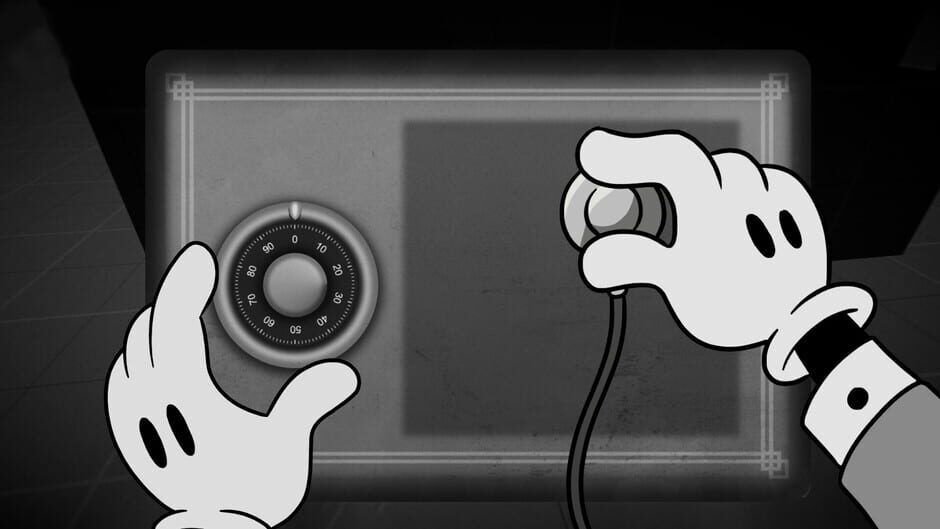
The first thing anyone notices about MOUSE: P.I. For Hire is the obvious thing. It looks incredible. The Fleischer-style rubber-hose animation, the grainy monochrome filter, the grotesque smiles and slapstick violence all land at once, and for a few minutes it can seem like the whole game might be coasting on that opening burst of novelty. That is the central question hanging over Fumi Games' shooter: once the visual hook stops feeling new, is there actually a great FPS here?
The reassuring answer is yes, mostly. MOUSE: P.I. For Hire is not just a mood board with a shotgun. It has the speed, readability, and crunchy feedback a retro FPS needs, and it understands that style only matters if the action underneath can carry it. The game does not reinvent the genre, and it occasionally leans too hard on its presentation to smooth over some familiar structural limitations, but its best stretches prove there is substance here beyond the grin and the grain.
You play as private investigator Jack Pepper, a trench-coated rodent working cases in a city where every alley looks like a punchline waiting to turn into a massacre. The noir framing is not merely decorative. The hardboiled setup gives the campaign a stronger sense of momentum than many throwback shooters manage. Instead of feeling like a string of disconnected combat arenas, levels often have a clear dramatic purpose. You are chasing leads, pushing through gang-controlled blocks, and descending deeper into corruption with enough narration and scene-setting to hold the episodes together.
That said, the writing is better at atmosphere than surprise. The dialogue snaps in a pleasing pulp rhythm, and the game gets decent mileage out of detective-fiction clichés filtered through cartoon-animal absurdity. But this is not some revelatory genre mashup where every joke lands and every mystery thread grips. The noir frame works because it commits to the bit with confidence, not because it produces a deeply intricate story. It gives the shooter an identity, and that turns out to be enough.
More importantly, the shooting has real bite. Weapons hit with a forceful, exaggerated punch that suits the cartoon ultraviolence perfectly. Muzzle flashes bloom like old film effects, enemies react with theatrical flops, and the audio sells each blast with satisfying bark. There is a welcome immediacy to combat. You move quickly, circle targets aggressively, and are pushed into maintaining momentum rather than peeking from safety. The game understands one of the oldest truths in this space: a retro shooter lives or dies by how good it feels to keep moving and keep firing.
For long stretches, MOUSE nails that sensation. Encounters have enough pressure to stay lively, and the readability of the art helps more than you might expect. Despite the stylized black-and-white presentation, enemy silhouettes and attacks are usually easy to parse in motion. That is a small but crucial win. A lot of heavily stylized action games become visual mush once combat starts, but MOUSE generally avoids that trap.
Where it falls a step short of the very best retro FPS releases is in the depth of its combat ecology. The enemies do their jobs, but they do not often force radically different tactics. The arsenal is fun, but not every tool changes the flow of a fight in a memorable way. You are rarely dealing with the kind of layered systemic interplay that makes the top tier of the genre endlessly replayable. There is snap here, not quite brilliance.
Level design follows a similar pattern. The strongest maps use the noir premise to give spaces a sense of place beyond their combat function. Streets, offices, hideouts, and urban rat warrens feel authored rather than purely abstract. There is pleasure in moving through spaces that seem to belong to a city instead of a level editor. The best stages create a rhythm between navigation, combat, and small bits of environmental storytelling, letting the detective framing breathe without stalling the action.
But level design is also where the game most clearly shows its limits. Too many sections are more straightforward than memorable. You push ahead, clear rooms, hit the next objective, and keep going. That baseline is solid, but it does not consistently produce the kind of set pieces, secrets, or spatial trickery that turn a good shooter into an essential one. When MOUSE is humming, it feels like a confident modern riff on old-school FPS design. When it dips, it can feel like a very stylish corridor campaign with decent combat.
The humor lands better than expected because it rarely strains for applause. The funniest thing about MOUSE is not a stream of one-liners but the way it commits to the collision between cheerfully elastic cartoon language and brutal shooter violence. Enemies collapse in absurd poses, weapons feel like props from a deranged animation cel, and the whole world seems one frame away from turning into a visual gag. It helps that the game does not oversell itself as a comedy machine. The jokes are seasoning, not the meal.
That restraint matters. A concept like this could have become exhausting fast if every room stopped to wink at the player. Instead, MOUSE trusts the aesthetic and the premise to carry most of the humor, and that confidence keeps the tone from becoming unbearable. The noir seriousness gives the silliness contrast, while the cartoon silliness stops the noir from becoming self-important. It is a smart balancing act.
The audiovisual presentation deserves praise beyond the obvious animation style too. The jazz-soaked mood, filmic grime, and expressive character design do heavy lifting in making the city feel coherent. More crucially, the art direction is not just beautiful in screenshots. It functions in motion. The game has a strong sense of visual timing, and that helps every weapon swap, enemy death, and environmental flourish feel connected to the same exaggerated universe.
So is it merely stylish, or is it actually one of the year’s stronger retro FPS releases? It clears that bar, with some caveats. MOUSE: P.I. For Hire is not a revolutionary shooter, and anyone hoping for a new genre king may come away a little disappointed. Its combat systems are not rich enough, and its levels are not inventive enough, to place it in the absolute top bracket. But it absolutely is more than a visual gimmick. The shooting is consistently satisfying, the noir framework gives the campaign shape, and the humor enhances the action instead of distracting from it.
That makes it one of the more worthwhile retro shooters of the year, particularly for players who are tired of throwback FPS games that remember the speed but forget the personality. MOUSE has personality in excess, and thankfully it also has enough mechanical strength to back it up. The style gets you through the door. The gunplay keeps you there.
It may not be the last word on the modern boomer shooter, but it is no fraud either. MOUSE: P.I. For Hire earns the right to be remembered for more than its face.
Final Verdict
A solid gaming experience that delivers on its promises and provides hours of entertainment.