
Review

By Pixel Perfect
MotionRec review prep: Famitsu’s score suggests a clever sleeper worth watching
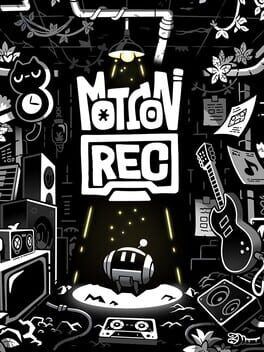
MotionRec is the kind of game that can disappear in the noise if you only scan release calendars for big names. On paper, it sounds modest. In practice, its central idea is exactly the sort of mechanic-driven hook that can turn a small puzzle-platformer into something special. The game is built around recording, replaying, and even reversing your own movements, turning basic platforming actions into the foundation for route planning, puzzle solving, and speed-focused execution.
That concept immediately gives MotionRec a stronger identity than a lot of indie platformers fighting for attention. Rather than leaning on vague atmosphere or retro shorthand, it appears to anchor the entire experience around one system. You move, save that movement, play it back, and use the resulting ghost-like action to interact with the stage in smarter ways. If the level design is up to the task, that creates the kind of satisfying puzzle-platform loop where every solution feels earned because it comes from understanding your own inputs instead of guessing at obscure rules.
Platform availability also helps its chances. MotionRec is listed for Nintendo Switch, PlayStation 5, and PC, which gives it a decent spread across the audiences most likely to appreciate compact, systems-driven indies. That matters, because this looks like a game that could find a particularly warm welcome on Switch, where inventive puzzle-platformers still have room to build a following, while PC gives it a natural home for players who like precision and chasing cleaner runs.
The immediate news peg is its fresh Famitsu reception. In the latest Famitsu roundup, MotionRec landed among the newly reviewed releases, which at minimum puts it on the radar in a week crowded with other titles. Famitsu scores are never the final word, but they are useful as an early temperature check, especially for smaller Japanese releases that might not get much English-language critical attention right away. The signal here is not that MotionRec has erupted into must-play phenomenon status. It is that it has shown up with enough credibility to justify a closer look rather than being dismissed as filler.
That distinction is important. Plenty of small platformers arrive with one decent idea and then collapse into repetition, muddy controls, or level design that never evolves beyond the tutorial. MotionRec does not yet look like an obvious breakout, but it does look like the sort of overlooked release where the mechanic is strong enough to carry real interest. A game about recording and replaying your movement lives or dies on clarity, responsiveness, and escalation. If those pieces are in place, it could become one of those under-the-radar recommendations people pass around with a simple pitch: you need to try this because the gimmick is actually the whole game, and the whole game works.
The strongest reason to pay attention is that the premise is not cosmetic. Recording motion can change how a player thinks about space, timing, and sequencing. Instead of simply clearing jumps and dodging hazards, you are potentially building solutions in layers, treating your past actions as tools. That gives MotionRec room to feel both cerebral and kinetic, a valuable combination for anyone who likes puzzle games but still wants the tactile pleasure of a platformer.
Right now, the game reads less like an instant essential and more like a possible sleeper. That is not faint praise. In a release environment stuffed with overfamiliar indie platformers, having a clean, understandable, mechanically rich concept is half the battle. Famitsu’s attention gives it a little extra legitimacy, and the multi-platform release means interested players should not have much trouble finding it.
So is MotionRec worth closer attention from our audience? Yes, with measured expectations. It does not yet have the broad critical chorus that would let us declare it a hidden masterpiece, but it absolutely looks like an overlooked release with genuine promise. If you are drawn to puzzle-platformers that revolve around one sharply defined idea, this is the kind of game that deserves to be watched, sampled, and potentially championed before it slips through the cracks.
We will need more hands-on critical consensus to know whether the execution fully matches the concept, but the early signs are encouraging for players who value clever design over marketing muscle. MotionRec may not be loud, but it has the profile of a game that could earn real affection from the right crowd.
Final Verdict
A solid gaming experience that delivers on its promises and provides hours of entertainment.