
Review

By Pixel Perfect
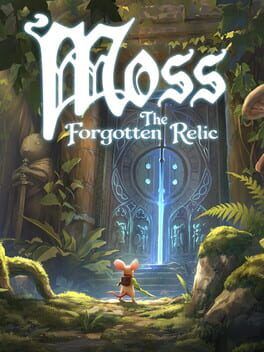
Image: IGDB
Store links: Moss: The Forgotten Relic on Steam
A VR storybook steps out of the headset
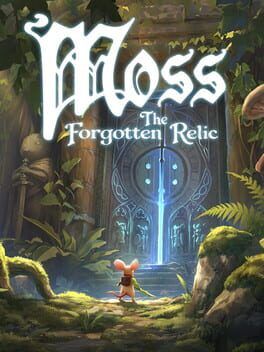
The most important fact about Moss: The Forgotten Relic is also its biggest creative risk: Polyarc has taken Moss and Moss: Book II, previously known as VR-only adventures, and rebuilt them as a traditional flat-screen release. Console Creatures describes the package as bringing those earlier VR titles together into a single adventure, while IGN calls it a remake of the previously VR-exclusive Moss and Moss: Book 2. Creative Bloq adds that the release combines Moss, Moss: Book II, and the Twilight Garden DLC, with reworked visuals, new cutscenes, and tweaked gameplay.
That makes this Moss The Forgotten Relic review slightly different from a standard sequel verdict. The question is not whether Quill’s adventure was special in VR. The sources agree that it was. The question is whether the heart of Moss survives when the Reader can no longer physically lean into its miniature world, reach into a puzzle box, and share space with a tiny sword-wielding mouse who looks back.
It mostly does. The Forgotten Relic keeps the fairy-tale warmth, readable puzzle design, and tactile partnership between Quill and the player. It also gives the two-game arc more heft simply by presenting the full journey together. What it loses is intimacy. What it gains is reach. Creative Bloq lists the release for PS5, Xbox Series X|S, PC, and Nintendo Switch 2, with a July 9 release date, while Console Creatures links the Steam page. For players who could not use VR because of cost, comfort, motion sickness, or platform access, that shift is substantial. Polygon’s reviewer framed the appeal clearly, saying the flat-screen release opened the door to players physically unable to play VR games.
The result is a strong VR puzzle adventure without the headset requirement, but not a frictionless one. Its storybook charm remains the draw. Its puzzles are where the conversion proves itself. Its camera and combat show where the old design still pushes against the new format.
Quill is still the reason the book works
Moss begins with a deliberately simple fantasy hook. As IGN describes it, the player is the Reader, finding a book in an old library and meeting Quill, a young mouse whose discovery of a piece of Glass lets her interact with you. Polygon’s summary follows the same setup: Quill finds a Glass, her uncle is captured, and she sets out with the Reader’s help into a larger adventure than she expected. IGN also notes the role of a Starthing, one of the mischievous beings who meddle in mortal lives, in pushing Quill toward her search.
On paper, that could sound slight. In motion, Moss has always depended on craft rather than lore density, and The Forgotten Relic preserves that strength. The story is framed through pages, chapters, and narration. Console Creatures praises the single narrator approach, where the performer handles dialogue and character voices in a manner that recalls someone reading a fantasy story aloud to a child. IGN points to the page-turning transitions, illustrated dramatic moments, and the act of flipping pages yourself as central to the fairy-tale feel.
Quill carries that framing because she is expressive without being overexplained. IGN describes her as brave but not fearless, strong but not stoic, and aware that she cannot do everything alone. That is the correct read on why Moss still lands outside VR. The Reader is powerful, but Quill is never reduced to a cursor with whiskers. She points when you are stuck. She reacts when you fail. IGN mentions her shaking herself off after a bad fall, offering high fives after success, and sometimes breaking into dance.
That responsiveness matters more in flat-screen form than it did in VR. Without the physical closeness of a headset, The Forgotten Relic needs animation, framing, and pacing to maintain the bond. It succeeds because Quill remains readable at every scale. She is small in the world, but she is never small to the game. The storybook charm survives because the adventure treats her as a partner rather than a pet.
The Reader controls are the smartest part of the conversion
The Forgotten Relic’s best design decision is refusing to flatten the Reader into a background mechanic. The original VR interaction was built around reaching into the scene, moving objects, grabbing enemies, and helping Quill from outside her body. In the flat-screen version, that becomes a dual-control setup. Polygon says one thumbstick controls Quill while the other controls the Reader’s hand. Gamesear’s demo impressions describe the controller layout similarly, with the left stick moving Quill and the right stick controlling the wand-like Reader interaction.
That setup is awkward for a few minutes because it asks the player to think in two layers at once. Then it clicks. You guide Quill through the environment while manipulating the stage around her, and the best puzzles use both actions in real time. Console Creatures gives a clear example: a beetle-like enemy can be grabbed by the Reader, dragged onto a switch, and used to keep a path open while Quill continues through hazards. Polygon also notes that the Reader frequently takes control of enemies to help Quill navigate.
This is where The Forgotten Relic proves it has not become a standard platformer wearing Moss art. Its puzzle language is still about cooperation across scale. Quill climbs, jumps, fights, and dodges. The Reader shifts blocks, elevates platforms, moves pieces, and weaponizes enemy behavior. Gamesear’s demo write-up calls the adaptation surprisingly effective because the game turns VR-style hand movement into something close to twin-stick multitasking.
The puzzles are not pitched as brutal brainteasers. Polygon says they are never too head-scratching, but they invite useful trial and error and sometimes require a few laps around an area before the solution appears. That is exactly the right difficulty band for Moss. It wants the pleasure of discovery, not the exhaustion of a locked door. The Forgotten Relic is at its best when the solution makes you feel like Quill and the Reader solved the room together, each handling a part the other could not.
Scale improves across the full package, but the camera pays the bill
Bundling Moss, Moss: Book II, and Twilight Garden changes the shape of the journey. TechRaptor says the first portion includes the original Moss and the free Twilight Garden update, adding extra levels and some gameplay additions, while also describing that early section as short and mechanically simple compared with what follows. The larger package helps because the second game’s broader toolset and escalation are now part of the same arc rather than a separate return trip.
Polygon notes that Quill gains more tools as the games go on, and by the end of Book 2 the player is switching between those tools in satisfying ways to clear puzzles. Console Creatures mentions later abilities such as a dash and a sword that shoots a magical orb, which are useful in combat but stronger when combined with puzzle solving. That progression gives The Forgotten Relic the new weight it needs. The early Moss rhythm is gentle and charming. The combined release gives it a fuller rise, especially as environments move from colorful forests into gloomier castle spaces, as Polygon describes.
The cost is the camera. In VR, part of the magic came from physically inspecting diorama-like scenes. Creative Bloq says the original let players lean into those environments to hunt secrets, hidden paths, and puzzle clues. In The Forgotten Relic, the camera follows Quill through each environment in a more traditional way. Polygon is sharper about the issue, saying players cannot control the camera because the sticks are already assigned to Quill and the Reader’s hand. That can make judging jump distance tricky, and Polygon singles out a precise platforming section near the end of the first half as especially frustrating.
This is the conversion’s clearest compromise. The fixed camera is not a constant problem, and Creative Bloq credits Polyarc’s cutaway effects for helping keep Quill visible. Still, the camera changes how secrets and jumps feel. When a puzzle stalls, you sometimes wonder whether you missed a clue, misread depth, or fought the viewpoint. The best rooms absorb that limitation. The worst remind you that the game began life as something you could physically peer around.
Combat has charm, but puzzles give it purpose
Combat is The Forgotten Relic’s weakest pillar, and the sources are unusually aligned on that point. Console Creatures describes it as fun but not very deep, built around Quill’s sword or large hammer, basic three- or four-hit combos, jumping, and dodging. Polygon calls combat the weakest part of Moss, especially when it becomes a patience test against waves of enemies in closed arenas. Creative Bloq’s verdict also lists combat depth as a drawback.
The good news is that Moss rarely feels interested in becoming a demanding action game. Its fights are clean, readable, and animated with the same care as the rest of Quill’s movement. The problem is repetition. Standard encounters can feel like pauses between the more inventive rooms, especially when you are using the same small set of attacks to clear enemies before the next puzzle interaction becomes available.
Combat improves when the Reader is allowed to interfere. Gamesear’s demo impressions highlight the fun of fighting one bug directly while using the Reader’s magic to throw another across the room. Console Creatures’ switch example shows the stronger version of this idea, where an enemy becomes a living puzzle piece during a fight. Polygon also says combat improves in the second half as Quill acquires additional abilities.
That distinction shapes the score. As action design, The Forgotten Relic is merely solid. As a puzzle-action hybrid, it has flashes of cleverness that fit the series perfectly. The Reader should feel like a guardian, stagehand, and co-conspirator. When combat supports that fantasy, it works. When it asks Quill to clear another arena with basic attacks, the spell thins.
A beautiful world, with VR intimacy traded for access
The Forgotten Relic remains visually persuasive because Moss was always built like a living storybook. TechRaptor says the environments are still beautiful without VR. Creative Bloq praises the refined visuals, elegant fantasy world, and Quill’s animation, while noting that the art direction shines in specific moments. IGN emphasizes the theatrical book presentation: page turns between screens, narrated prose, character voices, and illustrated dramatic beats.
The audio presentation is a quiet strength. The sources do not provide a technical breakdown of music, effects, or mix quality, so the safest praise belongs to the narration and storybook delivery. Console Creatures says the narration works so well that they wished there were more of it. IGN similarly frames the narrator and page structure as essential to Moss feeling like an actual fairy tale rather than a game borrowing fairy-tale imagery.
The biggest presentation loss is emotional rather than technical. Creative Bloq argues that some of VR’s intimacy is gone, because the Reader no longer physically exists beside Quill in the same way. TechRaptor, from the perspective of someone who played the first game in VR, says the lack of immersion is noticeable at first but quickly offset by the convenience of playing without a headset. Polygon’s review makes the accessibility angle even clearer, since the flat-screen version serves players who could not comfortably use VR at all.
On performance, the supplied review material does not document major frame-rate problems, crashes, or platform-specific technical failures. Creative Bloq lists PS5 as running on Unreal Engine 5 and other versions under Unreal Engine 4, but the available sources do not give enough hard data to compare frame rates, resolutions, or loading times across PS5, Xbox Series X|S, PC, and Nintendo Switch 2. For buyers, the practical caution is therefore about design friction rather than reported technical instability: if fixed cameras frustrate you in platformers, expect a few rough edges. If VR comfort kept you away, this is the version designed to remove that barrier.
Verdict: the charm holds, even when the headset comes off
Moss: The Forgotten Relic answers its central question with confidence. Yes, the series’ storybook charm survives the move away from VR. Quill remains one of the most endearing heroes in modern puzzle-platforming because she feels present, capable, and emotionally legible. The Reader concept still matters mechanically, and the flat-screen controls preserve the crucial partnership between a tiny adventurer and a larger presence guiding the world around her.
The package also gives the adventure a better sense of scale. Bringing Moss, Moss: Book II, and Twilight Garden together means the early simplicity grows into a broader puzzle vocabulary, with more tools, bigger spaces, and better multitasking. It does not fully escape its origins. The fixed camera can make depth judgment and secret hunting less graceful than the VR diorama design, and combat remains the least interesting part unless enemies are folded into puzzle logic.
For new players, this is the easiest Moss VR review recommendation to make: if you wanted the Quill Moss game but skipped VR, The Forgotten Relic is a warm, clever, and accessible way in. For VR veterans, it cannot replace the strange delight of leaning into Quill’s world and feeling seen by her. It can, however, preserve nearly everything else that made Moss special.
GameLoop score: 8.4 out of 10.
Final Verdict
A solid gaming experience that delivers on its promises and provides hours of entertainment.