
Review

By Pixel Perfect
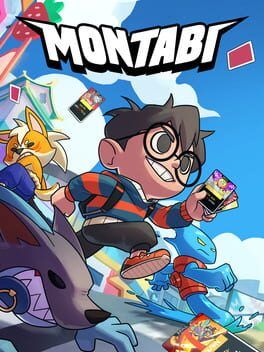
Image: IGDB
Store links: Montabi on Steam
A clever indie caught between two Switch generations
Montabi arrived on August 6, 2026 for Nintendo Switch and Switch 2, according to Nintendo Everything’s review listing, with Mankibo credited as developer and Akupara Games as publisher. That dual-platform launch creates the practical question at the heart of this Montabi review: if you want this creature-collecting roguelike on a Nintendo handheld, is the original Switch version good enough, or does the Switch 2 release become the safer buy?
The answer, based on the available Switch and Switch 2 review coverage, is that Montabi’s design is strong enough to recommend to genre fans, but the platform choice matters. Nintendo World Report and Hey Poor Player both reviewed the Switch 2 version and came away positive on the tactical loop. RPGamer, while praising the addictive structure, specifically cited performance issues on Nintendo Switch and game-breaking bugs as problems that held the game back. Hey Poor Player also mentioned glitches in its Switch 2 review, though it framed them as tolerable and expected to be addressed by patches.
That makes Montabi a good fit for handheld play in concept, but a conditional recommendation in practice. Its runs are compact, its battles are readable, and its creature-card synergies are the sort of systems that work beautifully in short sessions. The caveat is that the more technically stable version appears to be the one players should prioritize if they have the choice.
Monster catching rebuilt as a run-based tactics game
Montabi’s premise is simple. Nintendo World Report describes a society where people live alongside creatures called Montabi, before the player’s companion is stolen by Team X. Hey Poor Player names the antagonists as the X Gang and says the three playable trainers have also had Montabi companions taken. RPGamer is blunt that the story rarely develops beyond that rescue setup.
The thin narrative would be a bigger problem if Montabi were structured like a traditional monster-catching RPG. It is not. Nintendo Everything defines it as a creature-collecting roguelike where each run is its own journey rather than one long campaign with a permanent party. You recruit Montabi, gather upgrades, pick through branching paths, and try to push farther before the run ends. RPGamer says a complete run through the three main areas can take roughly thirty to forty-five minutes, which is a strong handheld rhythm: long enough to feel like a full attempt, short enough that a failed run does not sour the evening.
The strongest craft decision is that Montabi treats its influences as ingredients rather than a checklist. The Pokémon comparison is obvious, and Nintendo World Report also points to Mega Man Battle Network in the grid-based combat. The deckbuilding layer gives each run texture, while the roguelike structure keeps the creature roster from turning into a solved party list. You are not simply hunting for the best monster and coasting. The better runs come from adapting to the offered starters, equipment, charms, stickers, events, and card rewards.
Combat is where Montabi earns its confidence
The available reviews agree that Montabi’s best material is its battle system, even where they differ on exact field description. Nintendo World Report describes fights on a 3x6 grid with the trainer and Montabi placed in combat, plus reserves that can be switched in. RPGamer describes battles on a 3x3 grid with the player joined by up to two Montabi at once. That conflict may reflect different interpretations of the battlefield layout or build details, but the important confirmed point is consistent: positioning, cards, and creature roles drive each fight.
Nintendo World Report says actions are performed by playing cards, with each Montabi using a distinct combat style. Some apply bleed, some place traps and pickups, and others become stronger by discarding cards. RPGamer adds that cards can include buffs, debuffs, armor, and attacks, with action point costs attached. It also notes that zero-cost shortcut cards can become crucial later in a run, especially when a draw gives you the exact tempo needed to survive a boss.
This is where Montabi separates itself from the busier end of the roguelike deckbuilder shelf. Nintendo World Report praises the clarity of enemy telegraphs, saying upcoming attacks are shown both on the field and in descriptions, which allows planning without guesswork. That matters enormously on handheld screens. A tactical game can be deep and still exhausting if it hides intent, but Montabi’s reported readability keeps the player focused on choice rather than deciphering the interface. The one notable usability knock from Nintendo World Report is that the on-screen cursor can be too easy to lose track of, a small annoyance that stings more in a game built around careful targeting and movement.
Pacing favors handheld play, but the difficulty bites
Montabi’s run length and decision cadence are its best argument for Nintendo Switch and Switch 2. RPGamer’s thirty-to-forty-five-minute estimate for a full successful run puts it in a sweet spot for portable sessions. You can make meaningful progress without committing to a sprawling RPG chapter, and a loss still leaves behind useful knowledge about card synergies, trainer styles, and creature roles.
The pacing is also sharpened by the map structure. RPGamer describes nodes that include events, Gatchapon, and Vending Machine stops, with randomized equipment and boons that can help or hurt. Nintendo Everything similarly points to branching paths, decisions, loot, and encounters as the source of run-to-run variation. That structure gives Montabi the small but vital indie quality of making each decision feel like a nudge to your build rather than dead space between fights.
It is not an easy game, though. Hey Poor Player says an earlier demo had a first boss that repeatedly beat the reviewer, while the newer Switch 2 build felt better balanced. That is important praise because it suggests Mankibo adjusted the experience without flattening it. The appeal here is the moment a scrappy team suddenly clicks: a trainer stance, a passive ability, a defensive card, and one switched-out creature turning a doomed fight into a narrow win. If you want a cozy monster catcher, Montabi may feel too punishing. If you want a compact tactics puzzle with cute creatures and hard decisions, it has the right pressure.
Story, personality, and presentation lag behind the systems
Montabi’s biggest weakness is that its creatures and world do not appear to have the same expressive force as its mechanics. RPGamer calls the story effectively non-existent and criticizes the late plot twist as generic. Nintendo World Report’s Metacritic-listed review excerpt says the story, music, and characters are not standout elements, while also arguing that the game lays a strong foundation that could benefit from giving the titular creatures more defined personality.
That last point is the key disappointment. Creature collectors live or die on attachment as much as mechanics. Montabi has the mechanical side, with evolutions, passives, different playstyles, and tactical roles. Nintendo World Report notes that leveling a Montabi can evolve it into a stronger version with new passive abilities. The missing layer is emotional specificity. The reviews provided praise what Montabi do in battle far more than who they are outside it.
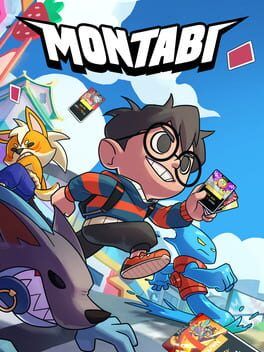
Visually, the required cover art and the general review descriptions point toward a colorful, approachable indie, and Hey Poor Player calls it a colorful adventure. Still, the sourced criticism around story, music, and character identity keeps this from feeling like a fully rounded monster-catching world. Montabi is easy to admire as a system. It is harder, based on the current coverage, to call it memorable as a cast.
Switch 2 is the version to pick if you can
The Switch 2 advantage is not framed in the sources as a confirmed feature list, so players should not assume upgrades that have not been announced in the provided material. There is no sourced confirmation here of price, resolution, frame rate targets, file size, or an upgrade path between Switch and Switch 2. The practical recommendation instead comes from review signals.
Nintendo World Report reviewed Montabi on Switch 2 and praised the strategic design while flagging a cursor visibility issue. Hey Poor Player also reviewed on Switch 2 and said the game delivered a nearly flawless experience aside from glitches the reviewer learned to tolerate. RPGamer’s Metacritic excerpt specifically mentions performance issues on Nintendo Switch, and the full RPGamer text cites game-breaking bugs alongside the lack of storytelling.
For players choosing between versions, that makes the Switch 2 release the better bet today. Montabi’s appeal depends on clean turns, reliable inputs, and readable tactical information. Any performance instability or run-ending bug hits harder in a roguelike because a single broken attempt can erase half an hour of decision-making. Original Switch owners are not locked out of a good game, but they should be more patch-conscious. If you are buying on Switch rather than Switch 2, waiting for confirmed updates or checking current user reports is the sensible move.
Verdict
Montabi is a sharp little hybrid with a better handle on genre fusion than its crowded pitch suggests. It takes monster collecting, roguelike routing, deckbuilding, and grid tactics, then finds a pace that makes sense on a handheld. The battles have satisfying visibility, the builds encourage experimentation, and the run length respects portable play.
Its shortcomings are just as clear. The story is bare, the music and characters have not been praised as major strengths in the available reviews, and the Montabi themselves could use stronger personalities outside their mechanical roles. More importantly, the Nintendo Switch version carries enough reported technical concern that the Switch 2 version becomes the cleaner recommendation.
As a Montabi Nintendo Switch purchase, this is a good game with caveats. As a Montabi Switch 2 review verdict, it is easier to recommend: a clever, demanding indie tactics roguelike that works best when the hardware gets out of the way.
Final Verdict
A solid gaming experience that delivers on its promises and provides hours of entertainment.