
Review

By Big Brain
A third outing that finally knows what it wants to be
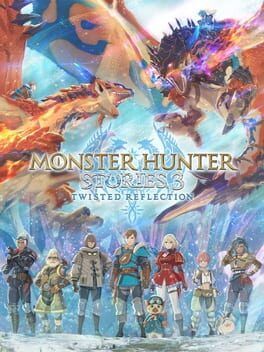
Monster Hunter Stories 3: Twisted Reflection arrives on Switch 2, PS5, Xbox Series X|S, and PC as the series’ first truly simultaneous, full-power launch. The pitch has not changed: this is still the turn-based, story-driven spin-off where you ride with monsters instead of carving them up. What has changed is how confidently it leans into being a full JRPG, with systems and structure that no longer feel like a side dish to the mainline games.
Across roughly 55 hours to credits and another 20 of postgame, Stories 3 delivers the strongest package in the subseries so far. It is not as tight or demanding as Monster Hunter World or Rise, and it still coddles newcomers a bit too much early on, but its ecosystem simulation, Encroachment-led storytelling, and party-building depth finally give it an identity that stands next to the main series rather than behind it.
Habitat Restoration turns busywork into a real ecosystem
The headline feature is the new Habitat Restoration system, and it is where Stories 3 most clearly outgrows its predecessors. Previous games treated the world as a backdrop for dens and chests. Here, every region feels like a living conservation project you are actively rehabilitating.
Each habitat starts in a degraded state, smothered by the crystalline Encroachment. Monster species are missing or displaced, gathering spots are contaminated, and even the day–night cycle looks sickly. As you clear Encroachment nodes, hatch endangered Monsties, and then release specific species back into their native biomes, you raise an Ecology Rank for that region.
This is not a vague percentage in a menu. Restoring a marshland might bring back herbivores that attract Nargacuga at night, which in turn unlocks egg patterns you could not get when the area was dead. Clearing invasive variants in a volcanic zone opens safe paths to high-tier mining veins. Rare den spawn rates, field skills, and even NPC quest lines are tuned against this evolving ecological state.
The magic is that it never collapses into a chore list. Restoration tasks drip-feed naturally from your normal play. Hunt a corrupted Barioth, and the quest reward is not just zenny but a tangible shift in which monsters prowl the tundra. Bring a clutch of Pukei-Pukei back to a poisoned swamp, and you will see them perched on branches during exploration and showing up in random battles. The loop of “discover imbalance, leverage your Monstie roster, watch the world heal” is quietly addictive.
Capcom also threads in mechanical stakes. Certain high-rank gene materials only drop when a habitat is at a specific Ecology Rank tier, forcing you to consider whether to keep pushing restoration or deliberately hold a region in a transitional state to farm a particular variant. It is one of the rare RPG systems where the fiction of protecting nature is inseparable from the numbers you care about.
It is not perfect. Mid-game, Restoration objectives start repeating, and the game could stand to be more ruthless about locking rewards behind higher ranks to keep late habitats from feeling like a checklist. But compared to the lifeless sidequests in Stories 1 and the lightly iterative co-op dens in Stories 2, this is a substantial, series-defining upgrade.
Encroachment makes the story structure actually work
The ecological focus is woven into the Encroachment-driven narrative structure, which is both the darkest and most coherent story the spin-off has told yet.
The Encroachment is a crystalline blight creeping across Vermeil and Azuria, twisting monsters and hollowing out entire biomes. Rather than a straightforward road trip, the game is structured around Encroachment Fronts: multi-step arcs where you enter a region, investigate how the blight has warped local monsters and politics, and then make painful choices about how to contain it.
Instead of just marching town to town, you are constantly triangulating between three pressures. Local rulers want the blight suppressed at any cost. Rangers want to preserve species caught in the middle. Your Rider instinct drives you to protect your own Monsties, some of whom are directly affected by the crystal corruption. The plot occasionally leans into melodrama, but the stakes feel grounded in the series’ longstanding theme of humans and monsters sharing a fragile world.
Structurally, Encroachment Fronts are clever. Each one combines bespoke dungeons, timed Restoration goals, and story decisions that nudge Ecology Ranks in different directions. Fail to stabilize a region in time, and you do not get a game-over screen; you get altered enemy tables, harsher weather patterns, and occasionally harder late-game Encroachment anomalies in the same area. It finally gives Monster Hunter’s talk of “balance” some mechanical teeth.
Compared to the feather-light Saturday-morning arcs of Stories 1 and the uneven pacing of Wings of Ruin, Twisted Reflection keeps its momentum. There are still exposition dumps and a few drawn-out cutscenes that feel more interested in lore than character, but the central mystery around the twin Rathalos and what the Encroachment is actually reflecting back at the world pays off with some memorable late dungeons and a final act that is far less rushed than Stories 2.
For players coming from mainline Monster Hunter, the tone will either be a draw or a deal-breaker. This is still brightly colored, earnest, and occasionally goofy, without the restrained, almost documentary style of World’s ecology storytelling. Yet the writing finally gives weight to the fantasy of coexisting with monsters instead of just hunting them.
Party-building hits a new high for the series
The other big win is how much deeper party-building has become without losing accessibility. Where the first Stories offered a fun but basic gene grid and Stories 2 flirted with real depth, Twisted Reflection finally nails the balance.
Your Rider and up to three active Monsties form the core of a six-slot combat lineup, with two reserve Monstie slots that can tag in mid-fight. The gene system returns but has been reworked. Each Monstie still has an elemental affinity and attack type, but the revised “Reflection Grid” encourages hybrid builds while punishing thoughtless min-maxing.
Genes are now tagged by both ecology and emotion. Slotting a Lagombi gene into a desert-native Khezu might give you a versatile Speed attacker, but stacking too many “foreign habitat” genes raises an Instability rating. High-Instability Monsties hit harder in Encroachment zones but are more likely to trigger out-of-turn counterattacks from corrupted monsters or misalign with Rider commands. It is a neat, flavorful way to keep your team composition relevant to the restoration theme.
On top of that are party-wide Synergy Traits, passive bonuses unlocked by fielding thematically linked Monsties. Run a full aerial squad, and you get ambush bonuses and turn-one speed buffs. Bring a balanced “guild-approved” lineup, and your item efficiency skyrockets. These push you to think in terms of party archetypes, not just individual monsters with stacked crit genes.
Combat itself still revolves around the Power/Speed/Technical triangle, double attacks, and Kinship skills, but adds positional considerations and encounter scripting borrowed from mainline hunts. Larger monsters telegraph sweeping tail swipes that hit backline Riders harder, while smaller packs try to pin down a specific Monstie type. A new Break Threshold mechanic lets you focus damage on limbs or crystals to suppress certain Encroachment abilities, a smart nod to part-breaking in the main series.
Veteran Stories players will appreciate how the game finally asks you to juggle more than just “bring a Technical Monstie to beat all these Power mobs.” Late-game and postgame hunts mix attack patterns, status auras, and Encroachment hazards in ways that reward experimenting with gene synergies and elemental coverage. It never reaches the mechanical density of a G-rank hunt in mainline, but it no longer feels like a kids’ mode either.
The only real blemish is that the first 8 to 10 hours are too easy and tutorial-heavy, especially on console where the game clearly expects a younger audience. You can brute-force early Encroachment fights with underbuilt Monsties and still cruise. Once the training wheels come off, though, the systems open up beautifully.
Exploration, structure, and pacing across platforms
With the jump to current hardware, Stories 3 finally stretches its legs. Regions are broader and more vertically layered, with climbing, gliding, and burrowing skills integrated into both exploration and Restoration loops. Unlocking new field abilities for your Monsties is no longer a side curiosity; it is often the key to reaching Encroachment crystals, rare dens, or hidden NPC camps.
Dungeon design has improved too. Encroachment caverns and crystal forests bend and fold back onto themselves, with short loops that make repeated runs for eggs far less of a slog than in previous entries. Some late-game dungeons flirt with tedious backtracking, but generous fast travel nodes and Rider abilities keep frustration in check.
Technically, the cross-platform launch is solid. On PS5, Xbox Series X, and a competent PC, the game runs at a stable high frame rate with sharper materials and more expressive lighting than past Stories games. The new crystal corruption effects and particle-heavy Kinship attacks look great without tanking performance.
Switch 2 is inevitably the least crisp, but the stylized art direction and simplified geometry hold up well in handheld mode. Where mainline Monster Hunter often feels compromised on portable hardware, Stories 3’s turn-based pace and more modest scene complexity make it a natural fit on the go.
Voice work is competent if not spectacular. English and Japanese tracks both treat the material earnestly, with the central duo of kingdom heirs selling the tension between duty and empathy. The soundtrack continues the spin-off tradition of orchestral Monster Hunter themes reimagined for a JRPG, with some standout Encroachment battle tracks that lean into eerie choral motifs.
How it stacks up to mainline Monster Hunter
Comparing Stories 3 directly to the main Monster Hunter games is a little unfair, because they chase different highs. If what you love is the tactile crunch of timing greatsword charges and learning hurtboxes by feel, no turn-based system will scratch that itch.
What Twisted Reflection does match, and occasionally surpass, is the feeling of being immersed in a coherent ecosystem. World and Rise hinted at monsters as part of a larger web of life. Stories 3 center that idea in its core loop, turning ecological stewardship into both narrative and mechanical progression. Where mainline’s ecology sometimes feels like smart window dressing, here it is the point.
It also offers a level of party customization that mainline Monster Hunter simply does not chase. Building out a roster of Monsties with intertwined genes and Synergy Traits scratches a similar itch to optimizing armor sets and decorations, but with the added emotional layer of watching those monsters grow, react to Encroachment, and sometimes struggle under the weight of the genes you have forced onto them.
On the other hand, no matter how intricate the Reflection Grid gets, combat is never as viscerally satisfying as landing a perfect helm splitter or chaining silkbind moves. Stories 3’s difficulty curve, even in postgame, tops out at “thoughtful JRPG” rather than “sweaty hunt with friends yelling in voice chat.” It complements rather than replaces the main series.
Versus the previous Stories games
Against its own lineage, Twisted Reflection is a clear leap.
The original Monster Hunter Stories was a charming, if shallow, experiment that felt like “Monster Hunter’s answer to Pokémon” more than a fully realized spin-off. Wings of Ruin made bold strides with its gene system and more cinematic story but was held back by repetitive side content and a world that felt oddly static between story beats.
Stories 3 takes the best parts of both and finally delivers on their promise. Habitat Restoration gives your actions lasting, visible consequences in every region. The Encroachment structure ties side content, exploration, and story into a coherent whole rather than a disconnected checklist. Party-building is deep enough to satisfy min-maxers without overwhelming younger players.
Returning fans will notice dozens of smaller refinements. Egg-hunting is faster and less random, with clearer feedback on how Restoration and Ecology Rank affect what you find. Co-op and PvP are better exposed and integrated into the postgame, making it easier to test builds against real opponents. Load times are drastically improved on all platforms compared to the Switch era.
The trade-off is that some of the breezy, almost toy-like simplicity of the first game is gone. Stories 3 expects you to engage with its systems. If you were here purely for an easy, Saturday-morning romp with familiar monsters, the layered mechanics and ecological bookkeeping might feel like overkill.
Verdict
Monster Hunter Stories 3: Twisted Reflection is the spin-off finally coming into its own. The Habitat Restoration system makes the world feel alive and responsive instead of static. The Encroachment-led story structure gives your conservation work narrative weight. The expanded party-building turns Monsties into more than cute mounts, inviting satisfying experimentation without drowning you in cruelling complexity.
It still drags its feet in the opening hours and it will never rival the tactile thrill of a perfect mainline hunt, but as a turn-based counterpart to Capcom’s flagship series, this is easily the best the Stories line has ever been.
If you bounced off the earlier games as lightweight side projects, Twisted Reflection is worth another look. If you are a long-time Rider, it is the payoff you have been waiting for.
Score: 9 / 10
Final Verdict
A solid gaming experience that delivers on its promises and provides hours of entertainment.