
Review
By Story Mode
Verdict and Score
MIO: Memories in Orbit is one of the first great Metroidvanias of 2026, a game that marries razor‑sharp movement and a stunning sci‑fi aesthetic with a somber, surprisingly human story. It is not the most explosive or mechanically dense entry in the genre, and some boss design and pacing quirks hold it back from true classic status, but after credits rolled I was already planning a second run.
Score: 9/10
Metroidvania Design: A Ship Worth Getting Lost In
MIO’s ark‑ship, the Trace, is a textbook example of how to build a modern Metroidvania space. The overall layout is compact compared to the genre’s behemoths, but the density of secrets, shortcuts, and looping paths is excellent. Early areas that seem like linear corridors quietly recontextualize themselves as you return with new powers, and the game is very good at using one new tool to open multiple directions at once. That keeps backtracking purposeful rather than obligatory.
Where some early reviews criticized the navigation as occasionally aimless, the launch build feels noticeably more coherent. Critical path hints are subtle but present, and NPC terminals and map markers now nudge you without spelling everything out. There are still moments where you can wander a bit too long looking for a specific breakable wall or hackable node, yet those lulls are the exception rather than the rule.
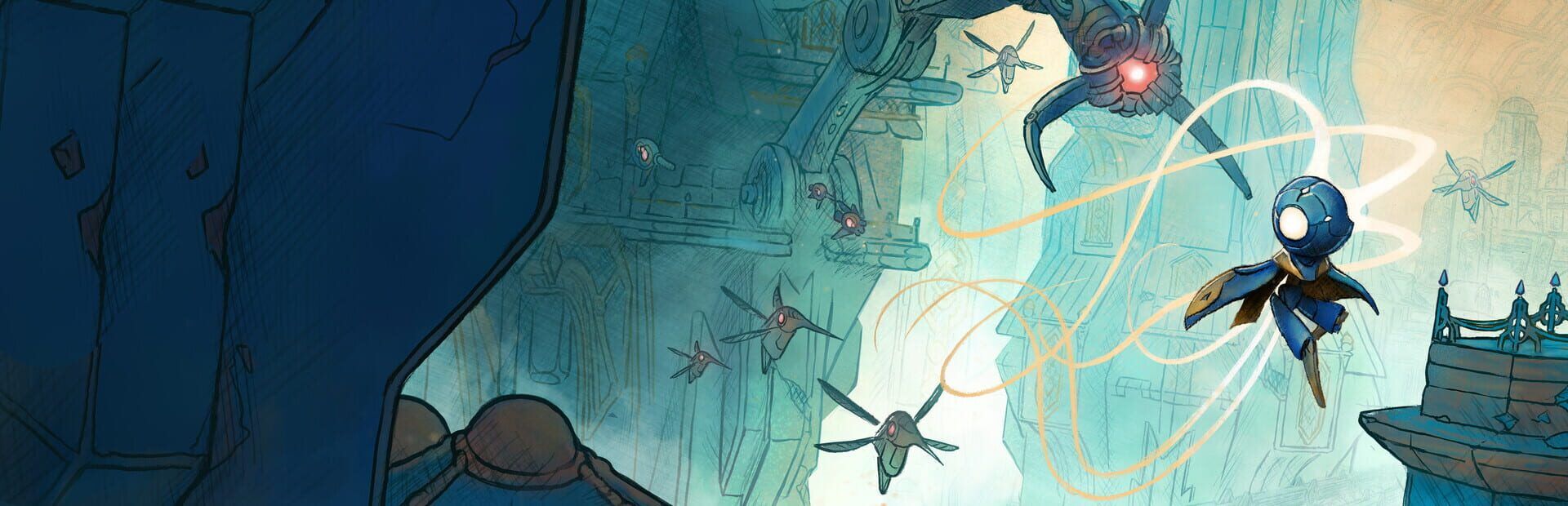
Thematic cohesion is what really sells the Trace. Each biome feels like a functional part of a living ship rather than just a level with a different palette. Maintenance shafts, hydroponic bays, and data cores all have distinct platforming rhythms and enemy mixes that reinforce their roles in the fiction. The environmental storytelling some critics praised is even more effective across the full game; optional memory fragments you can easily miss on a review deadline end up tying Mio’s personal arc directly into the layout of the ship.
If you’re chasing 100 percent completion, the game respects your time. Fast travel nodes are generously placed, shortcuts fold areas back into themselves, and most optional paths contain either meaningful upgrades or lore payoffs. Compared with flashier Metroidvanias that bloat their maps just to feel epic, MIO is lean and deliberate.
Combat Feel: Precision Over Power Fantasy
Moment to moment, MIO’s combat is all about clarity and commitment. Your basic strikes come out quickly, and input buffering is tight, but there is just enough animation lock that thoughtless button mashing gets you punished. Every hit has satisfying audiovisual feedback; sparks, screen shake, and clean sound effects make even the simplest combo feel impactful.
Several early impressions called the combat merely serviceable, but that usually came from the first few hours when your toolkit is limited. Once you unlock your mid‑game movement and attack options, the system opens up. Dash‑cancels, downward slams that combo into aerial strings, and resource‑based special attacks let you juggle lighter enemies and manage crowds in a way those previews only hinted at.
This is not a build‑crafting playground like some recent Metroidvanias. You are working with a curated set of abilities and a modest number of passive augments, which keeps the focus on execution rather than min‑maxing. That choice will disappoint players who want elaborate character builds, and I suspect it helped drive some of the more muted reviews, but it also means the developers could tune encounters for a relatively narrow power curve. The result is combat that consistently tests your mastery of a few tight tools instead of trivializing everything once you discover a busted combo.
There are still rough edges. Certain flying enemies feel more like annoyances than threats. A handful of mid‑game rooms spam projectiles in ways that clash with the otherwise thoughtful encounter design. But these spikes are brief, and the generous checkpointing and instant reloads keep frustration from calcifying into resentment.
Platforming: The Star Of The Show
What truly elevates MIO above the Metroidvania pack is how good it feels just to move. From the opening minutes, there is a subtle sense of weight and friction in Mio’s run and jump that recalls genre standouts, yet the android’s animations remain clean and legible even when the screen fills with effects.
New movement abilities arrive at a steady cadence, each tested first in safe spaces before being woven into more complex challenges. The air dash and wall climb are expected tools, but the late‑game gravity manipulation and momentum‑based swings add a distinct texture, turning several zones into flowing traversal playgrounds. Importantly, the game rarely confuses precision platforming with punishment. Missed jumps drop you into alternate routes or light combat encounters far more often than bottomless pits.
Some of the harshest early critiques focused on platforming sequences that felt tuned for someone else, with extremely tight windows and strict damage penalties. In the current version, those sequences have been massaged. Hitboxes are slightly more forgiving, visual language is clearer, and the most punishing chains live in optional challenge rooms where their presence feels appropriate.
This is where MIO’s quiet design philosophy shines. It wants you to feel vulnerable, but it also wants you to eventually look back at early corridors and realize you’ve become agile in ways you barely noticed happening. That slow burn is more satisfying than any single set piece.
Boss Quality: Great Ideas, Uneven Execution
Bosses are where MIO’s ambition occasionally outruns its execution. The early game introductions are strong: large, clearly readable machines that teach you to respect telegraphs and spacing. Their arenas are visually striking, and the soundtrack kicks up into thudding, mechanical motifs that reinforce the sense of scale.
As the game progresses, however, the designers lean harder into multi‑phase fights with layered bullet patterns and environmental hazards. Conceptually, these encounters are clever. Several bosses echo key themes of artificial identity and obsolescence through their animations and attack cycles. In practice, readability sometimes buckles under visual noise, with overlapping projectiles and particle effects making it harder to parse what actually hit you.
Compared with the broader critical consensus, I land between the camps. Some reviewers found bosses frustrating gimmicks; others praised them as highlights. The truth is that MIO’s boss roster is wildly inconsistent. A few duels are instant classics, demanding yet fair tests of the tools you’ve learned. Others devolve into attrition where chip damage and pattern repetition stretch battles just past their welcome.
The good news is that mid‑fight checkpoints and relatively snappy retry times mitigate the sting. But in a genre where boss encounters often define long‑term memory, MIO’s are more of a mixed bag than the rest of its design.
Performance Across Platforms
Xbox Series X|S (Including Game Pass)
On Series X, MIO is a rock‑solid experience. Frame pacing is stable, load times are near instant after the initial boot, and the crisp 2D art scales beautifully to 4K displays. I did not encounter any meaningful hitches, even in effects‑heavy boss fights. Series S takes an expected resolution hit but keeps the same smooth performance profile, making the Game Pass version an easy recommendation.
PlayStation 5
The PS5 version is similarly polished. DualSense support is modest but effective, with subtle haptic feedback for charged attacks and environmental rumble during heavy machinery sequences. Performance mode holds its target without noticeable dips, and the SSD’s quick streaming helps make fast travel feel truly frictionless. Among consoles, this is arguably the best overall package if you care about controller feel.
PC
On PC, the experience depends more on your hardware. On a mid‑range rig, the game runs at a very high frame rate with no trouble, and the visual options are straightforward. Keyboard and mouse are functional, but a controller remains the recommended way to play. The one caveat is that some users have reported intermittent stutters during rapid area transitions, which the console versions largely avoid. These hitching issues are minor rather than game‑breaking, but they stand out precisely because the rest of the experience is so smooth.
Across all three platforms, MIO launches in a far better state than many genre peers. Where a few early reviews flagged minor bugs and rare crashes on pre‑release builds, the current public version has clearly benefited from an extra pass of stability work.
Comparing To Early External Impressions
At launch, MIO entered the world with what you might call politely positive buzz. Critics generally agreed that it looked gorgeous and told an interesting story, but were divided on whether its mechanics could hang with the genre’s best. Some saw an atmospheric curio with patchy pacing and undercooked combat. Others touted it as a quiet masterpiece whose restraint would only grow in esteem over time.
Having played the release build across multiple platforms, my view leans toward the latter camp, with caveats. The central criticisms are not baseless: certain boss fights are too visually noisy, some traversal gauntlets flirt with frustration, and the upgrade system is narrower than it initially appears. Yet taken as a complete package, MIO’s tight map design, refined platforming, and emotionally resonant worldbuilding outweigh those blemishes.
There is also a sense that the game’s early hours undersell its strengths. Pre‑release reviewers understandably had to rush toward credits, leaving optional content and late‑game ability synergies underexplored. In the slower rhythm of normal play, those pieces click together in a way that makes MIO feel more cohesive and confident than some of those mixed impressions suggested.
Place In The 2026 Metroidvania Landscape
We are only a few weeks into 2026 and the Metroidvania shelf already looks overcrowded. Several big‑name sequels and high‑budget indies are competing for attention, many chasing the same blend of Soulslike difficulty, build complexity, and combat‑first spectacle. MIO stands out by refusing that arms race.
Instead of chasing endless skill trees or loot fountains, it doubles down on atmosphere, thematic consistency, and deliberate movement. It is closer in spirit to the quieter, more introspective branch of the genre, the side that cares less about how many damage numbers you can stack and more about how it feels to inhabit a particular place. The Trace is not just another gothic castle re‑skin or neon cybercity; it is a believable, melancholic machine that remembers what it once was, and your journey through it feels intimately tied to that memory.
That focus will limit its mainstream splash compared to louder contemporaries, but it is precisely what makes MIO memorable. In a year where Metroidvanias risk blurring together into indistinct collages of familiar mechanics, MIO carves out a distinct identity through tone and touch. If you are hungry for a meticulously crafted world and platforming that rewards practice, it comfortably earns a spot near the top of 2026’s Metroidvania queue.
Final Thoughts
MIO: Memories in Orbit will not win over everyone. Players who prioritize sprawling build systems, relentless boss gauntlets, or maximalist spectacle may bounce off its more measured pace. Yet if you value elegant map design, expressive movement, and science fiction that actually has something on its mind, this is a standout.
On Game Pass, it is a no‑brainer download. On PS5 and PC, it is absolutely worth full price if the genre speaks to you. Early reviews framed MIO as a promising experiment with notable caveats. The launch‑day reality is kinder: this is a quietly confident Metroidvania that knows exactly what it wants to be, and largely succeeds.
Final Verdict
A solid gaming experience that delivers on its promises and provides hours of entertainment.