
Review
By The Completionist
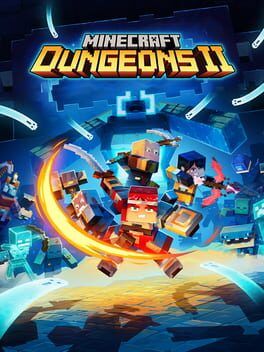
Image: IGDB
Store links: Minecraft Dungeons II on Steam
Vanilla Minecraft is no longer kept at arm’s length
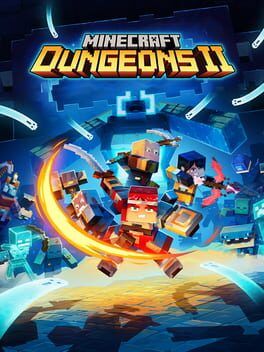
The most important design change in Minecraft Dungeons 2 is confirmed by Mojang’s own developers: the sequel deliberately moves closer to vanilla Minecraft. Speaking to GameSpot, creative director Måns Olson and design director Laura de Llorens Garcia said the team pulled the sequel nearer to the base game through systems such as four armor slots, Enchantment Books, jumping, and a larger, more exploratory world. Olson framed that as a change made possible because Minecraft Dungeons had already established an identity separate from the sandbox.
That choice defines this Minecraft Dungeons 2 review. The first game worked because it reduced the action RPG into something approachable: melee weapon, ranged weapon, artifacts, simple loot, readable mobs, and a campaign that could be played with younger or less genre-fluent players. The sequel’s vanilla Minecraft influence gives the loop more texture and makes the world feel less like a themed hallway, but it also pulls attention away from the clean arcade immediacy that made the original easy to recommend.
The result is a better Minecraft adventure than its predecessor in several obvious ways, but only a modestly stronger Minecraft action RPG. When it leans into exploration, gear tinkering, and the new Sift dimension, it gains personality. When it asks its combat and loot to carry repeated dungeon runs, its old limitations are still visible.
Buildcrafting improves, though it still avoids deep ARPG commitment
The sequel’s biggest systems win is equipment granularity. PCGamesN reports that characters now wear four armor pieces instead of the original game’s single armor slot, with each piece carrying its own buffs and enchantments. GameSpot separately identifies the four-slot armor model as part of Mojang and Double Eleven’s effort to make the sequel feel closer to base Minecraft. PCGamesN also notes three talisman slots, which can provide broader bonuses such as extra experience, higher maximum life, or a wolf companion.
That matters because Minecraft Dungeons has never had classes in the Diablo or Path of Exile sense. Your identity still comes from the weapons and three artifacts you equip rather than from a permanent skill tree. PCGamesN describes returning and new artifacts that include explosions, poison clouds, bees, defensive boosts, speed increases, and elemental enhancements, while also warning that precise targeting can feel finicky in crowded fights. IGN similarly describes the sequel as maintaining the stripped-down buildcrafting philosophy, even as it expands the number of customization options.
The enchantment change is smart in principle. PCGamesN reports that enchantments are unlocked through books, including some gained at story moments and others as drops, after which they become permanently available for gear. IGN also points to more options for enchanting weapons and armor, unlocked by conquering dungeons. This gives progression a clearer collection layer without burying the player under spreadsheets.
As an RPG player, I like the direction but not the ceiling. The sequel gives you more levers to pull, and its money cap and blacksmith structure, as described by PCGamesN, appear designed to push experimentation before letting players upgrade preferred gear. That is good onboarding. It keeps you rotating through weapon types instead of marrying the first high-roll drop. The tradeoff is that Minecraft Dungeons 2 still feels curated away from the hard choices that make builds memorable. It is broader, not substantially deeper.
The world finally feels closer to Minecraft, while the story stays thin
The new dimension, the Sift, is the sequel’s central setting change. Shacknews describes the premise as first contact between the Sift and the Minecraft Overworld going wrong when the Illagers, led by the Illager High Council, try to seize its power and use portal technology across the Overworld. GamingBolt also identifies the Illager High Council as the new threat after the Arch-Illager and Vengeful Heart of Ender, but criticizes the trio as weakly characterized and often played for laughs.
The broader structure is where the vanilla Minecraft influence pays off. GameSpot says the developers pushed the world to be bigger and more exploratory than the first game, while stopping short of calling it open world. DayOne goes further, describing a semi-open world with handcrafted biomes, rifts, caves, traditional dungeons, platforming challenges, secret nooks, side quests, and more reason to leave the main path. That aligns with Mojang’s stated goal of bringing Dungeons closer to the parent game without adding mining or crafting.
Jumping is the clearest mechanical symbol of that shift. IGN says the new jump button adds platforming, light puzzles, and a jump attack. DayOne also connects jumping to platforming, dodging, and an area-of-effect slam. For a series that once felt oddly grounded despite being based on Minecraft, that one verb does a lot of work. It lets spaces breathe. It makes small secrets more plausible. It gives combat a physical layer beyond rolling and cooldown timing.
The narrative remains the weak link. IGN calls the roughly seven-hour story barebones, with cutscenes and conversations functioning as a vague outline. GamingBolt is harsher, saying the sequel lacks memorable individuals, leans on narrator-driven exposition, and fills the main quest with familiar errands such as collecting items, returning objects, and finding keys. Shacknews finds the sparse, narrator-led presentation closer to a Dungeons & Dragons campaign and says it grew on the reviewer by the end, but even that more charitable read confirms how minimal the storytelling is.
For lore-aware players, the Sift is interesting because GameSpot reports Mojang has worked closely with the vanilla Minecraft team and that the dimension is planned to come to Minecraft in 2027. As a campaign, though, Minecraft Dungeons 2 uses that lore hook more as color than drama.
Combat remains welcoming, but the loop can feel too safe
At its best, Minecraft Dungeons 2 is still built around immediate readability: swing, shoot, roll, trigger artifacts, collect loot, repeat. That is the series’ strength. GamesRadar calls it polished and enjoyable for children and adults, whether solo, online, or couch co-op, while saying it is easy to keep playing and praises the steady introduction of gear modification. PCGamesN’s verdict is similarly positive, calling it a robust and welcoming short-form ARPG that improves the first game across most aspects.
The opposing read is also well supported. IGN describes the sequel as brief, forgettable, and shallow, with peaceful button mashing that does little to stand out. GamingBolt calls the experience unfulfilling and unrewarding, arguing that familiar Minecraft visuals are not enough when the action RPG systems underneath remain limited. GamesRadar, despite its positive verdict, lists repetition and excessive loot checking among its cons.
Both readings can be true because this series lives in a narrow design lane. Minecraft Dungeons 2 is trying to be the ARPG a family can play without explaining resistance breakpoints, seasonal economies, or paragon boards. It succeeds at that. The cost is that veteran action RPG players may exhaust the tactical vocabulary quickly. The extra armor slots, enchantment books, talismans, and jump attack improve the rhythm, but they do not transform the combat into a system that demands long-term mastery.
The vanilla Minecraft influence helps the dungeon crawling loop most when it adds verbs and spaces: jumping, exploring, poking around settlements, finding side routes, and caring about biome identity. It softens the action RPG identity when it pulls the design toward comfort and recognition rather than sharper combat stakes. The sequel is better when approached as a cooperative Minecraft-flavored loot adventure than as a genre challenger.
Co-op is the best argument for buying, but online play is a warning sign
The strongest practical recommendation is local co-op. Shacknews says Minecraft Dungeons 2 is enjoyable with friends, specifically local friends rather than online ones. GamesRadar also highlights couch play as part of the game’s appeal. That tracks with the series’ design: readable enemies, simple inputs, generous spectacle, and gear changes that are meaningful enough to discuss without stopping the room for ten minutes.
Online play is the biggest reported risk. Shacknews says its reviewer mainly played on an online server and quickly found that to be a mistake, citing major frustration. The same review reports that the game asks players to choose online or offline play at the start, both with drop-in and drop-out support, but that once a character is selected for one mode, the player cannot simply switch that character to the other. According to Shacknews, moving from online play with friends to offline local play with family requires starting a new character.
That restriction is more than an inconvenience in a loot game. Character continuity is progression. If a family-friendly ARPG divides online and offline characters, it makes the cleanest use case, playing with different groups in different contexts, unnecessarily awkward. The supplied sources do not establish whether this can be patched, whether cross-progression exists on other platforms, or whether the restriction varies by ecosystem, so the safest buying advice is to decide how you intend to play before investing time in a character.
There are also general technical caveats. GamesRadar says the game is a bit buggy at present. Shacknews praises the look of the Unreal Engine 5 cutscenes but notes there are few of them. The sources provided do not include resolution targets, frame-rate metrics, PC requirements, file size, price, or a complete platform list, so performance-sensitive buyers should check current platform-specific testing before launch-week purchase.
Minecraft Dungeons 2 score and buyer guidance
Minecraft Dungeons 2 earns a 7.0 in our scoring. That number reflects a sequel with clearly better progression scaffolding, a more Minecraft-authentic world, stronger exploration, and co-op charm, held back by a thin story, conservative combat, reported bugs, and serious online caveats.
The score also accounts for conflicting reports on length and scope. IGN describes a roughly seven-hour story and says players can see almost everything in an afternoon. DayOne reports a roughly 20-hour campaign and a much meatier base package, while also noting that a large portion of the world map remains blank and saying at least two DLC expansions are planned. Those claims are not identical. The likeliest explanation is a difference between mainline completion and broader exploration, but the supplied materials do not resolve it cleanly. Buyers should expect a short-form ARPG rather than a sprawling loot platform at launch.
If the first Minecraft Dungeons worked for your household because it was approachable, cheerful, and easy to play in short sessions, the sequel’s stronger vanilla Minecraft influence is mostly an improvement. Jumping, armor pieces, Enchantment Books, talismans, and a more connected world make the loop feel less sealed off from the parent franchise. If you wanted the sequel to grow teeth as an action RPG, this will likely feel too careful.
Wait if your priority is online play, endgame longevity, or technical polish. Buy sooner if you want a family-friendly Minecraft action RPG for local co-op and you value experimentation over optimization. Minecraft Dungeons 2 does not escape the shadow of its simplicity, but it gives that simplicity a better world to move through.
Final Verdict
A solid gaming experience that delivers on its promises and provides hours of entertainment.