
Review

By Night Owl
A factory built around a single smart idea
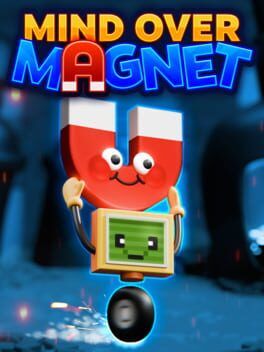
Mind Over Magnet is the kind of puzzle-platformer that lives or dies on one trick. In this case it is polarity. You play as a squat little robot trying to escape an industrial labyrinth, escorted by a talkative magnet companion who can flip between attraction and repulsion. The entire game is built around understanding how these forces move you, your partner and the world itself.
Rather than drowning you in subsystems, Mind Over Magnet commits to a tight verb set. You can jump, grab, throw and flip polarity. Almost every challenge is a question of where that magnet should be, what polarity it should hold and when you should swap it. Like Portal’s portals, the magnet is both your key and your weapon, a single mechanic stretched in increasingly surprising directions.
Magnetism that is readable instead of messy physics
Physics-based puzzle games often wobble between elegance and chaos. Portal abstracts physics into predictable portals and momentum, while many indie “magnet” games lean into messy ragdolls and fussy trajectories. Mind Over Magnet wisely lands closer to Portal. Despite the theme, this is not a wild sandbox of simulated electromagnetism so much as a crisp, rule-driven system.
Magnetic fields are short and clearly telegraphed. Platforms, boxes and rails that can be affected are color-coded, and polarities are obvious at a glance. If something moves, it moves along cleanly defined paths. When you latch your magnet onto a rail and flip polarity to drag a platform past a laser, the motion is deterministic. You are solving a logic problem, not wrestling with quirky collision.
The smartest twist is that the magnet is a character, not a passive tool. Sometimes it rides on your back, sometimes you throw it across a gap, sometimes you stick it onto a moving platform and then react to whatever it drags with it. Many puzzles hinge on treating the magnet as a partner that must be in the right place at the right time, which gives the game a pleasingly choreographic feel. You are planning tiny sequences: toss, flip, jump, catch, flip again.
Puzzle design: compact, focused, and usually fair
Structurally, Mind Over Magnet leans heavily on discrete chambers in the Portal mold. You step into a self-contained room, read the layout, spot the magnetic elements and start prodding at the solution. Early on, each room is almost didactic in how it introduces a new concept. One puzzle might exist purely to show that metal boxes can chain together, forming moving bridges when pulled by a single magnet. Another teaches that your own body is metal, and you can become part of a magnetic train.
The best sequences appear in the midgame, once the tutorial dust has settled and the designers start stacking ideas. You might need to pin your magnet to a vertically oscillating pillar, use its pull to yank a rotating arm out of the way, then repel yourself mid-air to arc through the gap before the arm swings back. These puzzles are multi-step but still cleanly scoped. When you finally spot the required sequence, it feels almost like parsing an elegant line of code.
Where some magnet-themed indies collapse under sprawling, fidgety levels, Mind Over Magnet stays disciplined. Most stages are short, with one strong concept. There are occasional exceptions late in the game where the designers push a little too far. A handful of final-factory puzzles cram several timing checks into a single room, and the solution space starts to feel busy rather than clever. These tougher outliers are not unfair, but they do demand a patience that more casual puzzle fans may not have.
Difficulty curve: gentle teach, spiky finale
Mind Over Magnet’s onboarding is excellent. The first hour flows beautifully, with almost no text tutorials. Every new wrinkle is introduced in a context that lets you fail safely and intuit the rule. The difficulty rises in clear plateaus: a few breezy rooms that make you feel smart, then a noticeable bump that asks you to recombine your knowledge in new ways.
That said, the curve is not perfectly smooth. Around the third major area the game suddenly expects sharper execution from its players. Puzzles stop being purely cerebral and start to lean on snappier inputs: jumping just as a platform glides past, flipping polarity mid-air to catch a moving block, or chaining throws across hazards. The design is still focused on logic first, but anyone coming for a purely "thinky" experience in the Sokoban tradition will notice the uptick in platforming demands.
Compared with Portal, Mind Over Magnet is less interested in large-scale brain-melters and more in bite-sized logic knots. You will not get the same “I have been stuck for 30 minutes and then the whole universe makes sense” catharsis that Portal’s best chambers provide. Instead, you get a steady drip of five to ten minute puzzles, punctuated by a few sharp spikes near the end. The tradeoff is that the game rarely feels padded, but its most brutal challenges can feel abrupt.
Controls and feel across platforms
On every platform, Mind Over Magnet benefits from tight, readable movement. Jump arcs are fixed and reliable, momentum is modest and the character snaps to edges in a way that compliments the puzzle focus. This is much closer to a precision-friendly platformer than a floaty physics toy.
On PC, keyboard controls are perfectly serviceable, but the game plays best with a controller. Flicking polarity onto a shoulder button and assigning magnet throw to a trigger feels intuitive. Aiming throws with an analog stick provides enough granularity without ever becoming a twin-stick shooter problem.
Switch performance is surprisingly solid. In handheld mode the crisp art scales down well and the frame rate holds steady in the vast majority of rooms, only dipping slightly in a few late-game arenas full of moving machinery. Joy-Con analog sticks are adequate, though their short travel makes some longer magnet throws feel twitchier than on other pads. Thankfully, the game is generous with checkpoints and instant respawns, so any fumbled jump is a minor irritation rather than a real punishment.
PlayStation and Xbox versions are clean and essentially identical. Load times are minimal, image quality is sharp and I did not encounter any stutters or hitching in puzzle-dense rooms. Controller layouts match the PC default, and haptics are used sparingly to emphasize magnetic snaps and polarity flips. It is a subtle touch, but having the pad thrum when you lock onto a rail or catch the magnet mid-air makes interactions feel concrete without becoming gimmicky.
PC performance is everything you would expect from a 2D puzzle-platformer with modest requirements. Even on low-end hardware the game runs smoothly, and there are enough basic settings to tweak resolution and anti-aliasing for weaker machines. Mouse and keyboard players can remap keys, although the interface is clearly designed with controllers in mind.
How it compares to Portal and other magnet-themed puzzlers
Any physics-adjacent puzzle-platformer released today has to live in Portal’s shadow. Mind Over Magnet does not match Valve’s masterpiece in narrative ambition or sheer inventiveness, but it does capture a similar design philosophy. There is one strong mechanic, introduced with clarity, iterated through a strict curriculum of puzzles and retired before it wears out its welcome.
The key difference lies in tone and scope. Portal uses physics as a vehicle for comedy and story. Mind Over Magnet is almost entirely focused on the puzzles themselves. Dialogue exists, primarily in the chirpy banter of your magnet companion, but it is a light garnish instead of a driving force. This makes Mind Over Magnet feel closer to the modern wave of minimalist “thinky” games than to a narrative showpiece.
Against smaller indie magnet experiments, Mind Over Magnet’s biggest advantage is restraint. Where some games treat magnetism as an excuse for unpredictable chaos, this one keeps its systems lean. Polarities operate on strict lines of influence, metal objects react consistently and nothing ever surprises you in a way that contradicts the rules you have learned. That consistency is what allows the puzzles to reach the complexity they do without collapsing into guesswork.
What you will not find here is a huge sandbox of overlapping physics systems, emergent glitches or speedrun-exploit playgrounds. If your favorite part of magnet-based games is breaking them in spectacular ways, Mind Over Magnet’s tightly controlled design might feel conservative. It is more interested in being a honed puzzle box than an anarchic physics toy.
Presentation: clean, functional, occasionally charming
Visually, Mind Over Magnet is understated. Industrial backdrops, clear silhouettes and strong color-coding do most of the heavy lifting. The factory setting is not striking in the way of, say, Portal’s sterile test chambers peeling back to reveal hidden catwalks, but it is consistently readable and occasionally endearing when the magnet cast is allowed to mug for the camera.
Animation is snappy and legible, particularly in how magnetic forces are represented. Lines of force, small arcs of energy and subtle squash and stretch on affected objects make it easy to parse what your latest polarity flip has actually changed. When a puzzle involves multiple moving parts, you can track cause and effect at a glance, which is critical in a game that builds its identity on logic.
The soundtrack is subdued, a gentle series of electronic pulses and low-key melodies that sit comfortably behind the problem-solving. It is the sort of music you forget until you take off your headphones, which is entirely appropriate for a game that wants you in a flow state. Sound effects carry more personality: the chunky clack of magnets attaching, the little whuff of polarity reversing and the metallic slide of platforms all reinforce the sense that you are tinkering with a real, mechanical space.
Verdict: a sharp, disciplined puzzle-platformer for people who like to think
Mind Over Magnet is not trying to be the next Portal, and it does not have to be. What it offers instead is a refined, tightly scoped puzzle-platformer that knows exactly what it is about. Its magnetism mechanics are readable and satisfying, its puzzle design is consistently thoughtful and its difficulty curve, minor late spikes aside, respects the player’s time and intelligence.
If you are chasing narrative fireworks or physics chaos, you may find it too careful and self-contained. The story is a light wrapper, the factory aesthetic rarely surprises, and the final stretch has a few puzzles that veer close to fussy. But if you enjoy that moment where a previously baffling room suddenly clicks into place because you finally understood how its rules interact, Mind Over Magnet delivers that sensation again and again.
Across PC, Switch, PlayStation and Xbox it runs well, controls cleanly and never gets in the way of its own ideas. In a crowded field of physics-based puzzlers and magnet-themed curiosities, Mind Over Magnet stands out not by being louder, but by being smarter, sharper and utterly committed to making one good idea sing.
Final Verdict
A solid gaming experience that delivers on its promises and provides hours of entertainment.