
Review

By Pixel Perfect
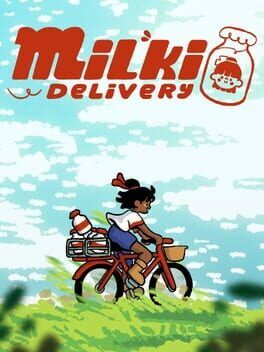
Image: IGDB
Store links: Milki Delivery on Steam
A small Steam release with one big question: is routine enough?
Milki Delivery is out on Steam, according to Rock Paper Shotgun’s launch coverage, and the clearest tension around Doot and Blibloop’s cow delivery game is built into that simple fact: this is a cozy delivery game about doing many small tasks on repeat. The appeal is obvious. You play as Neha, a young courier traveling with her pet cow Milki, hoping to find Milki a friend in a countryside where the other cows have gone missing. The risk is just as clear. A game about delivering milk, gathering resources, and biking familiar routes can either become a warm daily ritual or start feeling like errands with prettier scenery.
Based on the available review coverage and public listing details, Milki Delivery lands much closer to the former. It is a compact hand drawn indie game with a deliberate pace, mouse-driven navigation, light management, and an emotional center that stays modest rather than melodramatic. ScreenRant reported that the game is planned for Steam on PC, Mac, Linux, and SteamOS, while Rock Paper Shotgun’s launch article describes it as available now and points readers to the Steam page. Other reviews published around November 16 and 17, 2026 place it as a short release from the Doot and Blibloop team, with Wholesome Games Presents cited as publisher by ScreenRant and A Gaming Network.
That timing and platform picture matters because Milki Delivery is not trying to be a forever farm sim. It is a few-evenings game, the kind of indie that succeeds or fails on whether its one loop stays pleasant until the credits. On that front, this Milki Delivery review comes down to a practical answer: the routine works, the pacing is mostly smart, and the variety is enough for players who enjoy optimization at low pressure. If you need surprise every ten minutes, Neha and Milki’s countryside will feel too placid.
The daily loop is simple, but it has a real management spine
Milki Delivery’s structure is easy to understand within minutes. Rock Paper Shotgun describes movement as mouse driven: you plot a route and let Neha ride through the countryside. ScreenRant and SmashPad both outline the daily structure in more detail. Neha wakes up, feeds Milki gathered resources such as hay or berries, receives milk based on Milki’s happiness, then heads out by bike to sell milk, collect materials, complete quests, and return home before night.
The clever part is that the game treats this as light strategy rather than decoration. SmashPad notes that Neha’s time and stamina limit what she can accomplish each day, which forces choices even though the stakes stay gentle. A day can be spent chasing money through deliveries, gathering wood and scrap for upgrades, harvesting feed for Milki, or pushing quest lines forward with villagers. A Gaming Network reports that there is no meaningful failure state, even if you stay out too late. Instead of harsh punishment, Neha simply wakes up and continues. SmashPad similarly mentions that fainting leads to a small cutscene rather than a setback.
That balance is important. Cozy games often blur into busywork when the tasks have no texture. Milki Delivery avoids that by giving the player a steady sense of intention. Feeding Milki is not purely sentimental, since happiness improves output. Delivering milk is not only a checklist, since customers are tied to trust, quests, and the community’s recovery. Gathering materials is not filler, since upgrades reshape how efficiently Neha can move and earn. MonsterVine singled out the upgrade path as one of the game’s strongest qualities, saying nearly every upgrade feels useful, from faster travel options to better delivery income.
The result is a routine that feels like a tiny economy wrapped in a soft blanket. It never becomes demanding, but it does ask you to plan. That is exactly where this cow delivery game finds its footing.
Pacing improves as upgrades widen the map, but repetition is real
The main caveat in Milki Delivery is not hidden. Several outlets identify repetition as the tradeoff for the game’s calm structure. MonsterVine calls the experience pleasantly laid-back and surprisingly addictive, but says repeated routes and familiar resource collection can become stale before larger upgrades arrive. ScreenRant’s review similarly praises the gameplay as smooth while noting that travel can be time consuming and repetitive.
That criticism fits the design. Milki Delivery asks you to ride across similar roads across multiple in-game days, selling milk and checking in on residents. Because movement is plotted through the map rather than handled like a twitchy cycling game, the pleasure comes less from moment-to-moment control and more from route planning, scenery, and the satisfaction of shaving inefficiency out of a day. If that sounds meditative, the game is probably in your lane. If you want constant mechanical novelty, the first stretch may feel sleepy.
The pacing strengthens once progression starts folding back into the routine. SmashPad reports that upgrades expand stamina and allow Neha’s bike to reach new sights with better tires. MonsterVine notes that later improvements make familiar treks quicker, while new scenery helps keep the map from feeling static. A Gaming Network describes playtimes ranging from roughly 3 to 4 hours for efficient players, while ScreenRant reported about 5.5 hours for 100 percent completion. A Gaming Network also mentioned a 47 in-game-day run, which suggests the pace can stretch depending on how leisurely or efficiently you play.
That short runtime is a strength. Milki Delivery would likely struggle as a 20-hour management game without deeper systems, but as a focused cozy delivery game, its repetition becomes part of the texture rather than a fatal flaw. The game gives you enough time to develop habits, then ends before those habits fully curdle.
Neha and Milki give the errands emotional shape
The story is small, but it gives the delivery loop a reason to exist. Rock Paper Shotgun and ScreenRant both identify the central premise: Neha has promised Milki she will help find another cow friend. When the pair arrive, the area’s cows are gone, and the local community has become scattered and depleted. ScreenRant mentions an intriguing mystery behind the missing cows, while SmashPad’s review describes a collapsed dairy industry and local speculation about whether the disappearance is tied to a curse or something less explainable.
Milki Delivery is careful not to turn that setup into a heavy investigative drama. The story moves through service. Neha meets Yoyo, described by ScreenRant as a tinkerer and by SmashPad as an entrepreneurial fix-it girl who becomes an early friend, then gradually earns trust with villagers including a farmer, a grandmother, and a mailman. Rock Paper Shotgun’s examples are modest and charming: cats who want milk, a farmer who needs rope, residents who need help beyond their orders.
That is where the writing seems best suited to the format. The errands are not mechanically complex, but they soften the map. A repeated route means more when the destination has a face. MonsterVine praises the cast’s quirky small-town feel, while The Punished Backlog highlights colorful NPCs and little details such as Neha setting down her bike kickstand or a puppy helping fetch items later in the game. These are small touches, but small touches carry games like this.
There are signs of darker material at the edges. MonsterVine notes that the narrative brushes against themes of dairy factory farming, and several sources mention the absence of cows as an unsettling backdrop. Still, the dominant tone is hopeful. This is a hand drawn indie game about community repair, not a systems critique wearing a cow costume. Its emotional aim is gentleness, and by keeping the scope narrow, it earns that warmth more often than it forces it.
The art does a lot of the heavy lifting, and the sound helps it breathe
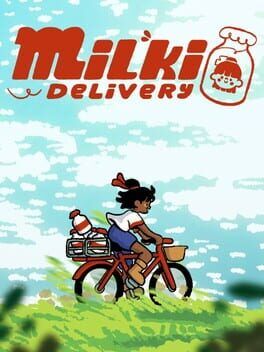
Milki Delivery’s strongest first impression is visual. Rock Paper Shotgun calls out its lush, bright countryside and hand drawn look, while ScreenRant praises the landscapes as beautiful. The Punished Backlog describes rural, forest, and beachside backgrounds rendered in the developers’ pastel style, with playful cartoon detail. MonsterVine also points to the soft colors and rounded animation as central to the game’s relaxed identity.
This matters because so much of the game is travel. When the player spends a meaningful portion of each day watching Neha move from node to node, the world needs to be pleasant enough to revisit. Milki Delivery appears built around that requirement. Its scenery is not simply a backdrop for mechanical errands. It is the thing that makes a repeated delivery route feel like a ride rather than a commute.
The audio picture, based on the available sources, supports that same low-pressure rhythm. ScreenRant says the music is lovely enough that its reviewer left it on throughout play. The Punished Backlog credits the audio soundscape to long-term collaborator Zakku and specifically mentions summery cicadas balanced with upbeat lo-fi music while biking through farm fields. MonsterVine describes light sound design and airy tracks that reinforce the tranquil tone.
Performance reporting is limited but encouraging. ScreenRant says Milki Delivery runs perfectly on Steam Deck and notes that their playtime was split between PC and Deck. That is the most concrete technical claim in the source material. Rock Paper Shotgun and A Gaming Network both describe mouse-driven play, which makes sense for PC, Mac, Linux, and SteamOS users. Players who prefer controller-first cozy games should check the Steam page for current input details before buying, since the supplied source text does not confirm full controller support.
Enough variety for indie fans, with clear limits
Milki Delivery is best understood as a compact, polished routine game. It has enough management to reward planning, enough character writing to make deliveries feel socially connected, and enough upgrade momentum to keep the middle from sagging. It also has a ceiling. The tasks remain familiar: feed Milki, produce milk, choose a route, deliver, forage, upgrade, sleep, repeat. The game’s success depends on whether that repetition feels restful to you.
For many cozy fans, it should. Players who like Stardew Valley or Animal Crossing for daily rhythms, but want something shorter and less demanding, are the clearest audience. A Gaming Network compares its cozy management feel to a shorter, more focused Stardew-like package. MonsterVine puts its runtime around a peaceful few hours, while ScreenRant’s 100 percent completion estimate of about 5.5 hours suggests completionists are not being asked for a major time investment.
For players who come to indie games for mechanical surprise, the recommendation is more cautious. Milki Delivery has progression, but not deep simulation. It has quests, but they appear to serve tone and pacing more than challenge. It has strategy, but SmashPad rightly frames it as low stakes. That is a strength if you want comfort after a busy week. It is a limitation if you want a delivery game that keeps reinventing itself.
The unanswered practical question is price, which is not provided in the supplied source material. Availability is clearer: Rock Paper Shotgun links to the Steam page, and ScreenRant lists PC, Mac, Linux, and SteamOS. Based on ScreenRant’s Steam Deck note, handheld PC players have a strong reason to consider it, though input preferences remain worth checking on the store page.
Verdict and score
Milki Delivery turns a humble premise into a warm, well-paced miniature. Its daily routine is the review’s deciding factor: repetitive, yes, but usually in the way a favorite walking route is repetitive. You know the turns, you notice the little changes, and the comfort comes from returning with a purpose. The upgrades add enough efficiency to keep the loop moving, the hand drawn countryside gives the travel charm, and Neha’s promise to Milki gives the errands an emotional anchor.
It is not the cozy game to buy if you need constant mechanical variety or a long management arc. It is the one to buy if you want a short, pretty, low-pressure adventure about rebuilding a community one bottle at a time. As a Milki Delivery game recommendation, that comes with a clear fit: cozy players, Steam Deck owners, and indie fans who appreciate craft over complexity should put it on the list. Players allergic to repeated routes may want to wait for a sale or watch more footage first.
GameLoop score: 8.0 out of 10. Gameplay earns an 8 for a satisfying low-stress loop with some repetition. Story earns an 8 for sweet character work and a clean emotional hook. Graphics earn a 9 for the hand drawn world and animation details. Audio earns an 8 for its gentle reported soundscape. Performance earns an 8.5, helped by ScreenRant’s Steam Deck report, though broader technical data is limited.
Final Verdict
A solid gaming experience that delivers on its promises and provides hours of entertainment.