
Review

By The Completionist
A Simple Pitch That Actually Delivers
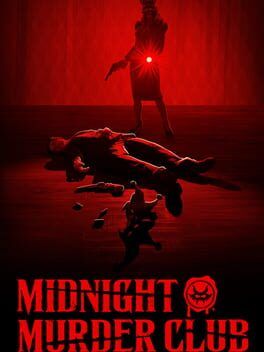
Midnight Murder Club is built on a dead-simple premise: shove two to six people into a pitch-black mansion, give everyone a flashlight and a revolver, then tell them to play hide and seek. Velan Studios leans hard into that idea, stripping away minimaps, glowing outlines, and most of the usual multiplayer clutter so that every match is about sound, light, and paranoia.
If that sounds like a perfect fit for the current wave of social horror games, that is because it is. The surprising thing is that it actually feels fresh in a space already crowded by Phasmophobia-style ghost hunts and Dead by Daylight chases.
Flashlight-and-Gun Hide and Seek
Everything flows from the flashlight-and-gun loop. Flashlights are bright and focused, with a tight cone and a real sense of weight. Clicking it on carves the darkness open, but it also paints a huge target on you. In the core hunt modes, you are constantly weighing whether to sweep the room and risk being seen or sit still and hope your ears can do the work.
Guns are intentionally clunky. The revolver has a slow, punchy cadence and exaggerated recoil, so firefights are brief and frantic. There is no spray-and-pray. If you blow your shot at a flicker of movement in the distance, you are suddenly the loudest, most visible person in the mansion. That risk–reward tension fuels the best moments, like when you follow a faint shuffle into a hallway, flick your light on for half a second, and land a perfect panic shot.
The hide-and-seek variants feel tuned for party chaos. Classic free-for-all hunts, team-based stalk modes, and objective twists like collecting artifacts or activating switches all reuse the same fundamental tools but shift the balance between stealth and aggression. The best modes are the ones that keep everyone moving, forcing you to cross bright choke points and noisy rooms to stay in contention rather than just camping in a dark corner.
What really sells it is how readable flashlight play is from both sides. Stalking someone by tracking the bounce of their beam on distant walls is exhilarating. On the flip side, turning off your light and counting on your silhouette to vanish into the gloom is often just as effective as any mechanical perk. It feels less like a traditional shooter and more like an elaborate horror-themed playground game.
Friend Pass: The Smartest Design Choice
Midnight Murder Club’s Friend Pass system might be its single most important feature. Only one player in a group needs to own the full game; everyone else can hop in through the free Guest Pass edition on Steam or PS5. They get full access to current modes in public or private lobbies, cross-play works smoothly, and progression still carries over if they buy the game later.
For a social horror title, that level of accessibility is huge. Getting five friends to commit cash to a niche multiplayer experiment is surprisingly hard. Getting them to download something free and try it for a night is trivial. The Friend Pass makes Midnight Murder Club feel like a low-risk, high-reward pick for game night. It also means lobbies fill quickly, since most groups can field a full six-player match without anyone sitting out.
That said, some players will likely treat it as a one-and-done experience, living entirely off the free version and only hopping in when a friend pings them. The game’s progression systems and cosmetic unlocks are clearly designed to give paying players the sense that they are building a “membership” in the club over time, but the core experience is so intact for Guest Pass users that convincing them to upgrade could be a challenge.
Map and Sound Design: Wormwood Manor Steals the Show
The real star is Wormwood Manor, the sprawling mansion that anchors most modes. Layouts combine long, deadly sightlines with clusters of tiny side rooms and looping corridors. There are creaky staircases, grand halls lined with breakable statuary, and cramped service passages where a single flash of light can blind you completely.
What makes the map design work is how it feels different at various light levels. In total darkness, rooms blend together and you navigate by memory and audio cues. With a few flashlights flickering around, subtle details emerge: the shape of a chandelier, the angle of a staircase, the outline of a piano in the corner. You start to recognize distinctive silhouettes and use them as landmarks even when your own beam is off.
The sound design is just as vital. Footsteps are crisp and directional, with different materials underfoot giving you a sense of where someone is even when you cannot see them. Doors have satisfying, telltale clacks that instantly broadcast when someone has slipped into or out of a room. Ambient creaks and gusts of wind occasionally fake you out, but never feel unfairly loud or misleading.
Proximity voice chat ties it all together. Whispered plans, panicked shrieks, and trash talk become as much part of the soundscape as the actual game audio. When a friend’s voice suddenly cuts off mid-laugh as a gunshot rings out, it sells the horror far better than any jumpscare pop-up could. The system is tuned well enough that voices are audible at believable ranges without becoming a constant roar.
The flip side is that the game’s reliance on audio clarity is unforgiving of bad setups. A noisy fan or someone’s echoey mic can wreck the tense atmosphere, and there are not a ton of audio filters or moderation tools beyond basic volume sliders and muting. As with many party games, your experience will depend heavily on your group’s hardware and etiquette.
Modes, Progression, and Long-Term Legs
Compared to juggernauts like Dead by Daylight or Phasmophobia, Midnight Murder Club is narrower in scope but sharper in identity. It is not about grinding perks or researching ghosts. It focuses almost entirely on short, high-intensity rounds that last a few minutes, with downtime mostly spent yelling at each other in the lobby.
There is a clear set of modes at launch: several variations of competitive hide-and-seek, more objective-driven hunts, and a co-op PVE mode that throws AI threats into the mix. Nightly challenges and wildcard modifiers occasionally shake things up by tweaking visibility, ammo counts, or trap density. A basic progression track doles out masks, outfits, and goofy cosmetic flourishes.
The question is whether that is enough to give the game real staying power. The core mechanics are robust and consistently fun with the right group. When everyone is leaning into the roleplay and baiting each other into noisy mistakes, it is some of the best social horror out there. But the content stack is still relatively thin compared to long-running live-service peers.
You can feel the limitations after a few long sessions. Wormwood Manor is great, but you will start recognizing optimal routes and camping spots quickly. The PVE mode is entertaining as a palette cleanser, yet lacks the depth or escalation you might want as a primary hook. Wildcards mix things up, but many players will end up gravitating to the same two or three favorite setups.
Where Midnight Murder Club does have an edge is in its pick-up-and-play nature. It is an easy recommendation for occasional horror nights, where you want something everybody can understand in seconds and laugh about for hours. If Velan commits to adding new maps, modes, and wildcard combinations over time, it could absolutely carve out a niche alongside bigger, grind-heavier rivals. Without that ongoing support, it risks becoming the very fun game you pull out a few times a year rather than a nightly obsession.
How It Stacks Up Against Other Social Horror Games
Stacked next to contemporaries, Midnight Murder Club feels less like a competitor and more like a complement. Dead by Daylight is an asymmetric arms race of perks and meta builds. Phasmophobia is methodical and investigative. Games like Among Us pivot on deception and accusing your friends.
Midnight Murder Club’s strength is immediacy. It gives you a gun, a flashlight, and a dark house, then gets out of the way. That simplicity means you can slot it into a game night rotation without needing to teach systems or unlock gear. It also means fewer knobs to twist, which could limit its ability to evolve over the long haul.
In practice, it lands closest to something like a horror-themed prop hunt or flashlight tag event. You are here for frantic laughs, quick scares, and the thrill of sprinting through a hall because you heard the tiniest scuff behind you. If your circle of friends thrives on that energy, Midnight Murder Club earns a permanent place in the party lineup.
Verdict
Midnight Murder Club is a sharp, focused multiplayer horror party game that understands the value of a good scream and a better punchline. The flashlight-and-gun hide-and-seek modes are tense and clever, the Friend Pass accessibility is genuinely player-friendly, and the combination of smart map design and excellent sound work makes Wormwood Manor a memorable arena.
Whether it has the long-term legs of other social horror giants will depend on how aggressively Velan expands it. Right now, it is more of a brilliantly executed concept album than an endlessly expanding live-service playlist. But as long as you do not expect it to become your only multiplayer obsession, it is absolutely worth joining the club.
Final Verdict
A solid gaming experience that delivers on its promises and provides hours of entertainment.