
Review

By Apex
Score: 9/10
After more than a decade of half-jokes and prototypes, Mewgenics finally exists, and it is every bit as unhinged as the elevator pitch implied. “A tactical roguelike about breeding an army of mutant trash cats” sounds like throwaway Twitter bait. In practice it is one of the most engrossing, systems-dense strategy games in years, and arguably Edmund McMillen’s strongest design work since The Binding of Isaac.
It is also overwhelming, opaque, and gleefully disgusting. If Isaac was a gross-out Zelda shooter, Mewgenics is Into the Breach crossbred with a genetics textbook that someone left in a litter box.
Tactical roguelike first, freakshow second
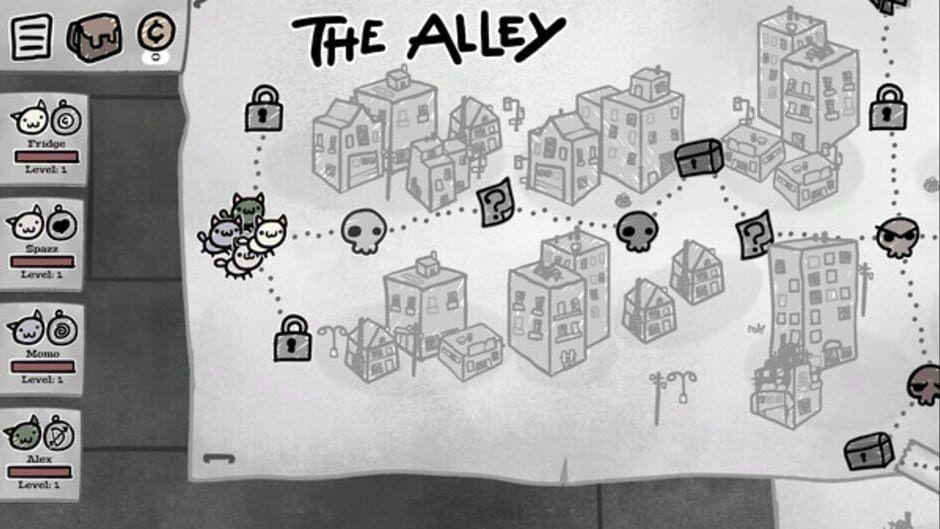
On paper, Mewgenics is a turn-based, grid-based roguelike. You draft a tiny squad of cats and march them through a gauntlet of fights and events, picking upgrades, items, and mutations along the way. Lose the squad and the run is over, but loot and bloodlines feed back into your long-term progression.
That high-level loop is familiar, yet what happens inside a given turn is where Mewgenics distinguishes itself. Positioning is everything. Enemies have push and pull effects, knockback chains can ping-pong cats into hazards, and the battlefield is cluttered with objects that can explode, bleed, poison, or otherwise ruin everyone’s day. You are constantly setting up Rube Goldberg killboxes, then watching the physics and status effects crash into each other.
Where Isaac was about twitch reflexes and build roulette, Mewgenics demands careful planning. Turning a seemingly doomed engagement into a victory because you realized a cat’s knockback could shove a bomber rat into a pile of corpses that then explodes into toxic clouds is the norm. The game’s best moments feel closer to Into the Breach’s perfect-information puzzles than to a traditional dicey roguelike, even as the sheer volume of traits and random modifiers nudges things back toward chaos.
The genius is that the tactical layer and the breeding sim are inseparable. Traits you unlock through runs do not just buff a single character, they seed entire lineages. You are not only solving this fight, you are sculpting the genome that will trivialize some future nightmare encounter you have not even seen yet.
Cat-breeding as long-term strategy
If that sounds clinical, rest assured the game wraps its deep genetics in the least scientific presentation possible. Breeding is a glorified menu where squishy cartoon cats slam into each other and pop out even squishier kittens. Underneath the juvenile gag is a frighteningly robust trait system.
Every cat has stats, core traits, random quirks, and mutations that can impact everything from turn order to how often they randomly defecate on the battlefield. Traits can cancel each other out, stack into wild synergies, or create double-edged monsters that are as dangerous to your own team as they are to enemies.
Over dozens of runs you start to think less in terms of individual units and more in terms of bloodlines. Maybe you have a line of high-initiative glass cannons that exist purely to reposition enemies and trigger traps, while another branch of the family tree is a bruiser lineage focused on taunt, armor, and self-healing. The game lets you retire elder cats to keep their genetics in the pool, preserving precious traits while making space on your current roster.
This is where Mewgenics pulls away from most tactics roguelikes. Meta-progression is not just a checklist of relics or global buffs. It is the slow, satisfying process of domesticating chaos. Early runs are a blur of unreadable icons and unexplained keywords. Twenty hours later you are carefully pairing cats because you know how a specific mutation will interact with a particular item type three tiers deep into a run.
The danger is obvious. It is easy to lose hours tweaking lineups and breeding plans before you even launch a campaign. But the payoff when your carefully engineered cat finally comes online and solo-wipes a boss encounter is enormous.
Onboarding: thrown in the litter box
For all of its brilliance, Mewgenics does a poor job of ushering new players into its sick little world. There is a tutorial, there are tooltips, and there is a codex, but none of them keep pace with how quickly the game starts throwing keywords, icons, and exceptions at you.
Early runs feel like reading a dense card game with half the rulebook missing. Traits reference other traits you have never seen. Icons blur together in the same fleshy color palette. Enemies spew status effects the game technically explains, but only in cramped text boxes you have to hunt for.
If you bounced off The Binding of Isaac because it relied on wikis and trial and error, Mewgenics doubles down on that philosophy. It expects you to fail repeatedly, absorb what killed you, and only slowly piece together how everything fits. The curve is not just steep, it is jagged.
The upside is that nothing feels trivial even dozens of hours in. There is always some new interaction you have not fully understood. The downside is that a lot of players will simply never get there. The game would benefit from a more guided first campaign or a curated set of starter cats with limited trait pools to teach fundamentals before the full madness kicks in.
Still, if you enjoy discovering systems the hard way, there is a real thrill in that first moment when the fog lifts and you find yourself making deliberate breeding decisions instead of just mashing the “new kitten” button.
Long-term progression and the joy of discovery
Once you push past the initial wall, Mewgenics opens up into a staggeringly generous roguelike. New zones, events, items, and enemy types trickle in at a pace that rarely lets the game feel solved. Meta unlocks fold back into both combat and breeding, often in sideways ways that rearrange your priorities.
Maybe you unlock a new item type that makes previously mediocre traits incredibly valuable. Maybe a late-game boss teaches you that your beloved glass cannon lineage has a glaring weakness to a status effect you never paid much attention to. The game is constantly teaching and unteaching you what is strong.
Crucially, progression does not just make you stronger, it expands the design space. There is always a risk in roguelikes that meta-upgrades will flatten challenge until early hours become a slog. Here, the power curve is mostly horizontal. You are not turning on easy mode, you are opening more knobs to twist and break.
That design keeps the run structure addictive. Even after a string of failed campaigns, there is always something to poke at back home. A new breeding experiment, a different item draft priority, a mutant you benched ten hours ago that might finally make sense in light of a recent unlock.
Soundtrack: a grimy, giddy heartbeat
McMillen’s games have always leaned hard on audio to sell their tone, and Mewgenics might be the strongest soundtrack he has shipped yet. It is a gross carnival of detuned organs, plunky bass, and scrappy percussion that somehow sells both the strategy and the stupidity.
Battle themes push just hard enough to keep tense encounters from turning into pure math homework. Town and home-base tracks are weirdly cozy, layering in off-kilter melodies that match the comforting rhythm of tweaking builds and planning your next expedition. There is a constant feeling of being in some diseased Saturday-morning cartoon, and the music is doing most of that lifting.
Importantly, the soundtrack scales with the game’s longevity. You hear these tracks for dozens of hours, and they never quite fade into wallpaper. Hooks stick without becoming grating, and stingers on critical hits, crit farts, and environmental kills sell the slapstick violence of a good turn.
Compared to Isaac’s iconic, oppressive score, Mewgenics is more playful and more varied. It is less about drowning you in dread and more about turning every fight into a feral jam session.
Compared to Binding of Isaac and other McMillen projects
The Binding of Isaac was, and still is, a masterclass in roguelike buildcraft. Super Meat Boy distilled platforming into pure input execution. The End is Nigh was a punishing refinement of that ethos. Mewgenics borrows their cruelty and item fetishism, but structurally it is a different beast.
Runs here are slower and more considered. Mechanical skill gives way to planning and risk assessment. Isaac’s joy came from tearing through rooms with a build you barely understood, improvising around your own brokenness. Mewgenics asks you to manufacture that brokenness on purpose across multiple generations.
What it shares most strongly with Isaac is a commitment to secrets and synergy. There are interactions here that feel just as revelatory as discovering Brimstone for the first time, except the “item” is now a lineage of cats that only exists because you decided, ten runs ago, to keep breeding a trait you were not even sure was good.
It is also far less pick-up-and-play. Isaac runs could be digested in 30 to 45 minutes once you were competent. Mewgenics campaigns sprawl. Between-battle micromanagement and breeding sessions can balloon your time investment. Some players will miss the immediate, arcade-like loop of Isaac.
Compared to many modern tactics roguelikes, Mewgenics sits in a strange middle ground. It lacks the clean readability of Into the Breach or the elegance of something like FTL, but in exchange it offers combinatorial insanity that few can touch. If you can tolerate the visual noise and dense rules, it is richer and more surprising over the long haul than most of its peers.
Verdict
Mewgenics is an unapologetically hostile first impression that hides a phenomenal tactics roguelike beneath the grime. The onboarding is clumsy, the UI leans toward clutter, and its fixation on bodily fluids and animal suffering will be a hard stop for plenty of people.
But if you can stomach the tone and wrestle through the learning curve, what emerges is remarkably special. The fusion of tight grid combat, long-arc breeding strategy, and a killer soundtrack creates a loop that is easy to lose whole weekends to. The tactical layer is sharp enough to stand on its own, and the genetic metagame turns every run into a chapter in a long, deranged family saga.
For fans of The Binding of Isaac who have been waiting for McMillen to go wild on a new canvas, Mewgenics delivers. It is messier, smarter, and more ambitious than it has any right to be, and it is one of the rare roguelikes that still felt unpredictable even after dozens of runs.
As long as you know what you are getting into, these cats are absolutely worth adopting.
Final Verdict
A solid gaming experience that delivers on its promises and provides hours of entertainment.