
Review

By Night Owl
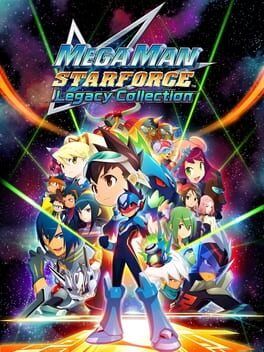
Mega Man Star Force Legacy Collection Review
Capcom has gotten very good at building archival packages, and Mega Man Star Force Legacy Collection continues that streak with a release that understands its assignment. This is not a remake, and it never pretends to be one. It is a careful, feature-rich preservation set for a DS subseries that spent years in an awkward corner of Mega Man history, admired by devotees and largely inaccessible to everyone else. Judged on those terms, this collection is a success. It makes the Star Force trilogy easy to play, generously stocked, and far more complete than tracking down original cartridges ever was.
The biggest question hanging over the collection is not whether these games were worth saving. They were. The real question is whether Capcom preserved them in a way that still feels good on modern hardware. For the most part, yes. The package quality is strong, the emulation is clean, and the extra options do real work instead of just filling menu space. It also helps that the underlying games, while undeniably rooted in DS-era habits like heavy tutorializing and some plodding early pacing, still have a sharp combat hook that comes through immediately once you are allowed to actually engage with it.
What you are getting here matters. The collection gathers Mega Man Star Force, Mega Man Star Force 2, and Mega Man Star Force 3, along with their various version splits, into a single modern release. That alone gives it serious preservation value. These were games built around fragmented versions, platform-specific quirks, and social features that could have easily been lost or half-restored in a lazy compilation. Instead, Capcom treats version completeness like a priority rather than an asterisk. For a set like this, that is essential. A collection covering versioned RPGs lives or dies on whether it feels definitive, and this one mostly does.
The first thing longtime fans will notice when actually playing is the input feel. Star Force has always lived or died by responsiveness because of its strange but compelling battle perspective. Unlike Battle Network's side-view lane management, Star Force pulls the camera behind Mega Man and asks you to read enemy formations and timing from a more compressed viewpoint. If the controls were mushy or the timing felt off, this whole collection would collapse. Thankfully, movement is crisp, menuing is snappy, and battles retain the quick tactical rhythm they need. There is still the occasional friction that belongs to the original design rather than the collection itself, especially in how some encounters and menu flows are structured, but the actual input response feels dependable. The games do not feel like they are being dragged through a compatibility layer. They feel playable in the exact way they need to.
That is especially important for newcomers, because Star Force can be a harder sell than Battle Network at first glance. Battle Network veterans are already trained to enjoy deckbuilding, pattern recognition, and a blend of action with RPG progression. Star Force shares that DNA, but its combat is more constrained in movement and more specific in how it asks you to read space. On paper, that sounds like a downgrade. In practice, it gives the battles a different kind of tension. You have fewer immediate degrees of freedom, so positioning and card choice matter more on a moment-to-moment basis. The collection does a good job of letting that appeal shine through without introducing technical annoyances that would make the games feel older than they are.
The dual-screen question is where any DS re-release earns its keep, and Capcom handles it well. No modern platform can perfectly replicate the ergonomics of a DS, so the goal is not authenticity at all costs. The goal is readability and flexibility, and this collection largely nails both. Multiple screen and layout options make it easy to settle into a setup that feels natural whether you are docked, handheld, or sitting at a monitor. Menus remain legible, the second-screen information is accessible instead of feeling crammed into an afterthought, and the presentation avoids the amateurish look that can plague cheap DS ports.
There are limits, of course. These games were built around a very specific hardware context, and no arrangement on a single screen will ever make that entirely disappear. Some interface moments still remind you that you are playing software designed for two displays and touch-era assumptions. But Capcom gives players enough layout flexibility and visual options that the compromise rarely becomes irritating. That is the right outcome for a collection like this. You are aware of the translation from DS to console, but you are not fighting it.
Bonus content is another area where the package earns its shelf space. The gallery and music options add meaningful archival appeal, not just token unlockables tossed in to justify the word legacy. Star Force has always had a particular identity in its character art, UI flavor, and soundtrack, and the extras help underline that this was a distinct branch of Mega Man rather than just Battle Network's awkward cousin. The museum-style additions are not revolutionary, but they add context, reward fan curiosity, and make the collection feel curated. That matters when the audience includes both returning players and people touching these games for the first time.
The quality-of-life additions are practical rather than flashy, and that is exactly what the collection needed. Speed-up options and power-assist style features make a real difference in games that can be text-heavy and occasionally padded. Purists can ignore them. Everyone else can use them to smooth over some of the more stubborn DS-era rough spots. This is one of the collection's smartest choices because it respects the originals without becoming enslaved to every one of their flaws. A preservation project should preserve the work, not the inconvenience.
As a complete package, this is also one of the stronger arguments yet that Star Force deserved rescue from obscurity. The original releases had the usual version-split baggage, and in the case of these games, that fragmentation could make the trilogy feel more inaccessible than it needed to be. Here, the breadth of included content gives the collection a definitiveness the original market rollout never had. If you care about game preservation in any serious sense, this is the kind of re-release you want to see more often: all the major versions, sensible modern features, bonus materials, and no sense that the publisher is reluctantly doing the bare minimum.
The bigger challenge is how well the games themselves hold up depending on who you are. For Battle Network fans, the answer is easy: quite well, provided you are open to a different cadence. The similarities are obvious enough to feel familiar, but the perspective shift and tone make Star Force its own thing. If you came in wanting a carbon copy of Battle Network, you may need an adjustment period. If you came in curious about another spin on card-based action RPG combat, there is still plenty to love.
For newcomers with no Battle Network attachment, the answer is a little more complicated. This collection presents the games clearly and comfortably, but it cannot erase their pacing problems. The early hours can be chatty, tutorial-heavy, and slow to trust the player. Dungeon design and progression can feel repetitive by modern standards. Some social and online-rooted mechanics also carry a distinctly period-specific feel. The collection mitigates these issues with its options and convenience features, but it cannot fully modernize a design philosophy that occasionally loved friction a bit too much.
Still, the core battle system remains compelling enough that patient newcomers can absolutely find their way in. Once you settle into folder building, exploit enemy patterns, and start understanding how Star Force wants you to think in combat, the games reveal why they have lasted in memory. The collection helps by removing access barriers and by making experimentation less of a chore. It does not transform Star Force into something sleek and contemporary, but it gives the series its best possible shot with a fresh audience.
That, ultimately, is what makes Mega Man Star Force Legacy Collection work. It knows the value of the software it is preserving, and it respects players enough to present that software in a usable, attractive, and content-rich form. The input feel is right, the DS layout handling is thoughtful, the bonus content is worthwhile, and the version coverage gives the package real authority. The games themselves still carry some inherited baggage, and anyone expecting a dramatic modernization will not find it here. But as a collection, this is exactly what it needed to be: a strong archival release that makes a once-stranded trilogy feel available, coherent, and worth revisiting.
For Battle Network fans, it is an easy recommendation. For curious newcomers, it is a qualified but sincere one. And for anyone who cares about preservation value, this is one of Capcom's better Legacy Collection efforts because it does more than dump old ROMs into a storefront. It restores context, convenience, and completeness. That is what a legacy collection is supposed to do.
Final Verdict
A solid gaming experience that delivers on its promises and provides hours of entertainment.