
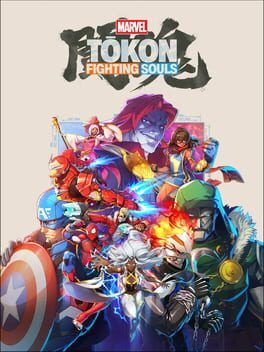
Review

By Parry Queen
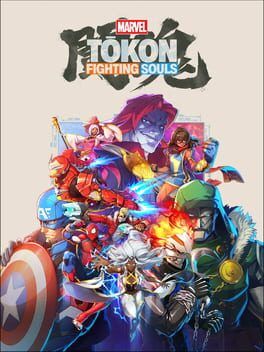
Image: IGDB
Store links: Marvel Tokon: Fighting Souls on Steam
Arc System Works gets Marvel into fighting shape, with one platform warning
The strongest fact around Marvel Tōkon: Fighting Souls is also the source of its biggest buying caveat: Sony, Marvel Games, PlayStation Studios, and Arc System Works have delivered a well-reviewed Marvel fighting game on PS5 and PC, but multiple outlets reported a rougher PC launch than the console version. Metacritic lists the game as released on Aug. 6, 2026, with Arc System Works as developer and Sony Interactive Entertainment attached to the listing, while GamingBolt reports availability across PC, PS5, and PS5 Pro.
That platform split matters because this is a game built for exact inputs, visual noise management, and online repetition. A tag fighter can survive a thin story mode more easily than it can survive unstable performance or suspect matchmaking. The good news is that the core design has landed. IGN called Marvel Tokon a rare fighter with strong mechanics, teaching tools, netcode, Replay Takeover, story content, and modes for different skill levels. OpenCritic currently places it in the 95th percentile of scored games, and Metacritic’s PS5 page shows generally favorable critic and user reception.
My review recommendation follows that same tension. On PS5, Marvel Tokon is an easy competitive buy if you want a modern Marvel fighting game with Arc System Works’ animation and system design. On PC, the answer depends on your tolerance for launch patches and crossplay uncertainty. IGN says a recent patch appears to have fixed most of the PC version’s earlier issues, while GamingBolt and Operation Sports both frame the PC situation as needing emergency attention. That is enough to keep the platform caveat alive without turning this review into a troubleshooting guide.
The 4v4 format is smarter than it looks
Marvel Tokon’s best design decision is that its 4v4 structure does not ask beginners to learn four full characters before they are allowed to have fun. IGN describes the system as a 4v4 tag fighter where the whole team shares one lifebar, rather than giving each character separate health that can be rotated for recovery. GameSpew also notes that you pick four characters but start with your main, with other teammates becoming available in later rounds or through certain actions.
That shared lifebar quietly solves two old tag-fighter problems. Matches do not drag into four separate health-bar comebacks, and new players do not have to build a tournament-ready team on day one. You can begin with one point character, learn your anti-air timing, confirm routes, and pressure rhythm, then add assists and swap extensions as your neutral becomes less random. IGN’s example of learning Spider-Man first, then adding Blade and Magneto later, matches the way serious players actually improve: one matchup question, one conversion route, one assist purpose at a time.
The result is a Marvel fighting game that still feels busy, but rarely feels unreadable for the wrong reasons. The screen fills with assists, supers, comic-style effects, and team movement, yet the shared-health format gives every hit a clean consequence. You are not winning because your bench hid three fresh health bars. You are winning because you forced the opponent to block, tagged at the right timing, and spent meter with purpose.
Roster feel favors clear roles over encyclopedic fan service
The available source material does not provide a full roster count, and one OpenCritic-listed review from Press Start argues that the roster feels small for this kind of game. That criticism is worth keeping in view, especially for Marvel fans expecting a giant crossover museum. Tokon’s roster succeeds less through raw volume and more through sharp silhouettes, readable combat jobs, and character kits that give new players obvious entry points.
Operation Sports identifies Ms. Marvel, Captain America, Hulk, and Blade as strong beginner choices, and the reasons are instructive. Ms. Marvel is described as straightforward because she can punish from range and close in while plus through Elasti-grab, though Operation Sports warns that her limited aerial mobility can hurt her against zoners. Captain America is framed as the fundamentals pick, with Shield Strike, Freedom Charge, and Shield Guard giving him a simple tool spread even if he struggles against highly defensive opponents. Hulk is the direct brawler, built around rushing in, charging gamma, armored moves, Thunderclap, and a fully charged unblockable heavy punch. Blade is described as easy to play, strong across ranges through Heart Stopper, useful as a tag option, and rewarding enough to master that Operation Sports calls him the only top-tier character on its beginner list.
That is good fighting-game onboarding. The characters are not simply easier because they do less. They teach different lanes of improvement. Captain America teaches stable neutral and conversion discipline. Ms. Marvel teaches range control and approach risk. Hulk teaches commitment, armor timing, and fear. Blade teaches why a flexible all-range kit can anchor a team. For players trying to improve, that matters more than whether the launch roster checks every personal favorite.
Beginner tools are strong, but Tokon still has real teeth
GameSpew reports that Marvel Tokon uses light, medium, and strong attack buttons rather than separate punch and kick layouts, with specials available through traditional commands or a right-trigger-plus-direction shortcut. Assists also have a dedicated button that can be combined with directions to call specific teammates. That control design is friendly without flattening the game. Mashing medium can produce useful offense when the Skill Gauge allows it, according to GameSpew, but stronger players will get more from routing, assist timing, and gauge optimization.
This is where Arc System Works’ hand is most visible. The game gives you a way to function before you understand everything, then keeps opening doors. IGN praises the teaching tools and says the game lets players add new elements to their plan piece by piece. Insider Gaming, quoted on Metacritic, similarly highlights excellent tutorials and a 4v4 system that stays approachable because of its assist emphasis. For a tag fighter, that is a huge win. The genre’s usual failure state is making beginners feel like they are losing before the round starts because team construction is already homework.
Tokon avoids that, but it is still a competitive game. Shared health means bad defensive habits are punished immediately. Assists give you conversion power, but careless calls can become predictable. Simplified specials help execution, but they do not replace spacing or turn recognition. If you want to climb, treat the easy routes as scaffolding. Learn one reliable midscreen confirm, one corner route, one safe assist call, and one answer to zoning before you start labbing highlight combos.
Online readiness looks promising, with cross-platform caution
For an Arc System Works Marvel game to last, online play has to carry the week-two player base after the story credits and launch novelty fade. The reporting here is encouraging but not perfectly uniform. IGN calls out great netcode and specifically praises hardcore features like Replay Takeover. Metacritic’s Insider Gaming excerpt cites smooth online performance. At the same time, an OpenCritic-listed Push Square review says the dodgy PC port affected the crossplay experience at launch, and Indigo GEEK’s Metacritic excerpt says online still has some kinks to work out.
That is not a contradiction so much as a launch-state snapshot. PS5 appears to be the cleanest online recommendation. PC may now be better than it was at release, with IGN saying a recent patch fixed most of the earlier performance problems, but the record still shows a rocky start. If you are buying primarily for ranked, lobbies, or tournament practice, PS5 is the safer platform based on the available reporting. If your training group is on PC, confirm the current patch state and crossplay experience before committing long term.
The inclusion of Replay Takeover is especially important for improvement-minded players. When implemented well, that feature turns replays into drills instead of passive film study. You can isolate the moment you got clipped, take control, and test whether your answer was late, wrong, or impossible. For a tag fighter with layered assists and screen control, that is one of the most useful competitive tools a developer can ship.
PS5 and PS5 Pro are the cleanest versions to recommend
GamingBolt’s technical coverage reports that Marvel Tokon targets and sustains a locked 60 frames per second on PS5 and PS5 Pro, with very fast loading into matches and rematches. It also reports that PS5 Pro uses PSSR to produce a crisper upscaled 4K image, with cleaner fine details, edges, and distant background elements. The drawback is limited player-facing graphics control: GamingBolt says neither PS5 nor PS5 Pro offers graphics or performance mode toggles, despite the title being Pro Enhanced.
For a fighter, I would take locked 60 and fast rematches over a menu full of graphics options every time. Training-mode iteration, ranked sets, and local casuals all benefit from short downtime and stable presentation. The missing toggles are still disappointing on PS5 Pro, but they do not undercut the competitive recommendation if the framerate target is consistently met.
Visually, the game is carrying a lot. GamingBolt points to Unreal Engine 5, comic-evocative art direction, detailed character models, expressive faces, attack effects, supers, transitions, and busy stages with foreground and background detail. DayOne goes further, calling it the most beautiful fighting game the reviewer had seen and praising the comic sketch styling across menus and supers. That spectacle could have become a readability tax. Instead, the better reports suggest the animation and effects sell impact while preserving the core fight flow. In a Marvel game, that balance is the whole match.
Verdict: a serious Marvel fighter with a practical platform split
Marvel Tōkon: Fighting Souls is the strongest modern answer to the question of what an Arc System Works Marvel fighter should be. It is stylish, approachable, lab-friendly, and structured in a way that makes 4v4 less intimidating than the number implies. The shared lifebar is the key. It lets beginners start with one character while giving stronger players enough team-building depth to keep discovery alive.
The weaknesses are real but manageable. The roster may feel lean depending on your Marvel expectations, as Press Start’s OpenCritic-listed review notes. Solo content is not universally praised, with OpenCritic showing GameRant calling the solo experience weak and Push Square saying offline play does not reach the level of genre leaders like Street Fighter 6. PC also remains the version with the most caveats in the reporting, even after patch improvements cited by IGN.
If you are on PS5, buy it if you want a competitive tag fighter that welcomes new players without insulting experienced ones. If you are on PS5 Pro, expect the best image quality according to GamingBolt’s PSSR findings, but not extra graphics toggles. If you are on PC, this is playable by current reporting but still the version to research before purchase, especially if crossplay and ranked stability are your priority. Metacritic lists a $59.99 PS5 buy option, so the value question comes down to whether you plan to play online and train seriously. For that audience, Tokon earns the recommendation.
Final Verdict
A solid gaming experience that delivers on its promises and provides hours of entertainment.