
Review

By Pixel Perfect
Marvel Maximum Collection Review
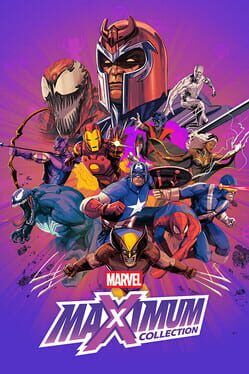
The first question with Marvel Maximum Collection is not whether these games are good. Some of them are, one of them is great, and a few are historical curiosities you will boot up once and then leave in the archive drawer forever. The real question is whether the package earns its asking price on Switch. On that front, the answer is a qualified yes. Thirteen versions across arcade, console, and handheld history make this feel substantial at a glance, but the bundle is doing some clever math. This is really a six-game Marvel retro set padded out by regional and platform variants. That does not make it dishonest, but it does mean the value proposition depends on how much you care about preservation, comparison, and cartridge-era weirdness.
If you only want a stack of all-timer classics, Marvel Maximum Collection is thinner than the title suggests. If you want a curated time capsule of Marvel's 8-bit, 16-bit, arcade, and portable years, it becomes much easier to recommend. For Switch owners in particular, that distinction matters. Nintendo's machine is a natural home for old licensed action games, and this collection lands with enough flexibility and convenience to justify itself, even if it never quite reaches the museum-grade ambition of the best modern retro anthologies.
What saves the package from feeling overpriced is the top end of the lineup. X-Men: The Arcade Game is still the headliner and still the easiest game in the collection to love. It remains a big, loud, quarter-munching mutant riot with a fantastic sense of momentum, chunky enemy waves, and some of the most gloriously cheesy voice work of its era. On Switch, it is also the collection's most modernized offering, thanks to online multiplayer for up to six players with rollback netcode. That single feature does a lot of heavy lifting. This is the game most people will return to, and having a smooth way to play it with friends beyond the couch gives the bundle a pulse that some nostalgia compilations never find.
The other major pillar is Spider-Man and Venom: Maximum Carnage, which remains an enjoyably scrappy brawler with attitude to spare. It is not as elegant as the Konami arcade games, and its pacing can get lumpy, but the presentation still sells it. The comic-book framing, the soundtrack's punch, and the unusual superhero pairing give it a personality many licensed games from the period lacked. Venom/Spider-Man: Separation Anxiety is the less impressive companion piece, a follow-up that feels broader and sloppier, but it has enough co-op novelty to be worth revisiting in short sessions.
Captain America and The Avengers is another worthwhile inclusion, if only because it captures that very specific era when arcade action games were blunt instruments with immaculate comic-shop energy. It is repetitive, stiff in places, and not exactly deep, but there is fun in its simplicity. It knows its job. It throws famous heroes at famous villains and lets the screen fill with chaos. That can still be enough.
Then there is the rest of the set, which is where the package shifts from crowd-pleaser to archive project. Spider-Man/X-Men: Arcade's Revenge is fascinating in the way many old licensed games are fascinating. It is messy, awkward, sometimes cruel, and often more memorable than actually enjoyable. Silver Surfer is infamous for a reason, and this collection does not magically transform it into a hidden gem. It is still a brutal shooter best appreciated with save states doing emergency surgery on the original design. The handheld versions included here are valuable less because they are endlessly fun and more because they broaden the picture. They show how Marvel games were translated downward onto smaller, weaker hardware, and for preservation-minded players that matters.
That gets to the core of the emulation and port work. This is a competent, largely respectful package rather than a revelatory one. The expected quality-of-life tools are here, including save states, rewind, display options, and a music player, and those features go a long way on Switch where pick-up-and-play convenience is part of the appeal. Performance appears stable, menus are functional, and the collection benefits from letting players move quickly between versions and tweak presentation to taste. Nothing about the emulation feels careless.
At the same time, this does not sound like one of those retro collections built with a lavish documentary mindset. The preservation is useful and broad, but the curation is not especially transformative. You get the games, the variants, the manuals and vintage material in the archives, and some welcome modern comfort features. What you do not get is the sort of deep contextual framing, developer history, or richly produced interactive presentation that has made the top-tier archival compilations feel essential even to people who do not have nostalgia for the source material. Marvel Maximum Collection preserves these games effectively, but it does not entirely celebrate or interrogate them.
That makes the extras good rather than exceptional. The digital archive with box art, manuals, and ads absolutely has value, especially for licensed games that spent decades in rights limbo. The music player is another smart inclusion because several of these soundtracks deserve better than being treated as background noise. On a pure checklist level, the collection covers the basics well. It just stops short of turning those basics into a real event.
Online functionality is similarly narrow but meaningful. Only X-Men: The Arcade Game gets proper online multiplayer with rollback netcode, and that is both understandable and a little disappointing. Understandable because it is the obvious showcase title, disappointing because broader online support would have elevated the bundle's replay value considerably. As it stands, online play is a strong selling point for one game rather than a collection-wide advantage. Still, on Switch, having a dependable way to jump into six-player X-Men online is a genuine feature, not marketing garnish.
For Switch owners specifically, the collection makes more sense than it might elsewhere because of format. These are games that benefit from short bursts, handheld access, sleep mode, and quick suspend-resume rhythms. The weaker titles are easier to tolerate when you can dip into them for ten minutes, experiment with a strange port variant, then bounce over to a better game without friction. That flexibility turns the bundle's unevenness into part of its charm. On a TV-first platform, some of this would feel like homework. On Switch, it feels closer to rummaging through a long-lost comic box.
The catch is that nostalgia still does a lot of the work. Beyond X-Men: The Arcade Game and a small handful of other highlights, this is not a lineup overflowing with timeless play. Several entries are rough, limited, or flat-out punishing in ways modern players may admire more than enjoy. If your interest in Marvel retro gaming starts and ends with wanting the best possible games, this collection is easier to like than to love. If your interest includes history, oddities, and side-by-side platform comparisons, its value rises sharply.
So is it worth it beyond pure nostalgia? Yes, but not by a landslide. Marvel Maximum Collection succeeds because it offers more than a simple memory lane cash-in. It preserves multiple versions, adds modern usability features, includes a respectable archive, and gives its best game online play that actually matters. But it also leans heavily on quantity framing, and its archival ambitions are modest compared with the elite standard for this kind of release.
For Switch owners, that leaves it in a good-not-great spot. It is a sturdy retro package with one killer anchor, a few solid supporting acts, and a bunch of historically interesting deep cuts. Buy it if that combination excites you. Skip it if you are expecting thirteen bangers or a definitive interactive museum piece. The maximum in the title refers more to the breadth of Marvel history than the consistent quality of the games themselves, and once you understand that, the collection becomes much easier to judge fairly.
Marvel Maximum Collection is a worthwhile anthology for the right audience, carried by X-Men: The Arcade Game, strengthened by smart Switch-friendly features, and held back from true greatness by an uneven lineup and only decent archival ambition.
Final Verdict
A solid gaming experience that delivers on its promises and provides hours of entertainment.