
Review

By Night Owl
A haunted city built for runs, not just vibes
Malys is one of those games that sounds like a pitch-meeting word salad in the worst way: a narrative-heavy roguelike deckbuilder about an ex-priest exorcist detective in a festering city. The strange part is that it actually works. Summerfall Studios, coming off Stray Gods, leans just as hard into character and conversation here, then lashes that to a structure that is unmistakably run-based.
You play as Noah, a former priest turned demon-hunter who is equal parts investigator, counselor, and spiritual hitman. Each run is framed as a new sweep through a corrupted district, tracking possession cases and deciding who you can save, who you can merely contain, and who you might have to sacrifice for the greater good. Between runs you return to a central hub, where relationships deepen, factions shift, and the city quietly rots in new ways.
What stops Malys from feeling like yet another Slay the Spire-alike is the way its fiction and mechanics are fused. You are not just lowering hit points. You are probing a demon’s hold over its host, exposing its true form, and trying not to shatter the human underneath.
Exorcism as a card game
On paper, Malys is straightforward. Encounters play out as lane-based card battles. You draw a hand, spend faith and resolve instead of traditional energy, and line up attacks, protections, and rituals to survive. In practice the focus is less on raw damage and more on managing three constantly shifting layers.
There is the demon, which is initially obscured, sometimes literally hidden behind the host in the UI. Its attacks are often unknown until you “reveal” it by playing specific expose cards, which then causes its pattern and intent to change. There is the host, who has their own stress and trauma trackers. Push them too hard with aggressive tactics and you can break them long before the demon is ready to be expelled. Then there is Noah himself, juggling faith, doubt, and scars that persist across runs.
Most decks you build will revolve around one of several broad approaches. You can lean into revelation, running a lean package that quickly strips away a demon’s disguises and focuses on short, brutal fights that leave hosts shaken but alive. You can err toward compassion-heavy builds that stack shields, calm cards, and confession effects to stabilize the host before you start ripping into the demon. Or you can go almost utilitarian, focusing on fast control and containment, essentially freezing a case in place so you can move on.
The clever twist is that these are not just mechanical playstyles. They are ethical orientations, and the game remembers them.
Relationships that really remember what you did
Summerfall’s Dragon Age pedigree shows most clearly in the people around Noah. Fellow hunters, jaded cops, neighborhood priests, and possessed victims who survive a run all hang around between exorcisms. They see how you work and comment on it, then quietly adjust how they treat you and what help they offer in future runs.
If you brutalize a demon out of a teenager to secure a big payoff in faith and a powerful new relic, the kid’s family remembers. Maybe they avoid you in the hub and a potential ally route simply vanishes. Maybe a local gang suddenly treats you as a ruthless asset and opens up new, darker jobs. That persistent web of grudges and gratitude is the real metagame.
Romantic and platonic relationships are similarly fragile. A cop partner who favors hardline tactics loves seeing you take the gloves off in the field, but another ally might start pulling away as you rack up collateral damage. Malys does not have the wild, musical theatricality of Stray Gods, yet it shares that game’s taste for conversations that feel tailored to the path you have carved.
Where it stumbles is in surfacing all this. The relationship tracking is sophisticated under the hood, but the game is inconsistent in communicating just how much you have shifted someone’s opinion. Sometimes a single case brings down a cascade of new scenes. Other times, the consequence of what felt like a huge decision is a terse line of dialogue and a small icon change on a character portrait. You can tell there was an intent to avoid gamifying human connection, but now and then it just feels opaque.
The loop: ritual, reset, regret
As a roguelike, Malys lives or dies on whether its run-based structure stays addictive beyond the novelty of its setting. The first five or six hours are an absolute high. New case types unlock at a brisk clip, from domestic hauntings to cult compounds that play out over multi-stage battles. Each successful exorcism feeds you faith used to unlock new cards, relics, and permanent upgrades back at the hub.
Instead of simply adding cards to a global pool, you are choosing which strains of theology and technique Noah invests in. Double down on punitive rites and your card pool starts to skew toward big, risky plays that chew up demons at the expense of hosts. Favor pastoral care and your decks fill with patient, stabilizing tools that turn fights into tense endurance matches. It is a satisfying layer of controlled randomness. You are not just hoping the right card shows up; you are curating the kind of exorcist you are becoming over dozens of runs.
Past the ten-hour mark, though, the seams begin to show. Case structures repeat more often, even when the names and surface details change. You will see the same “husband hearing voices from the walls” scenario or “teacher with strange drawings” template pop up enough times that the shock wears off. Dialogue permutations help, but the skeleton underneath is easier to spot with each failed run.
Meta-progression also starts to feel a bit stingy. Unlocks slow down significantly, and the faith costs for new doctrines spike in a way that seems tuned to stretch playtime rather than to hit a satisfying cadence. The deckbuilding sandbox is deep enough that hardcore players will happily grind for fresh combinations, but if you came here first for the story you will feel the repetition sooner.
How the storytelling and cardplay intertwine
When Malys is at its best, the story is not sitting on top of the mechanics but running through them. The key example is how every card in your deck feels grounded in the fiction. A “Lay Bare” card that strips enemy intent is also Noah pushing a host to relive their worst memory. A “Binding Circle” that redirects damage away from a victim is visualized as friends or family physically holding them down while you confront the demon.
Fights against major demons are the highlight. These bosses often hide their full nature at first, sometimes masquerading as benign stressors or minor addictions. You might spend the first phase thinking you are dealing with a pretty standard wrath demon, only to reveal that the true entity is a parasitic martyr spirit and the whole dynamic of the battle flips. The game reinforces this by swapping out card art and even renaming certain cards mid-fight to reflect hard truths you have uncovered.
Run-to-run, you start piecing together not just the lore of individual demons but how they map onto the city’s institutions. A particular pride demon keeps reappearing in corrupt charity fronts, another nestles into the police force. If you have tangled with one enough times, future encounters start with partial knowledge, speeding up the mechanical process of exposure while also giving you and Noah a sense of bitter familiarity.
This structure is a real strength. Instead of a linear plot chopped into roguelike runs, Malys treats every failed attempt as another file in Noah’s overflowing cabinet. The writing embraces that investigative cadence, seeding callbacks and recognizing when you, the player, have clearly seen a pattern before even if Noah technically has not.
Does the hook hold past the early hours?
The answer is a qualified yes. Malys is one of the better attempts at marrying heavily authored storytelling with hardcore roguelike repetition, but it does not completely solve the inherent tension between those goals.
As long as the relationship threads are advancing, it is easy to forgive repeated case frameworks. You want to see how a burned bridge with one ally affects a showdown two acts later. You want to know whether a host you barely kept alive three runs ago really will show up again as a shaken informant. When those payoffs arrive, they are terrific and they go a long way toward making the grind feel purposeful.
The problem is that the game’s best relationship content is front-loaded toward the midgame. By the time you are chasing final endings and optimal builds, many arcs have either wrapped or plateaued. What is left is a few late-game demon types and a lot of familiar encounters. At that stage, Malys relies mostly on the inherent pleasures of tinkering with decks and pushing deeper into higher difficulties, where mistake-free play and high-synergy builds become mandatory.
If you are the kind of player who still happily boots up Slay the Spire five years on because you want to try one more cursed relic combo, Malys has that same staying power. The mana system of faith, resolve, and self-harm costs on certain cards opens the door to some really nasty, memorable builds, especially once relics start breaking the usual rules. If you are primarily here for branching narrative and character drama, the magic wears off closer to the twenty-hour mark, when new lines of dialogue and major relationship shifts thin out.
Presentation and feel
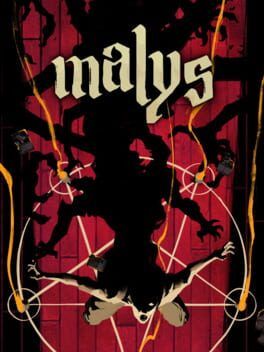
Visually, Malys lands somewhere between graphic novel and stained-glass window. The corrupted city is all sharp angles, heavy inks, and splashes of crimson for demonic influence. Exorcism scenes, with a victim strapped to a chair and a looming demon filling the background, are some of the most striking battle screens in the genre.
Sound design is equally sharp. Every card play lands with a ritualistic snap, chime, or scorched hiss. The soundtrack swims between low choral drones and tense, percussive cues when a demon is about to break through. Voice acting is reserved for key scenes, but Noah’s weary baritone and a few standout supporting performances do a lot to sell the emotional weight of each case.
Technically, the 1.0 build is solid, with only occasional hitching when large status stacks are in play. The bigger annoyance is in some sluggish menu transitions and overly nested UI for managing decks across multiple doctrine trees. It is never outright broken, just clumsier than you want in a game that invites constant tinkering.
Verdict
Malys is not the perfect union of story and roguelike repetition, but it comes closer than most. Its central exorcism mechanic is smart and flavorful, its relationship web is reactive enough to make your choices sting, and its cardplay is deep enough to reward long-term experimentation. The cost of that ambition is a second half that leans more on mechanical grind than fresh narrative beats.
As a narrative-heavy roguelike deckbuilder, though, it succeeds far more often than it stumbles. If you are hungry for a card game where the numbers, the people, and the demons all feel part of the same cursed tapestry, Malys is absolutely worth stepping into the city and taking a few runs at salvation.
Final Verdict
A solid gaming experience that delivers on its promises and provides hours of entertainment.