
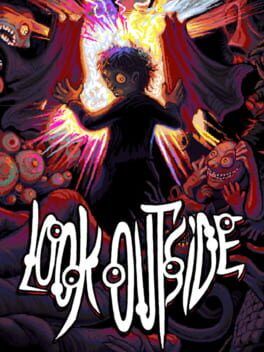
Review

By Pixel Perfect
Trapped in the building, trapped in your own bad decisions
Look Outside takes a very simple premise and stretches it until it screams. You are stuck in a single apartment block after a cosmic event turns anyone who looks out the window into warped, fleshy monsters. You should not look outside. You probably will anyway.
On paper it is a compact 2D pixel horror game. In practice it feels like a malicious tabletop campaign set in a single, cursed map grid. Every floor hides a new rule, every neighbour is a potential ally, victim, or future boss, and every choice you make feeds back into a branching narrative that is far more reactive than it first appears.
The magic trick is how it braids three genres that usually fight each other. The moment to moment tension of survival horror, the menu‑driven crunch of a classic turn‑based JRPG, and the gated, looping exploration of a metroidvania all sit on top of each other. Look Outside should be a mess. Instead it is laser focused, with each system sharpening the others.
Survival horror where the mundane is as stressful as the monsters
Before you even get into combat, the game is already gnawing at you. You have to eat, sleep, bathe, brush your teeth, and keep your tiny room habitable. Food rots. Power and water are not a given. Noise attracts attention. Even walking into the corridor feels like stepping onto thin ice.
That routine is not busywork. It is the backbone of the horror. Managing hunger, hygiene, and stress becomes as important as tracking ammo. A blood‑slick boss on the seventh floor might be less dangerous than the slow attrition of going three in‑game days without a shower because the pipes in your section are full of meat. Fail to take care of yourself and your effectiveness in combat, navigation, and negotiation tanks in ways that feel brutally logical.
Supplies are tight but rarely random. You are not hoping a crate rolls you a shotgun at the last second. You are deciding whether to spend precious cleaning supplies on making your bathroom usable again or saving them to clear a putrid hallway later so you can reach a shortcut. Survival here is planning rather than panicking.
Turn‑based RPG systems that actually justify the menus
Underneath the grime sits a very traditional turn‑based battle system. You pick commands from menus, exploit status effects, juggle weapon types, and keep an eye on health and sanity. That alone would be fine. What makes it special is how the system is constantly recontextualised by your neighbours, your body, and your earlier choices.
Weapons feel scrappy and improvised rather than generic. A rusty pipe, a nail gun, a kitchen knife wrapped in tape, each has specific speed, stamina, and accuracy quirks that matter. Status effects are not just coloured icons. Parasites nest under skin, teeth rot, infection spreads, and your character sheet begins to look like a medical report. Buffs and debuffs echo the body horror.
Your build is shaped less by class selection and more by the awful things you agree to do. Treat a parasitic worm like a tool instead of a threat and it might offer combat tricks at the cost of your humanity and your neighbours. Refuse, and some fights stay harder but your conscience and relationships look different. The game keeps quietly recording these decisions, then feeds them back into skill checks, encounter variants, and even who will talk to you later.
Crucially the battles are paced with restraint. Random fights do not constantly drag you into menus. When you do drop into combat it feels earned, whether it is a mutated tenant barricading the stairwell with their own viscera or a frantic multi‑turn scramble to stop a door collapsing under something that should have stayed on the other side of the glass.
Metroidvania in a single building
Look Outside’s map is one apartment block, but it stretches and folds on itself with the logic of a nightmare. Locked stairwells, barricaded corridors, and sealed apartments form a dense knot of routes that gradually untangle as you discover keys, tools, and new traversal abilities.
Progression is less about learning new movement verbs and more about understanding the building as a living organism. Maybe you repair an electrical loop that powers a lift on higher floors. Maybe you cut through a neighbour’s reeking shortcut if you can stand what is growing there. The result is a constant sense of circling back through familiar spaces, seeing the same stretch of hallway in three different states of decay depending on when you finally get through.
Backtracking rarely feels like padding because the game is very good at layering consequences. A decision you made many hours ago about whether to barricade a door or trust the thing knocking on it can completely change how a later floor connects, which vendors or allies survive, or which grotesque miniboss now nests in a once safe room.
Combined with the survival systems, this structure creates a friction that feels intentional rather than clumsy. Routes that are optimal for conserving resources might force you past something you would rather avoid. The game constantly asks whether the savings are worth the psychological damage.
Choice‑driven horror that does not bluff
Choice is the spine of the narrative, and Look Outside almost never cheats about it. It does not throw up big binary prompts that secretly funnel you to the same cutscene. Instead, choices slip into the texture of everyday survival.
Do you answer the door when a neighbour sobs in the hallway, or pretend you are not home so you can finish cooking in peace. Do you share medication with someone who can barely stand, or hoard it because you know combat is getting nastier and your own stats are sagging. Do you feed the slick, whispering worm because it promises a way past a new blockage, or starve it and risk losing access to an entire chunk of the building.
The key is that the consequences are usually legible. You might not know the exact outcome, but the game is very good at foreshadowing. Notes, overheard conversations, and environmental details hint at what kind of ripple each decision will cause. When things go horribly wrong it feels like the culmination of a pattern you could have spotted, not a twist just added to hurt you.
Multiple endings and large mid‑game branches make the whole building feel like a narrative maze. Aligning with different factions of survivors, or deciding that everyone is a threat and acting accordingly, can reconfigure late‑game sequences in ways that reward replay without padding the campaign too far beyond its lean runtime.
Body horror that turns your stomach without turning off your brain
Look Outside’s pixel art could have limited its horror impact. Instead the art leans into suggestion and texture. Harsh lighting, blown‑out colours, and detailed sprites work together to make every room feel diseased. Rot swells under wallpaper. Pipes bulge in ways that look uncomfortably organic. Carpets glisten.
Monsters are more upsetting for how recognisable they remain. Many are still clearly your neighbours, just pushed a few mutations further down the road. Limbs twist but wedding rings stay on. Pajamas cling to frames that should not be standing. And then there are the parasites, growths, and invasive organisms that set up shop in both enemies and allies, constantly daring you to poke at them in search of advantage.
The gore is graphic in concept but rarely juvenile. Some of the most revolting sequences happen in text as you agree to procedures and experiments that feel almost worse because you can only half see them. The game’s best set pieces are long, slow descents into a specific obsession, such as helping a squirming intruder claim more of a host body in exchange for its help later. It is the kind of horror that stays in your head for days.
Humour, when it appears, is pitch black. Jokes about tenant meetings and passive aggressive notes in the lobby sit next to scenes of surgical improvisation. The contrast keeps the whole thing from collapsing into pure bleakness while never undercutting the fear.
Punishing but rarely unfair
Look Outside is openly hostile. It gives you limited saves, no in‑game map, and a flood of overlapping systems to internalise. It wants you to feel overwhelmed. Yet for players used to survival horror or old‑school RPGs, that hostility almost always lands as a challenge rather than cheap cruelty.
Most of the difficulty springs from information management. The game expects you to pay attention, to remember which stairwell is blocked by which incident, which neighbour hinted at a hidden route, which room you left as an emergency stash. Failure usually traces back to a choice you made, not a hidden dice roll or an unforeseeable trap.
When it does spike too hard, there are usually escape valves. Many encounters can be sidestepped with preparation, negotiation, or a different path. The turn‑based system gives you time to think through options, and the resource economy is tight but generous enough that a single mistake does not doom an entire run. It is entirely possible to soft‑lock yourself, but you have to ignore a lot of warning signs to get there.
The lack of a traditional map is the one friction point that will lose some players. For others it is part of the fear, forcing you to build a mental model or keep notes like an old notebook RPG. The tension between those two experiences is intentional, and genre fans who enjoy being left alone with a game’s logic will find a lot to savour.
Verdict
Look Outside feels like it was stitched together from classic influences and then infected with something personal and deeply unpleasant. Its blend of survival routines, crunchy JRPG combat, and metroidvania exploration should not work this well, yet each piece reinforces the others until you are fully trapped in its diseased high‑rise.
It is uncompromising, often exhausting, and packed with body horror that will be too much for some. For horror and RPG fans who crave systems that bite back and stories that remember what you did, it is one of the most uniquely punishing and rewarding games of the year.
Final Verdict
A solid gaming experience that delivers on its promises and provides hours of entertainment.