
Review
By Apex
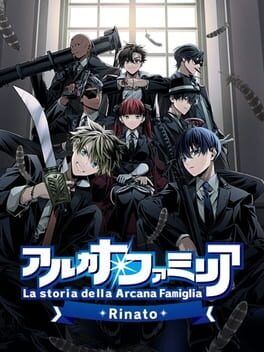
La Storia Della Arcana Famiglia has always had the bones of a cult classic: a Mediterranean island ruled by a magic‑wielding mafia, a cast of loud personalities, and a heroine literally fighting for control of her own future. Rinato on Switch is essentially the definitive version, building on the original PSP release and the Vita port Ancora, then layering in a slick new presentation and a long‑overdue English localization.
It is also a fascinating case study in how much a visual novel can gain from smart structural and UI changes, and how much it can still lose when it clings to older otome habits like a mostly silent protagonist.
From PSP to Switch: what actually changed
Rinato is built on the Vita version, so it already folds in the extra routes and fandisc‑style content that PSP players never saw. On Switch, the most obvious upgrade is the visual overhaul. The game keeps the original character art but reframes almost everything through a dynamic manga‑panel system that makes the PSP and Vita versions look flat by comparison.
The localization is also new, and crucially, much better than the fan‑lamented early scripts associated with the series. Italian names, mafia jargon, and tarot terminology are handled with far more consistency, and character voices survive the jump into English with surprising nuance. Lines that once read like wooden direct translations now flow with actual rhythm.
Structurally, this is the same story arc veterans know: Felicita, daughter of the Arcana Famiglia boss, learns that her father intends to retire and marry her off via a combat tournament. She enters the tournament herself to claim both the title and her autonomy. What the Switch version does is package that storyline and its routes in a way that finally feels coherent and easy to navigate, instead of the slightly scattershot feel the PSP version could have.
Manga‑panel presentation: style that actually serves the story
Rinato’s strongest feature is its panel‑based presentation. Rather than static full‑screen CGs and simple sprite swaps, the story frequently plays out in comic‑style frames that slide, stack, and zoom. It feels like reading a living graphic novel more than a traditional NVL.
On PSP, the framing was simple: background, a couple of sprites, text box. Vita did a little more, but it still looked like a lightly polished PSP game. On Switch, scenes that used to be just two characters talking now cut between close‑ups, reaction panels, and foreground silhouettes, all without becoming visually noisy.
Crucially, this is not just cosmetic. Fight scenes and confrontations, which were always meant to be high stakes, finally have the snap the script implies. When an Arcana contract flares out of control, you get quick cuts between a character’s eyes, the tarot sigil, and a reaction shot that sells the danger far better than the old versions ever did. Even mundane slice‑of‑life bits in the Famiglia mansion benefit, since banter feels like it is bouncing around the room.
There are moments when the game leans a bit too hard on the panel gimmick and the eye can get tired, especially in long stretches of dialogue. Overall, though, the Switch presentation turns a perfectly serviceable PSP otome into something that looks contemporary and distinct, more than a simple up‑res.
Arcana systems: Cocoaru, Comiaru, and the illusion of agency
Mechanically, Rinato extends beyond pure kinetic reading through its Arcana systems, which tie into the tarot contracts that power the setting.
The Cocoaru system centers on Felicita’s Lovers Arcana, which allows her to read people’s hearts. In practice, this manifests as a resource you can spend to peek into a character’s inner thoughts during key scenes. On the PSP and Vita versions it sometimes felt like a bit of optional flavor. On Switch, with clearer UI and better signposting, it feels more deliberately integrated.
Spending this limited resource adds layers to the character writing, especially for guarded types like Libertà and Nova. You get their surface banter in the main text window, then, via Cocoaru, the fears and doubts they are actually suppressing. It does not radically change the story branches, but for players who enjoy dissecting character psychology it is a real hook.
Comiaru, on the other hand, tracks relationship affection and overall Arcana proficiency. These numbers silently governed routes in earlier versions in ways that could feel opaque. Rinato surfaces them more cleanly, with the Switch UI making it easier to see what events you have triggered and how your choices have nudged each bond.
This transparency is a double‑edged sword. Genre veterans who remember stumbling into bad ends on the PSP will appreciate the clarity. At the same time, you begin to notice how little your power actually disrupts the story rails. The systems give the impression of tactical choice in what is still, under the hood, a tightly scripted romance VN. The illusion works well enough, particularly for an older title, but anyone coming from modern otome with more branching and free‑form scheduling will see the seams.
Route structure: a more digestible Famiglia
One of the original game’s biggest problems was pacing. The common route lingered, the tournament framing took ages to pay off, and character arcs sometimes felt rushed once you finally chose a partner.
Rinato smooths this out without rewriting history. The Switch version’s structure follows the Vita port, with a clearer division between common route, romance routes, and after stories. Checkpoints and skip functions make hopping between routes much less of a chore than on PSP, where replays could feel like a slog.
The route lineup still reflects its early‑2010s origins. Some, like Libertà’s and Nova’s, do a solid job of tying their personal trauma to the ethics of Arcana contracts and the expectations of the Famiglia. Others lean more heavily on trope comfort than on serious thematic follow‑through. The fandisc‑style content that Rinato folds in gives under‑served characters extra space and throws in lighter episodes that play into the found‑family fantasy.
Compared with the original, Switch is simply a more approachable package. It is easier to see every route, easier to collect CGs, and easier to target your favorites without fighting the structure. Newcomers, though, should be prepared for an older style of route design that prioritizes archetype flavors over very deep branching.
Localization: finally worthy of the aesthetic
Perhaps the most important difference for non‑Japanese players is the English script. Earlier impressions of the series, filtered through patchy fan translations and spotty official text, have done Arcana Famiglia no favors over the years.
Rinato’s Switch localization is not perfect, but it is a clear step up. The translation respects the Italian flavor without drowning the script in clumsy foreign terms. Names like Mondo, Debito, and Pace sit comfortably alongside tarot jargon like Lovers and Death. Idioms are rephrased so that character banter reads as if it were written for English from the start instead of forced through a dictionary.
The improvement is felt most in tone. The Famiglia’s chaotic dinners and bickering feel genuinely funny now. Serious conversations about the burden of Arcana powers have weight without the melodrama tipping into unintentional comedy. A few stiff lines and occasional odd word choices remain, but they stand out mostly because the baseline is now solid.
For players familiar with the PSP or Vita in Japanese, some nuance inevitably shifts, especially in emotionally dense scenes. However, the Switch localization generally lands on the right side of clarity, rarely sacrificing character intent. It finally allows the game’s superb aesthetic to be matched by a script that does not actively drag it down.
The silent heroine problem
Where Rinato still shows its age is in its approach to Felicita herself. She is visually present and conceptually active, but functionally muted. Voice clips are limited, and compared to more recent otome heroines she can feel like an almost blank self‑insert, despite the premise insisting on her agency.
For otome newcomers, especially those arriving from story‑driven Switch titles where heroines are fully voiced and emotionally expressive, this can be a barrier to engagement. When the narrative discusses Felicita’s fight for autonomy, but the on‑screen performance gives her little audible pushback, the tension between concept and execution becomes obvious.
Veteran otome players will likely be more forgiving. Silent or semi‑silent heroines were a standard for the era, and the Switch version retains that flavor. In text, Felicita does have opinions and will stand her ground, she just rarely gets the vocal presence to match the men around her. For some, that makes self‑projection easier. For others, it blunts the impact of major story beats, since the heroine who is supposed to be tearing up the rules of her world is quiet at precisely the moments you want her to roar.
Rinato’s Switch script and manga‑panel shots help, using visuals and inner monologue to give Felicita more subtle shading. Yet it is hard not to wish that this definitive edition had gone a step further and given her a fully modern treatment, with stronger voiced reactions and more assertive framing.
For newcomers vs veterans: who is Rinato really for?
As a platform‑agnostic experience, Rinato on Switch represents the best version of Arcana Famiglia you can play today, and the forthcoming PC version will likely mirror it. The question is whether its particular mix of old and new will land for you.
Otome newcomers coming from newer Switch localizations will find a game that looks and sounds far more dynamic than its PSP roots, with stylish panel work and a smooth interface. They will also run into pacing that feels slow by contemporary standards, relatively limited true branching, and a heroine whose presence rarely matches the energy of the men courting her. If you are here first and foremost for interactivity and expressive protagonists, Rinato may feel like a step backward.
Genre veterans, especially anyone who has nostalgia for the PSP or Vita era, will probably be more charmed. The Arcana systems are lightly implemented but flavor‑rich, the manga‑panel layout gives the familiar story a fresh coat of paint, and the improved localization fixes many of the pain points that made earlier versions tough to recommend.
In both cases, what carries the game is its identity. There are other mafia‑adjacent otome, but few commit to the tarot and found‑family angle with this level of stylistic confidence. When Rinato is firing on all cylinders, with the UI slicing the screen into panels and the script actually delivering on the cool it promises, it feels like the eccentric classic it was always meant to be.
Verdict
La Storia Della Arcana Famiglia Rinato on Switch does not rewrite its PSP origins, but it refines them. The manga‑panel presentation is a real upgrade that turns even modest scenes into something lively. The Arcana systems finally make sense instead of feeling like half‑explained gimmicks. The route structure is more accessible, and the localization at last does justice to the game’s intoxicating style.
At the same time, the silent‑leaning heroine, measured interactivity, and occasionally creaky pacing reveal the bones of a much older otome. Newcomers who want fully modern storytelling might bounce off. Veterans hungry for a polished, definitive edition of a once‑niche favorite will find plenty to love.
Taken as a platform‑agnostic package, Rinato is the version Arcana Famiglia deserved from the start: not flawless, but finally stylish in both look and language, and easy to recommend to anyone curious about a tarot‑tinted mafia romance as long as they understand that underneath the flashy panels beats a very 2010s otome heart.
Final Verdict
A solid gaming experience that delivers on its promises and provides hours of entertainment.