
Review
By Headshot
Incantation Review
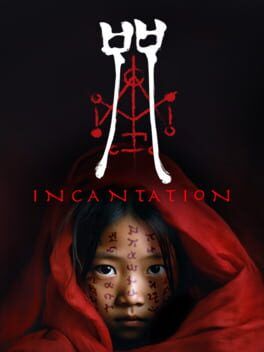
Famitsu’s score blurb gave Incantation a respectable but cautious reception, and after extended play that guarded tone makes sense. This is not a disaster, but it is also nowhere near the kind of horror game that can coast on atmosphere alone. It adapts the film’s occult panic and oppressive mood well enough to grab your attention early, yet the actual game underneath that setup is far more uneven than its premise suggests.
At its best, Incantation works as a first-person horror mystery built around tense exploration, environmental puzzles, and a steady sense of dread. Its strongest stretches lean into slow, nervous movement through cursed spaces where every room looks like it might hide a clue, a trap, or some fresh revelation about the ritualistic nightmare swallowing the story. The game knows how to frame a hallway, how to use sound to make simple spaces feel hostile, and how to make you hesitate before opening a door. When it sticks to that lane, it can be effectively unnerving.
The problem is that the core loop starts showing its seams fairly quickly. Exploration is the main attraction, but it is often less about discovery than about methodically sweeping rooms for interactable objects and then trying to determine which item or symbol matters. That can create good tension when the game trusts the player to observe and connect details. Too often, though, it slips into sticky, trial-and-error progression where horror gives way to interface friction. You are not always solving something clever. Sometimes you are simply exhausting the environment until the game decides you noticed the correct hotspot.
That issue feeds directly into system readability for new players. Incantation is not mechanically dense, but it can still be confusing because it does a shaky job of communicating what kind of interaction it wants from you in a given moment. The distinction between useful objects, flavor props, and progression-critical clues is inconsistent. Puzzle logic is occasionally intuitive, especially when it draws from the game’s religious imagery and recurring symbols, but just as often it feels underexplained. New players are likely to spend their first few hours wondering whether they are missing something smart or just wrestling with unclear design. In horror games, uncertainty can be a strength. Here, it regularly feels accidental.
Calling the game combat-focused would be misleading. This is not a horror action game with a satisfying arsenal or deep enemy encounters. The more accurate description is that Incantation uses threat as pressure during exploration, with sparse confrontations and chase-like sequences acting as spikes in intensity. That approach can work, and in some scenes it absolutely does. The lack of conventional combat helps preserve vulnerability. But it also means the game lives or dies by pacing, and pacing is one of its least reliable qualities. There are stretches where it builds fear nicely through investigation and anticipation, then undercuts itself with clumsy repetition or by forcing the player through another murky objective chain that kills momentum.
What keeps it from falling apart entirely is the audiovisual atmosphere. The presentation does much of the heavy lifting. The environments have enough grime, ritual detail, and oppressive visual language to sustain the game through some rough patches. Audio is especially important here, and Incantation gets good mileage out of distant noises, unsettling ambient layers, and sudden punctuations that sell the idea that the world is spiritually poisoned. It is a game that often sounds scarier than it plays, but in horror, that still counts for something.
Performance on Switch is serviceable rather than impressive. The game is playable, but it carries the compromises you would expect from a moody first-person horror title on Nintendo’s hardware. Visual clarity takes a hit, which matters more here than it might in a simpler game because clue-hunting and environmental reading are central to progression. When a horror mystery already struggles with signaling, softer image quality and occasional roughness only amplify the problem. Frame pacing is not ruinous, but the experience never feels especially smooth or polished either. It does the job, and if Switch is your preferred platform you can get through it, but this is not one of those ports that becomes a technical showcase. It feels like a version you tolerate for portability, not one you celebrate.
The story has enough mystery to keep you pushing forward, especially if you are already interested in the film’s premise and iconography. There is a grim fascination to piecing together what happened and what forces are still at work. Even so, narrative momentum is harmed by the same stop-start structure that affects the rest of the game. Horror stories need escalation. Incantation often circles its own tension instead of tightening it, and by the later portions the experience can feel more draining than frightening.
That brings the review score conversation into focus. A middling-to-positive response in the Famitsu range feels justified after spending real time with the full game. Incantation is too competent, atmospheric, and occasionally inspired to dismiss outright. But it is also too awkward in its interactions, too uneven in pacing, and too fuzzy in communicating its own systems to earn stronger praise. The game has the shape of a memorable horror experience without the consistency needed to truly land.
If you want a horror title driven by mood, folklore, and vulnerable first-person exploration, there is enough here to justify a look, especially for genre fans willing to forgive some stiffness. If you want elegant puzzles, crisp interaction design, or a reliably polished Switch experience, this one is far harder to recommend. Incantation is not bad in the spectacular sense. It is frustrating in the more disappointing one, because you can see the better game trapped inside it.
Score: 6/10
Incantation earns its uneasy reputation. The mixed response is not underselling it, and it is not missing some hidden masterpiece either. This is a decent horror game with real atmosphere and equally real design problems, the kind of release that keeps you interested just long enough to make its shortcomings sting more.
Final Verdict
A solid gaming experience that delivers on its promises and provides hours of entertainment.