
Review
By The Completionist
A Second Chance At The End Of The World
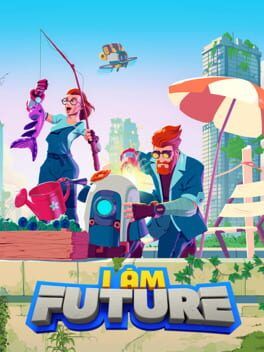
I Am Future arrives on Nintendo Switch after a long stint in PC Early Access, pitched as a “cozy apocalypse” where you wake up alone on a flooded planet and gradually turn a ruined rooftop into the comfiest end-times bachelor pad imaginable. The big question for anyone who sat out Early Access is simple: is the Switch version a polished, definitive edition or a compromised port of a PC-first design?
The answer sits comfortably in the middle. This is a good fit for portable play and a solid way to experience I Am Future, but it falls short of feeling definitive.
Rooftop Survival In Short Sessions
In structure and pacing, I Am Future feels tailor made for handheld play. Each in-game day is a bite-sized loop of scavenging, tidying, crafting, and tinkering with new gadgets. You wake up, poke around the rooftop and neighboring platforms for scrap, expand your camp a little more, and then crawl back into your sleeping bag. It is easy to squeeze meaningful progress into a 10 or 20 minute train ride, especially early on when every new blueprint unlocks a clear next objective.
The Switch version preserves that relaxed tone. There are survival needs to juggle, but the game rarely pushes you into high-stress situations. Instead it leans on the satisfaction of turning trash into a home, automating chores with cute robots, and slowly pushing out across a drowned city that looks more inviting than it has any right to.
Performance And Loading On Switch
Technically, I Am Future comes over to Switch in decent shape. Visually it holds up better in handheld than in docked mode, simply because the softer image is less noticeable on the smaller screen. The art style does a lot of heavy lifting with bright colors and chunky, readable shapes that survive the drop in resolution.
Loading is acceptable rather than impressive. Initial boots and save loads are long enough that you will notice them, but once you are in, transitions between areas and interior spaces are snappy enough not to break the flow of short sessions. Autosaves and manual saving do not introduce stutters large enough to be distracting.
Frame rate fares reasonably well. During quiet base work and light exploration, the game stays smooth, and input response feels immediate. When your base becomes cluttered with machines, storage, and decorations, you can feel performance wobble a little, especially in docked mode where the camera pulls back and more objects are visible. It never turns into a slideshow, but the dips are there. Compared to a well tuned PC version running at higher frame rates, this is a clear downgrade, though not a deal-breaker if you value portability above all.
Controls And Handheld Usability
The biggest question for a survival and building sim on Switch is always how well mouse-first systems adapt to sticks and buttons. I Am Future does an adequate job, but rarely more than that.
Movement feels good, and basic interactions like picking up scrap, chopping debris, and placing simple objects are straightforward on a controller. The trouble starts as your camp layout grows more complex and your inventory balloons. Item management uses radial menus and shoulder-button tabs that are functional but fussy, and trying to reorganize storage or swap between multiple tools can take more clicks than it should.
The cursor-style placement controls also expose some clunkiness. Snapping objects into place is fine when you are building along clear grid lines, but fiddlier tasks like rotating furniture to just the right angle or highlighting a specific item among overlapping clutter can feel imprecise. Handheld play adds the extra complication of smaller text around HUD edges, so the learning curve for the control scheme can last longer than expected.
There is rumble support, but it is light and underused, which suits the relaxed tone but also means the tactile feedback does not help you read interactions the way it could.
UI Legibility On The Small Screen
UI and text readability are acceptable in handheld, though comfortably shy of ideal. The default font is clean but small, and while menus avoid excessive visual noise, there is a lot of information packed into crafting trees, automation panels, and lore entries.
On an OLED model, colors pop and the high contrast between background and text makes things easier on the eyes, but prolonged reading sessions still caused some squinting. If you plan to spend long stretches theorycrafting base layouts or digging into story notes in bed, expect to bump the system brightness and lean closer than you would like.
Docked mode on a TV solves most of the legibility issues and makes the interface feel closer to its PC origins. That said, the Switch version does not offer particularly granular UI scaling options, so accessibility settings are more limited than they should be in a text-heavy management game.
Content And Quality-Of-Life Compared To PC
From a content perspective, the Switch release arrives in line with the final PC version. The narrative arc, rooftop expansion, automation systems, farming, cooking, and gadget progression all match what you would find on a fully updated computer build. There is no sense that you are buying a cut-down portable edition; you get the same core experience, from the relaxed early game to the more complex late-stage factory of robots and devices.
Quality-of-life tweaks from the Early Access period, like clearer resource recipes, better tutorialization, and smoother progression pacing, are all present here. The onboarding is significantly better than it was in the initial PC builds, which makes this console release a far easier recommendation to newcomers.
What you do not get are Switch-specific enhancements. There is no touch screen support for handheld play, which feels like a missed opportunity for inventory and building, and there are no special control presets tuned for Joy-Con versus Pro Controller. Cloud saves are tied to Nintendo’s usual system level, with no cross-save option for players who already invested time on PC. This is a straight port with fully up-to-date content rather than a feature-rich “complete edition.”
Is Switch The Definitive Version Of I Am Future?
For players who skipped Early Access and are only now considering diving into I Am Future, the Switch version is a solid, cozy way to experience this rooftop apocalypse, especially if you imagine nibbling away at it in handheld rather than sinking into marathon mouse-and-keyboard sessions.
Portable play suits its low pressure loops beautifully, and the technical compromises are mostly acceptable. Performance is stable enough, visuals retain their charm, and the game’s day-sized routines feel perfectly compatible with real life commutes and couch breaks. The control and UI concessions are noticeable, but rarely catastrophic once you acclimate.
If you already own a capable PC and prefer sharp image quality, high frame rates, flexible keybinds, and better UI scaling, the computer version still feels like the definitive way to play. The Switch port does not add meaningful new content or platform-specific flair that would justify double dipping.
If, however, you are choosing between platforms for a first playthrough and portability is a major factor, the Switch release is easy to recommend. It is not the best version of I Am Future, but it is a good one, and for many players, being able to build the coziest camp at the end of the world from the comfort of a handheld screen will outweigh its technical blemishes.
Final Verdict
A solid gaming experience that delivers on its promises and provides hours of entertainment.