
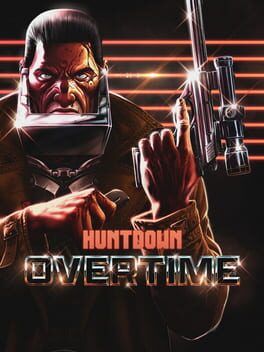
Review

By Night Owl
A cult hit goes procedural
The original Huntdown earned its cult following by being focused to a fault. It was a short, vicious, left-to-right barrage of gags, gore, and precision shootouts. Levels were hand-crafted, bosses were set-piece stars, and every encounter felt rehearsed rather than random.
Huntdown: Overtime upends that structure. This is a roguelite prequel, built around runs through a shifting New Detroit where you play a flesh-and-bolts version of John Sawyer clocking in for consecutive bounty-hunting shifts. Instead of a tour through bespoke stages, you’re grinding districts, stacking upgrades, and feeding a meta-progression tree that slowly replaces meat with metal.
The good news is that Easy Trigger hasn’t lost its touch for crunchy run-and-gun combat. In its current PC early access build, Overtime already feels great to play. The concern is whether the new roguelite scaffolding adds enough long-term texture without sanding off the original’s carefully staged highs. Right now, it’s halfway there.
Roguelite structure: overtime in every sense
Runs in Overtime are structured as escalating contracts across slices of New Detroit. You pick a route through a small map of nodes, each node being a compact stage full of gangers, hazards, and a mini-objective, with bosses capping off key milestones. Clear a node, scoop up your cash and temporary perks, then limp to the next.
Death punts you back to the operating table, where a very literal upgrade pipeline lets you spend earnings on permanent cybernetic enhancements. These range from basic survivability bumps to more transformative tweaks that alter how you approach entire runs, like amplifying specific weapon classes or adding utility to your dodge and slide.
This loop is conceptually a smart fit for the setting. Corporations have turned open warfare into an overtime line item, and the game leans into the idea of Sawyer as an endlessly rebuilt asset. Each failed run is framed as just another shift that went sideways. It’s thematically tight and, more importantly, quite moreish.
Where it currently stumbles is in how quickly you start to see the same building blocks repeat. Level chunks are stitched together with enough variation that back-to-back runs don’t feel identical, but anyone who replayed Huntdown obsessively will notice tile sets, encounter patterns, and miniboss archetypes looping before the meta-progression has fully bloomed. The structure works, but it occasionally feels like you’re shotgunning leftovers of the original instead of discovering new cuts.
Weapon variety: guns, glorious guns… with some gaps
If there’s one area where Overtime already outpaces its predecessor, it’s raw weapon count. The early access build throws an armory’s worth of 80s nonsense at you: brutal hand cannons, sputtering SMGs, spread-happy shotguns, tacky laser rifles, and chunky explosives that paint the screen in red confetti.
The key improvement is how these weapons plug into the roguelite systems. Temporary run-based pickups can dramatically skew your loadout, but the permanent upgrade tracks lean into specific archetypes. Invest in shotguns, for example, and you’ll start seeing perks that push you into close-range, shield-bashing aggression. Lean into precision weapons and you’ll pick up slow-motion triggers and crit-focused bonuses that reward accuracy over spray-and-pray.
What still needs work is the depth within each category. Several weapons, especially in the early-game pool, are functionally minor variations on each other. You’ll get a new assault rifle with a slightly different recoil pattern or a pistol with one extra round in the mag and a marginal damage tweak. They feel great in the hand because the core shooting is so solid, but as roguelite “build” options they blur together more than they should.
Huntdown’s best weapons were memorable because they redefined how you engaged with a stage: a sticky grenade launcher that let you deny space, a piercing rifle that turned shield-toting enemies into collateral damage, a goofy, overpowered gadget you hoarded for bosses. Overtime has a few of those standouts already, yet too much of the current pool lives in the realm of sidegrades.
The upside is that the existing framework clearly supports wilder ideas. You can see the intent in a handful of guns that alter your movement rhythm or incentivize riskier play. If Easy Trigger keeps layering in more extremes, weapon variety could go from solid to exceptional by 1.0.
Bounty-hunting runs: from carefully staged hits to messy shift work
The biggest philosophical shift from Huntdown to Overtime is how bounties themselves are presented. In the original, every boss felt like a headliner with a custom stage, intro, and gimmick. Overtime reframes bounties as jobs in an endless queue. You’re less a legendary closer, more a workaholic merc clocking in where the numbers say you’re needed.
Practically, that means bosses show up at the end of routes rather than as the spine of the whole experience. The ones in the early access build are still animated with Easy Trigger’s usual flair, all silly monikers and cartoon brutality. Patterns are readable but punishing, and they dovetail nicely with the weapon sandbox. A boss built around vertical mobility will reward runs where you leaned into aerial control or explosives, for instance.
The trade-off is that these fights don’t hit quite as hard as the original’s marquee encounters. There’s less build-up, fewer bespoke arenas, and more reuse of environmental motifs. Taken on their own merits, they’re snappy, satisfying capstones to a route. Measured against Huntdown’s most memorable showdowns, they feel more like very good roguelite bosses than unforgettable bounty posters you’ll talk about with friends.
On the regular-stage side, Overtime is unapologetically chaotic. Enemies pour in from both sides, grenades and Molotovs arc in from off-screen, and the game constantly dares you to overextend for cash pickups. It still supports cover play and methodical advance, but the roguelite economics nudge you toward aggression. You’re not just clearing a level, you’re racing to hoover up enough resources this run that your next iteration of Sawyer will be a little less squishy.
For fans of the original’s measured pacing, this may feel more scattershot. The set-piece density is lower; the moment-to-moment tension comes less from tightly choreographed ambushes and more from emergent messes. It’s entertaining, and paired with crunchy feedback it makes for great “one more run” fodder, but you do lose some of the first game’s almost arcade-perfect stagecraft.
Style, feel, and performance on PC
Visually, Overtime is completely in step with Huntdown’s aesthetic, leaning even harder into VHS noise, scanlines, and trash-future neon. New Detroit is a blur of rain-slicked billboards, flickering signage, and tatty corporate propaganda. Animations remain crisp and expressive, from Sawyer’s weighty slides across asphalt to the way enemies crumple or explode under high-caliber fire.
The tone is just as knowingly stupid as you’d hope. Sawyer rattles off deadpan one-liners, enemy gangs are caricatures of 80s villains, and environmental storytelling is all cracked tubes and corporate rot. If you bounced off Huntdown’s particular flavor of grindhouse goofiness, this will not win you over. If you loved it, Overtime feels like an unembarrassed encore.
On PC, the early access build runs well. Input latency is low, which is crucial for a game this quick, and the limited options menu at least lets you tweak visual filters if the VHS smearing is too much. I didn’t encounter anything game-breaking in terms of bugs, though there are the usual early-access rough edges: occasional uneven difficulty spikes between nodes, some odd enemy pathfinding when multiple vertical layers stack up, and UI bits that feel placeholder.
The Linux crowd has reason to be cautiously optimistic. The original Huntdown behaved nicely under Proton, and early reports suggest Overtime is following suit, though Easy Trigger has yet to stamp a native build on the roadmap.
Does the roguelite pivot expand or dilute Huntdown?
For now, it’s a bit of both.
On the plus side, the new structure makes the core combat endlessly replayable. The original Huntdown was something you could 1CC on a weekend and then revisit occasionally. Overtime is designed to be a long-term time sink, the sort of game you dip into between bigger releases just to see how one more meta-upgrade will change your chances.
The cybernetic progression is the strongest argument in favor of the pivot. Turning each failure into more literal upgrades is not just a cute narrative hook; it ties your sense of mastery to a visible transformation of Sawyer from battered beat cop to chrome-plated apocalypse problem solver. It gives context to the grind.
The downside is the erosion of deliberate pacing. Huntdown felt curated. Overtime, by design, feels shuffled. When the randomizer serves up a satisfying run, the game sings. When it lines up repetitive tiles and lukewarm weapon drops, you’re left leaning on the combat alone to carry you. It usually can, but you will miss the sense that every encounter was authored to test a specific skill.
If your favorite thing about Huntdown was its script-like flow from scene to scene, Overtime is unlikely to supersede it. If what you loved was the feel of sliding into cover and reducing waves of gangers to paste, Overtime gives you far more of that than the original ever could.
Early access verdict: buy in now, or wait for 1.0?
The current early access build of Huntdown: Overtime is already a legitimately enjoyable roguelite shooter. The gunplay is sharp, the aesthetic is intact, and the core loop of hunt, die, upgrade, repeat is strong enough to support a lot of late-night sessions.
That said, it also feels obviously incomplete in three key areas:
Content breadth is the big one. Weapon pools, enemy rosters, and environmental tiles are all good but not yet generous. After a dozen or so runs, patterns emerge, and the sense of discovery dips.
Boss and bounty presentation comes in a step below the original. The fights are mechanically solid, but the framing and spectacle are still catching up to Huntdown’s best.
Progression balance will clearly be a moving target for a while. Some upgrades feel indispensable, others like filler, and the economy around unlocking them could use a few more passes.
So who should clock in now?
If you’re a Huntdown diehard who mainly craves more of that specific shooting feel and you’re comfortable with early access churn, Overtime is already worth your time and money. You’ll get to watch the arsenal and level pool expand, and the current foundation is strong enough that it’s fun even in this rougher state.
If you valued the original primarily for its tight, authored campaign and you’re lukewarm on roguelites in general, you should wait. The 1.0 version will almost certainly have more bosses, more routes, more weird weapons, and better-tuned progression. That’s when Overtime is likeliest to rival the original’s impact, rather than just remix it.
From where it stands in early access, Huntdown: Overtime is a promising shift from cult classic to endlessly replayable crowd-pleaser, but it hasn’t fully earned its overtime pay yet.
Final Verdict
A solid gaming experience that delivers on its promises and provides hours of entertainment.