
Review
By Apex
A 16-bit nightmare that mostly lives up to the “Zelda x Bloodborne” pitch
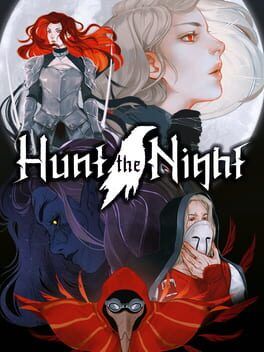
Hunt the Night arrives on Nintendo Switch with a hell of an elevator pitch: take the overhead exploration of classic 16-bit Zelda, fuse it with Bloodborne’s gothic menace and punishing boss fights, and present it all as a razor‑sharp pixel‑art action RPG. On paper that sounds like marketing fantasy. In practice, Moonlight Games gets surprisingly close, especially on Switch, where the game feels right at home in handheld and docked play.
This is a challenging, occasionally infuriating game, but it is also one of the more distinctive dark fantasy indies on the system. The launch trailer sells an oppressive, cursed world and twitchy combat. The good news is that what you see there is almost exactly what you get moment to moment.
Combat feel: quick, lethal, and mostly tight
You play as Vesper, a member of the Stalkers, carving through the ruined world of Medhram. Combat is immediate and snappy. Vesper has a short‑range melee weapon, a selection of firearms mapped to another button, a dash with brief invincibility, and special abilities you unlock as you progress. Enemies hit hard and die fast, and so do you. It is all about spacing, i‑frame timing, and reading telegraphs.
On Switch, the controls map cleanly to the Joy‑Cons or Pro Controller. Melee on Y, dodge on B, ranged on X, and item use on A feels natural. There is very little input latency in either handheld or docked play, and the dodge in particular has a crisp start‑up that lets you reliably thread through tight hitboxes. The generous snap of melee strikes and a very slight “stickiness” when you connect make every hit feel solid.
Where things get slippery is in the ranged system. Ammo is limited and refilled by landing melee hits, which is a clever risk‑reward loop but also means you are constantly weaving in and out to top up. On PC with mouse and keyboard, this aiming can feel clumsy and over‑twitchy unless you switch to a controller. Switch obviously assumes a controller from the start, and the game benefits from that assumption. Thumb‑stick aiming for guns is accurate enough, especially with the game’s slight aim assist, though aiming diagonally in the heat of a boss fight can still be finicky.
Most regular encounters play out like mini dance routines: dash through a lunge, carve in a combo, pop back, throw in a gunshot when your ammo allows, then reset. When it clicks, it is wonderfully rhythmic, much closer to a top‑down character action game than a plodding Zelda clone.
Difficulty tuning: satisfying for masochists, messy for everyone else
Hunt the Night has a reputation for being hard. That is accurate, but the quality of that difficulty is inconsistent.
Early areas on Switch mirror the PC build almost 1:1. Enemies do serious damage, but patterns are readable and checkpoints are fairly placed. Deaths feel like your fault. As you push into the midgame, though, the tuning gets spikier. Some rooms jam in multiple enemy types with overlapping projectiles and lunges, and healing options feel thin. The game offers loadout customization and different weapons to nudge you toward adaptation, yet the curve can still veer from “tense and fair” to “why is everything in this room tracking me across half the screen.”
Bosses are the best expression of the game’s intent and also where the tuning wobble stands out most. They are designed like 2D Souls bosses: big arenas, multi‑phase move sets, and attacks that force you to learn timing rather than face‑tank. The first few major bosses on Switch are brutal but exhilarating. You will probably die a dozen times learning patterns, but the tells are legible and the reloads are snappy.
Later on, several fights cross the line from challenging into messy. Hitboxes feel larger than the sprites suggest, some projectiles blend into the already busy environments, and there are attacks that chain together in ways that leave little room for recovery. That was already a common complaint in early PC reviews and it remains true on Switch. Patch work has smoothed some rough spots, but the underlying design is still punishing in a way that will appeal to masochistic action‑RPG fans and alienate anyone hoping for a more classic Zelda difficulty curve.
That said, there is a real thrill when the game finally relents and you beat a boss you have been stuck on for 45 minutes. The combination of sharp controls, loud audiovisual feedback, and short retry loop hits the same reward centers as a tight roguelike or a good Souls boss.
Boss design: inspired, theatrical, sometimes cheap
If the hook for you is gothic 16‑bit boss fights, Hunt the Night delivers. Bosses are imaginative and visually striking. There are plague‑ridden knights that lunge in arcs of sickly light, multi‑limbed horrors that fill the arena with crawling shadows, and twisted clerics that summon bullet‑hell patterns across the floor.
Design wise, these bosses rarely feel like simple sacks of HP. Most introduce a central mechanic you must respect. One might punish greedy melee by countering, forcing careful use of ranged attacks. Another fills the arena with traps that reshape safe zones every few seconds. Phase transitions are dramatic and accompanied by musical shifts, selling each fight as a full encounter rather than a single pattern stretched thin.
The downside is that some of that ambition is undercut by readability issues. On Switch’s handheld screen, a few late‑game bosses look incredible but are harder to parse. Telegraphed ground effects can blend into tiled floors, and certain projectiles flick by fast enough that noticing them is almost as big a challenge as dodging them. Docked mode mitigates this somewhat, but these design quirks are baked into the game across platforms.
If your tolerance for the occasional “cheap” hit is low, you will bounce off some of these encounters. If you can stomach a few unfair feeling deaths in exchange for memorable set pieces, the boss lineup here is one of the game’s biggest strengths.
Exploration and pacing: Zelda bones with Bloodborne mood
Outside combat, Hunt the Night leans hard into the “16‑bit Zelda” half of its identity. Medhram is an interconnected world of hubs, dungeons, and secret‑stuffed offshoots. You will find locked doors keyed to macabre emblems, puzzle rooms built around pressure plates and switches, and small side quests that hint at the world’s doomed history.
The actual puzzle design is solid rather than spectacular. Most conundrums are about reading environmental clues or manipulating light sources and pathways. They serve as breathers between combat surges more than as brain‑breaking obstacles. The pacing here is good on Switch. Sessions of twenty to thirty minutes in handheld mode feel satisfying, because you can typically clear a room sequence or tackle a chunk of exploration and then suspend.
Where pacing falters is a sloggy midgame stretch whose level layout feels more like a maze of dead ends than deliberate labyrinth. On PC, reviewers called this area out as a low point, and it is no less tedious on Switch. Combined with the difficulty spikes, this can make the middle third of the game feel like wading through molasses between the high points of early discovery and late‑game boss gauntlets.
Gothic pixel art and atmosphere: haunting on both screen sizes
Visually, Hunt the Night absolutely nails the “Bloodborne filtered through 16‑bit” aesthetic. Cities are a lattice of crumbling rooftops and rain‑soaked alleys. Cathedrals loom with impossible geometry. Forests feel like they are suffocating under layers of creeping mist. There is heavy use of chiaroscuro, with pockets of candlelight struggling against vast swathes of inky black.
On Switch, the pixel art survives the transition beautifully. In handheld mode, dense detail can actually look better than on a large PC display. The smaller screen hides some sprite aliasing and makes animations feel tighter, like a lost SNES game you somehow never played. Text remains legible and UI elements are cleanly framed. Only in a handful of scenes loaded with particle effects does the Switch screen feel cramped.
Docked, the art holds up nicely on a TV. The color palette is intentionally muted, so you never get the blown‑out look that some pixel games suffer from when scaled. Sprites remain sharp, if not as crisp as the PC version running at higher resolutions. The trade‑off is that you more easily notice repeated tiles and simpler environmental details when they are stretched across a large screen.
The soundtrack is equally committed to the mood. It is a brooding mix of low strings, somber piano, and occasionally choral touches, reminiscent of Bloodborne and classic gothic Castlevania in tone if not in melody. It is not endlessly hummable, but it is deeply effective. On Switch, this audio presentation fares better in handheld mode with headphones or earbuds. The trailer heavily emphasizes the music and ambient sound, and playing that way really does elevate the experience. The tiny Switch speakers do not do the low‑end justice in tabletop or undocked play without headphones.
Switch performance: stable and responsive, with minor caveats
In terms of raw performance, the Switch port is solid. Frame rate targets 60 frames per second and, in most normal exploration and combat, hits it. Docked mode is consistently smooth, with only occasional dips when multiple large enemies are filling the screen with overlapping effects. Even then, drops are brief and rarely impact dodge timing in a noticeable way.
Handheld performance is much the same, though you will see slightly more frequent micro stutters in the busiest boss patterns. They are not catastrophic, but because of how punishing the game can be, even a single dropped frame in the wrong moment can feel more annoying than it would in a slower paced title. It is not a deal‑breaker, but it is the one technical edge PC retains.
Load times on Switch are a bit longer than on a decent PC SSD, but the areas are compact enough that this is not a huge issue. The quick reload back into boss fights is still snappy, which is essential for a game that expects trial and error.
Most importantly, input feels responsive. The dreaded mushiness that plagues some action games on Switch is not a factor here. The dodge comes out when you press it, attack chains buffer cleanly, and there is no obvious input lag docked or handheld.
Switch controls vs PC: where should you play?
On PC, Hunt the Night was already strongly recommended with a controller. Mouse and keyboard support has seen patches, but numerous early reviews and player impressions described it as uncomfortable and imprecise. With a game that lives and dies by tight dodging and directional attacks, that matters.
Switch removes that Choice Paralysis entirely. Everyone is on a controller, and the game's design is clearly tuned around that reality. The Joy‑Cons are perfectly adequate, and the Pro Controller feels excellent, offering the same kind of experience you would get with an Xbox or PlayStation pad on PC.
If you have a mid‑range or better PC and a gamepad, that version is still the technical best. You get sharper resolution, rock‑solid performance, and quicker loads. If you also value achievements and potentially cheaper discounts on storefronts like Steam or GOG, PC has the edge.
However, there is a strong argument in favor of Switch for how this game plays. Being able to chip away at a punishing boss or frustrating area in bed, on a commute, or on the couch while something else is on TV changes the feel of the grind dramatically. What can be maddening in long PC sessions feels more palatable in focused handheld bursts. The pixel art also flatters the Switch screen more than it does a giant monitor.
If you are highly sensitive to frame rate dips and want the cleanest presentation, buy on PC and use a controller. If the appeal of gothic Zelda with Soulslike bosses in your hands sounds irresistible, the Switch version is an easy recommendation. You are not losing anything major in the transition, and in a few ways, you might actually enjoy the structure more.
Verdict
Hunt the Night on Nintendo Switch delivers on most of what its launch trailer and early buzz promised. It is a striking, melancholic action RPG with fast combat, memorable bosses, and an atmosphere that actually deserves the overused “gothic” label. Its difficulty tuning is often more brutal than elegant, and some readability issues and design spikes keep it from true greatness. Yet for players who crave a demanding 16‑bit style nightmare to master, this port is more than up to the task.
If you bounced off the PC version’s control quirks or just prefer your Soulslike suffering in bite‑sized, handheld sessions, this is a very good way to hunt the night.
Final Verdict
A solid gaming experience that delivers on its promises and provides hours of entertainment.