
Review

By Apex
Image: IGDB
Store links: Hot Wheels Infinite Rush on Steam
Milestone trades circuits for four islands, and the handling carries the move
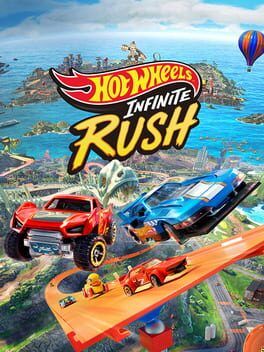
Hot Wheels Infinite Rush is Milestone’s open-world turn for the toy-car license, moving beyond the circuit-led structure of Hot Wheels Unleashed and Hot Wheels Unleashed 2 into four explorable islands. That is the central fact behind this Hot Wheels Infinite Rush review, and it creates the game’s main tension: the driving is widely reported as sharp, accessible, and satisfying, while the open world does not always make the best case for why this series needed to leave its tighter track format.
Checkpoint lists Hot Wheels Infinite Rush as developed and published by Milestone S.r.l., with a September 10, 2026 release on PC, PS5, Xbox Series X|S, and Nintendo Switch 2. PlayStation LifeStyle and Push Square both reviewed the PS5 version, framing the game as a continuation of Milestone’s reliable arcade racing work rather than a clean break from the Unleashed formula. The biggest change is structure. Instead of selecting toybox circuits from a menu, players move through themed islands, complete events, unlock later areas, and build out a garage of Hot Wheels cars.
That shift gives Infinite Rush a clearer identity on the PlayStation 5 racing shelf. It is lighter, more immediate, and less sim-minded than Milestone’s motorcycle and motorsport work, but it also asks to be judged against open-world arcade racers rather than track toys alone. On that tougher grid, the game qualifies as a fun alternative for racing fans who want quick drifts, boost management, and collectible cars, but its world design keeps it from becoming the obvious PS5 arcade pick.
Handling: simple inputs, useful class differences, and a good drift-boost loop
The strongest part of Hot Wheels Infinite Rush gameplay is the car control. PlayStation LifeStyle reports that boost is earned by driving well and drifting around turns, much like the Unleashed games, and that the boost system gives players an advantage on straights. Push Square similarly says Infinite Rush inherits the enjoyable driving mechanics from the earlier entries, with drifts and high-speed roaming doing much of the heavy lifting.
The handling model is not trying to simulate tire load, surface grip, or suspension behavior in a serious motorsport sense. It is tuned around readable arcade responses: initiate a drift, hold a stable slide, build boost, then spend it where the road opens. That matters on PS5 because the game’s speed only works if the car remains predictable. Monstervine notes that different surfaces such as grass, asphalt, water, and dirt feel largely the same, calling that initially jarring when compared with racers where terrain changes the car’s resistance. As an arcade decision, however, that consistency has a benefit. It means the player is learning vehicle class behavior and route rhythm rather than fighting surface penalties.
Those classes are the game’s most practical handling wrinkle. Sources consistently identify four types: Versatile, Speeder, Drifter, and Titan. Checkpoint describes Versatile cars as middle-of-the-road, Speeders as faster, Drifters as easier to slide, and Titans as beefier but slower. PlayStation LifeStyle also notes that certain missions require specific classes, encouraging players to maintain a usable option in each category. GamingTrend adds that players can swap classes on the fly in the open world after choosing models from their garage.
That structure gives Infinite Rush more texture than a pure boost-and-drift toy would have. A Speeder suits checkpoint work and straight-line runs, a Drifter makes long corner chains easier, and a Titan is better aligned with smash-heavy objectives. It is not deep tuning, but it gives the garage a reason to exist beyond collecting familiar die-cast bodies.
The open world has toys, traffic, and detours, but it does not always improve the racing
Infinite Rush’s four-island format is where opinions across the source material diverge most sharply. PlayStation LifeStyle says each island has its own events and activities, including collectibles and drifting challenges, but argues that driving from event to event can sometimes feel like busywork. Push Square is more critical, calling the open-world addition unnecessary and describing the islands as fine but not particularly memorable. Monstervine is more positive about the worlds themselves, describing them as visually distinct playsets connected by orange Hot Wheels tracks, loops, and ramps.
The common thread is that the best moments still tend to happen when the game gives the player a direct driving challenge. Checkpoint describes progression as campaign events marked by crown icons, culminating in a one-on-one race against a Rusher before later islands open. That structure is clear, but it can become repetitive when players are asked to complete similar races and earn coins for cars or boost styles. GamingTrend also notes that the absence of a traditional story does not hurt the early game, though later sections could have benefited from stronger structure.
The open world does add useful activity variety. Monstervine mentions time trials, deliveries, destruction-focused missions, Tourist photo objectives, decals, and perks. PlayStation LifeStyle highlights pink slip races, where beating another car unlocks it, while Monstervine calls these roaming Daredevil cars worthwhile detours because defeating them adds them to the roster. Push Square also reports that some vehicles are found moving through the open world and unlocked by winning short races.
The issue is density and purpose. A good arcade racing world should make every transition feel like part of the drive. Infinite Rush sometimes does that with loops, ramps, traffic, destructible scenery, and collectible bait. At other times, according to PlayStation LifeStyle and Push Square, it feels like a map built to connect better events rather than a playground that is constantly interesting in itself.
Track spectacle: the Hot Wheels identity is present, but unevenly expressed
For racing fans considering Hot Wheels Infinite Rush PS5 as a lighter alternative, the license matters. Hot Wheels is strongest when it sells improbable speed through plastic track language: orange lanes, loops, jumps, oversized props, toy-scale spaces, and cars that look like collectibles in motion. Infinite Rush delivers some of that spectacle, but the sources do not fully agree on how well it captures the toy fantasy.
Monstervine praises the visual direction, citing plastic buildings, oversized animatronics, highways that turn into loop-de-loops, and a vibrant palette that suits die-cast cars. It also says the world is interconnected through classic orange Hot Wheels tracks and that destructible bushes, fences, and street objects make free roaming enjoyable. That version of Infinite Rush sounds closest to a broad toybox fantasy.
Push Square and PlayStation LifeStyle are less convinced. Push Square says the maps are scaled realistically to the cars, which makes the game feel closer to a normal racer than one about small toy vehicles. It specifically says the game misses the sense of driving Hot Wheels through domestic or retail spaces such as living rooms, gardens, or toy stores. PlayStation LifeStyle makes a similar criticism, saying the islands are not as imaginative as they could be and that the game loses some of the miniature charm Unleashed had by embracing hand-built scale.
Both views can be true depending on what a player wants from the license. Infinite Rush clearly contains Hot Wheels iconography, especially in its tracks, loops, cars, and materials. What it does less consistently is use scale as a design idea. The result is a racing game that often looks colorful and toy-like at speed, but sometimes feels like a conventional arcade world wearing Hot Wheels branding rather than a child-sized play space brought fully to life.
PS5 performance and feel: 60fps target holds in reported testing
For a fast arcade racer, performance is central to the buying decision. Push Square reports that Hot Wheels Infinite Rush targets 60fps on PS5 and says it never experienced the frame rate wavering from that target. That is the most important technical point available in the supplied source material, because the game’s drift timing, traffic avoidance, and boost-heavy corner exits would suffer quickly if the frame rate became unstable.
Push Square also describes the game as generally good-looking, especially the car models, while noting inconsistent textures in places and some load times that are longer than hoped. The outlet adds that those texture inconsistencies are unlikely to be noticed often while driving at very high speeds. That sounds like a technically adequate PS5 version rather than a showcase, which fits the game’s arcade positioning.
DualSense support is another useful PS5-specific detail. Monstervine says trigger resistance adds a tactile touch while driving, and Checkpoint reports that the DualSense felt terrific, citing trigger resistance during drifting as an example. Neither source describes a transformative controller implementation, but the reported feedback should help sell the physicality of sliding and accelerating toy cars.
There is one practical limitation called out by Monstervine: local co-op cannot be used to navigate the open world. The source says that made open-world side activity feel worse, because collecting and roaming with another player would have been welcome. The provided material does not establish full multiplayer feature details beyond that point, so the safe buyer guidance is narrow: do not buy Infinite Rush expecting split-screen free-roam exploration unless a storefront or publisher listing separately confirms it.
Garage progression gives the game its hook, even when the map gets repetitive
Collecting is one of Infinite Rush’s better fits for the license. Push Square reports that many Hot Wheels cars can be purchased at dealerships with earned in-game money, while others come from open-world races or event rewards. PlayStation LifeStyle says there are a lot of cool cars to unlock, and Monstervine highlights Daredevil cars as some of the best-stat vehicles in the game.
This matters because the four-class system prevents the garage from becoming purely cosmetic. Players are encouraged to find strong vehicles in each field, since class-locked missions can otherwise create friction. A favorite Speeder might handle checkpoint races cleanly, but a Titan may be the right pick for smashing through objectives, while Drifters serve events built around controlled sliding. GamingTrend also reports a perk system with unlockable slots that can improve traits such as handling or acceleration, with each car able to carry a specific setup.
The customization side has some breadth. Monstervine mentions decals and an extensive editor for changing vehicle appearance, plus perks that can boost some stats, reduce others, or grant immunity to environmental hazards. Those systems give completion-minded players a reason to clear side content, but they also expose Infinite Rush’s pacing issue. If you enjoy chasing cars, adjusting builds, and squeezing events for currency, the world has a steady reward loop. If you mainly want strong race layouts, the surrounding errands may start to feel like open-world filler before the garage grind pays off.
Verdict: a good PS5 arcade racer for relaxed speed, but not the new class leader
Hot Wheels Infinite Rush is easy to recommend with one important condition: buy it for the handling, the car collection, and short-session arcade racing, not because its open world redefines the series. The drift-boost loop is responsive, the class system gives events enough mechanical variety, and the PS5 version has reported 60fps stability from Push Square, which is exactly what this kind of high-speed racer needs.
The weaker side is structure. The four islands provide space, color, activities, and collectibles, but PlayStation LifeStyle and Push Square both question whether they are imaginative or event-rich enough. Monstervine’s more favorable read of the toybox environments suggests that players who love Hot Wheels aesthetics may get more from roaming than players who mainly want tightly authored tracks. That split defines the buying advice.
Racing fans looking for a lighter PS5 alternative should consider Hot Wheels Infinite Rush if they want approachable handling, toy-car spectacle, fast unlocks, and a break from heavier driving models. Players hoping for a Forza Horizon-level open world on PlayStation 5 should temper expectations. This is a polished, cheerful arcade racer with strong fundamentals and some charming toy energy, but its islands do not consistently match the quality of the driving.
GameLoop score: 7.5 out of 10.
Final Verdict
A solid gaming experience that delivers on its promises and provides hours of entertainment.