
Review
By Apex
A Pink‑Haired Prophet of Doom
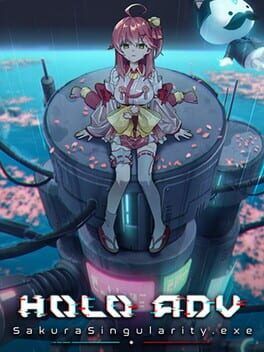
Holo ADV: SakuraSingularity.exe is a free doujin horror adventure that asks a deceptively simple question: what if Sakura Miko woke up in a future where Hololive went horribly wrong, and the only way out was through time‑warped trauma and awkward flirting in the ruins of Cover Corp?
Developed by the circle Holo ADV, it is very clearly a love letter to Hololive, built with the obsessive detail only fans bother with. At the same time, it is trying to be a real horror ADV with boss encounters, branching choices, and a self‑contained time travel story. That tension between “fanservice playground” and “cohesive horror VN” is what ultimately defines the game, for better and worse.
Cover Corp as Your Haunted Dungeon
The core premise is strong. Sakura Miko finds herself in a distorted future timeline, with the Hololive office twisted into a liminal maze of cubicles, meeting rooms, and server rooms that feel half real and half digital hallucination. The game leans hard into glitch aesthetics. UI artifacts flicker, sprites fracture, and text occasionally corrupts at key story beats. It is never as oppressive or inventive as something like AI: The Somnium Files or the sharper scenes of Corpse Party, but there are moments where the presentation, music, and framing actually sell the idea that corporate office life has become a cursed dungeon.
If you know anything about Cover Corp and Hololive’s real‑world streaming schedules, merch pushes, or infamous mishaps, environmental details land as wicked in‑jokes: busted promotional props, abandoned streaming setups, or timelines of events that slowly diverge from reality. For fans, exploring this alternate Cover HQ is fun and unsettling. For non‑fans it is just a generic Japanese office with spooky lighting and corrupted screens. The horror still reads, but you will miss the sting in the satire.
Time Travel Story: Accessible Setup, Fan‑Weighted Payoff
Narratively, SakuraSingularity.exe does a respectable job of onboarding newcomers to its premise. You do not need encyclopedic knowledge of Hololive to understand “future is broken, timelines diverged, fix the anomaly.” Miko is written as an obvious protagonist archetype, and the early chapters explain the basic stakes in straightforward terms. Time travel here is less hard sci‑fi and more emotional causality: small choices with certain talents ripple into larger shifts in the timeline.
Where the story falters for non‑fans is in emotional context. When a particular hololive member appears older, broken, or eerily different, the game expects a jolt of recognition, a clash between the cheerful streamer you know and the version in front of you. If you have never watched their streams, these reveals function only as mildly interesting alternate character takes. There is foreshadowing and solid structural setup, but the narrative punches are clearly calibrated for existing parasocial investment.
From a pure storytelling perspective, the pacing is a bit uneven. The middle hours sag under repeated investigation loops in similar‑looking office areas, punctuated by lore drops you either find fascinating or feel like wiki dump. The final act pulls things together decently, tying the “sakura singularity” conceit into a coherent conclusion. It is not mind‑blowing, but it is more ambitious than a quick meme project.
VTuber Fanservice and Dating‑Sim Bonding
This is where the fan project DNA is most exposed. Between the horror beats you have clear dating‑sim flavored bonding segments, where you spend time with different Hololive members, choose dialogue options, give light support, or otherwise “route” toward them emotionally. It never goes fully into adult territory, but it absolutely borrows from romantic VN structures.
For existing Hololive fans this is catnip. You get to inhabit a scenario where you comfort a shaken talent, encourage them past their alternate‑timeline anxieties, or just trade banter in the middle of uncanny events. The writing does a better job than many fan projects at keeping everyone in‑character, blending their stream personas with a slightly more grounded, horror‑aware version of themselves.
For non‑fans, though, this is where pacing might feel indulgent. The bonding sections stretch out, and because the game assumes familiarity with running gags and personality traits, many scenes are just “two anime characters talking” with minimal hook. Structurally they matter, because these bonds factor into route branches and how certain boss encounters resolve, but emotionally they land flat if the names and quirks of the girls do not already mean anything to you.
The good news is that, unlike some fan VNs, the game at least ties these segments to its themes of memory, fate, and idealized personas. You are not just ticking affection meters for their own sake. You are deciding which broken futures to prioritize, which versions of the talents you are trying to save, and that provides some narrative weight even if you are not fully in the Hololive ecosystem.
Boss Fights in a Visual Novel Body
The boldest swing in SakuraSingularity.exe is its attempt to fold boss encounters into what is primarily a text adventure. Rather than relying on pure choice menus, certain chapters escalate into time‑limited decisions, simple pattern‑based mechanics, or multi‑stage confrontations where your past bonding choices matter. It is not action gaming in the traditional sense, but it successfully creates a sense of pressure and consequence.
Mechanically, these fights are a mixed bag. The better ones are essentially narrative puzzles: understand a character’s trauma, use dialogue or timing to navigate their breakdown, and you “win” by resolving their singularity. A few others lean too heavily on reflex prompts and UI tricks that border on trial‑and‑error. Because this is a free doujin title, the lack of extensive accessibility options around input windows and text speed might frustrate some players, especially if you are here purely for the story.
Still, the existence of these climactic encounters gives the game a welcome structure. It is not just endless reading. You work your way through zones of Cover HQ, gather narrative and emotional resources, then confront a boss scenario that recontextualizes what you have learned.
Horror Tone: Uneven But Earnest
As horror, SakuraSingularity.exe is neither relentlessly terrifying nor toothless. It lands somewhere in the middle, with a heavier focus on melancholy and digital decay than on body horror or gore. There are jumpscares, glitch shocks, and more traditional “corrupted idol” imagery, but the game is more interested in the dissonance between idol personas and bleak futures.
The standout scenes come when the UI itself becomes hostile, text refuses to obey, or familiar mascots and office props are twisted in quietly wrong ways. The sound design supports this with corrupted BGM stingers and sudden dead silences that underline certain revelations. On the other hand, tonal whiplash is frequent. Lighthearted banter between talents sometimes steps on the tension right when it should be escalating. Fans may enjoy that classic Hololive chaos bleeding through, yet from a pure horror standpoint it blunts the edge.
Presentation and Polish
Given its doujin status and free price, expectations should be tempered, but the production values are commendable. Character art varies a bit in consistency, though major talents receive expressive sprites with alternate glitch states and horror expressions that sell their emotional arcs. Backgrounds of the Cover offices and future facilities carry enough detail to reward repeat visits, and the visual corruption effects, while not groundbreaking, are cleverly used.
UI work is mostly clean, aside from the occasional intentional corruption. Save and load are straightforward, text is legible, and the VN framework is familiar. Performance is solid on modest PCs, with some heavier effects sequences occasionally hitching but never breaking the experience. Voice acting, if present in your build, tends to be partial rather than fully voiced, which can be jarring when transitioning between key scenes and unvoiced exchanges.
For Hololive Fans vs. Newcomers
Taken as a Hololive fan project, SakuraSingularity.exe is easy to recommend. It respects the talents’ personas, plays with their history, and builds an elaborate what‑if scenario around the idea of futures where their careers and relationships go sideways. It is dark enough to feel distinct from official content, yet affectionate rather than cruel. The combination of bonding, horror, and a Cover Corp dungeon crawl is exactly the kind of niche fan fantasy that official channels would never produce.
As a standalone horror adventure for people who do not follow VTubers, its appeal is narrower. You can follow the main plot, appreciate some of the glitch horror, and enjoy the time travel mystery in broad strokes. However, so much of the texture, emotional payoff, and even basic characterization assumes preexisting knowledge that the game often feels like arriving late to an in‑joke‑heavy party.
If you are curious about Hololive and willing to treat this as a crash course filtered through horror, you might get more out of it than a complete outsider. But it does not function as an introduction designed for you. It is a project by fans, for fans, with just enough structural competence that an outsider can still make it to the end.
Verdict
Holo ADV: SakuraSingularity.exe is an ambitious free fan game that wears its Hololive obsession on its sleeve. As a horror ADV set in a warped Cover Corp office, it delivers a solid blend of glitch aesthetics, melancholy futures, and inventive boss‑style confrontations. As a piece of VTuber fanservice, it is packed with satisfying character beats and bonding sequences that will delight anyone already invested in Sakura Miko and her colleagues.
For non‑Hololive fans, though, it is more of a curious side dish than a main course. The time travel framework is understandable, but the heart of the experience lives in references, callbacks, and subversions of established personas. If you are here mainly for a tight, standalone horror narrative, your mileage will vary.
As a fan project, it succeeds. As a general‑audience horror adventure, it is functional but far from essential.
Final Verdict
A solid gaming experience that delivers on its promises and provides hours of entertainment.